how to make pour over coffee: the complete guide (with ratios that actually work)
master pour over coffee with basic equipment by focusing on fundamentals like ratios over expensive gear for brighter, cleaner flavors.
in this guide
- the golden ratio (and why it's not actually golden)
- the pour technique that changed everything
- troubleshooting common disasters
- equipment that actually matters
- the beans that make it worthwhile
- timing and extraction decoded
- the ritual worth protecting
- beyond the basics
- frequently asked questions
- what is the best coffee-to-water ratio for pour over?
- how long should a pour over take to brew?
- why does my pour over taste bitter?
- do i need a gooseneck kettle for pour over coffee?
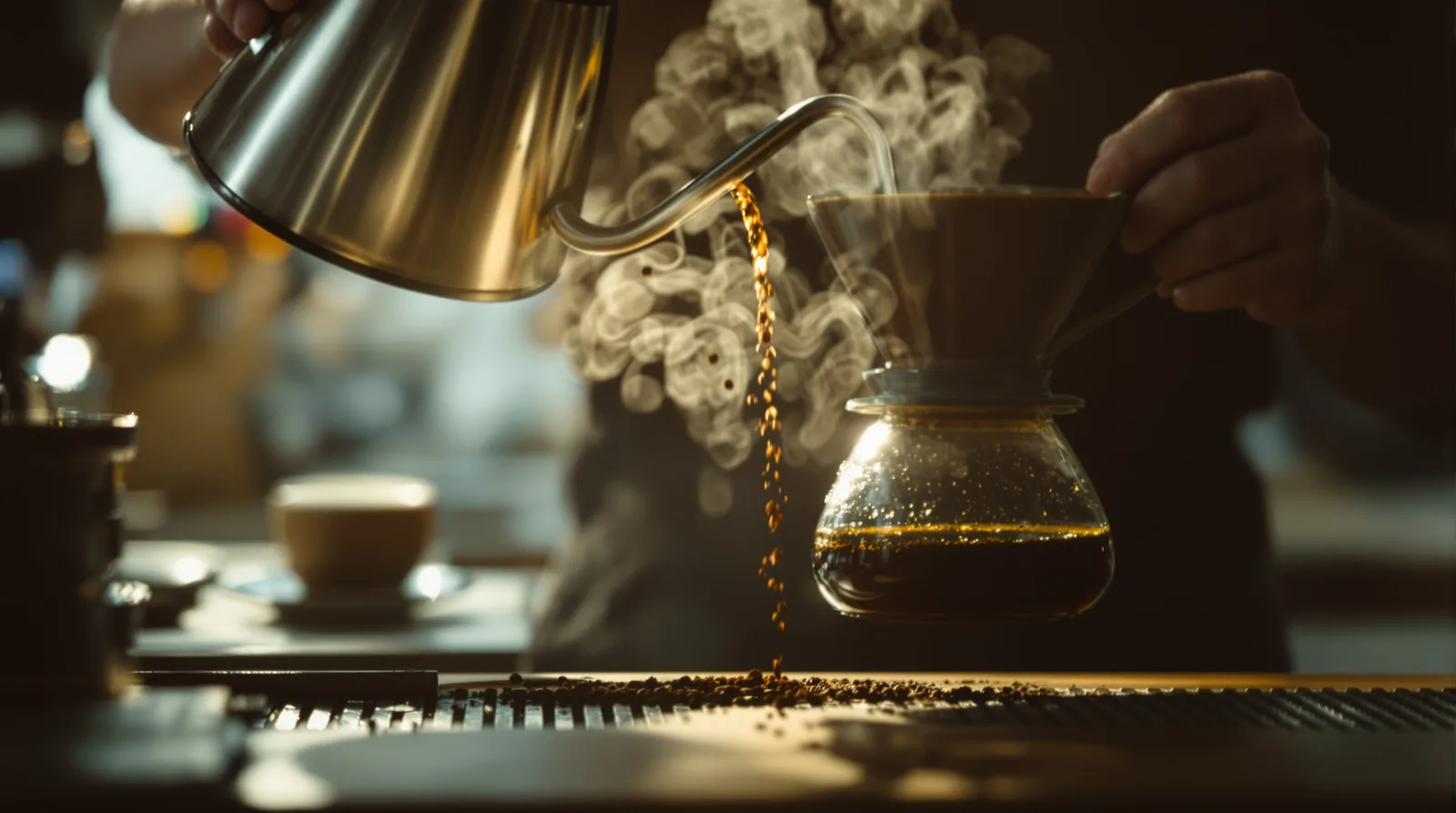
the first time you nail a pour over, you'll know. the smell hits different — brighter, cleaner, like someone just wiped the fog off your coffee glasses. your kitchen transforms into something close to ritual space. the gentle hiss of water meeting grounds. steam curling up in lazy spirals.
most guides want to sell you gear first. but here's the thing — you can make exceptional pour over with basic equipment if you understand the fundamentals. ratios matter more than your kettle's gooseneck curve.
the golden ratio (and why it's not actually golden)
start with 1:16. that's 1 gram coffee to 16 grams water. sounds clinical? it is. but it works.
for a standard cup, try 22g coffee to 350g water. tastes weak? go 1:15. too intense? push to 1:17. the "golden ratio" is wherever your palate lands, not what some manual dictates.
medium grind. think kosher salt, not powder. if you're grinding too fine, your pour will crawl. too coarse and water rushes through like it's late for work.
water temperature sits around 200°f. no thermometer? wait 30 seconds after your kettle stops screaming.
the pour technique that changed everything
forget the elaborate pouring patterns. here's what actually moves the needle:
the bloom. double your coffee weight in water. 22g coffee gets 45g water. wait 30 seconds. watch the grounds puff and release co2. this moment determines everything that follows.
the main pour. slow, steady circles from center outward. keep the water level consistent. don't let the bed go dry, but don't drown it either. total brew time: 3-4 minutes.
the final pour. once you hit your target weight, let it drain completely. the last drips carry the most concentrated flavors.
your wrist matters more than your equipment. smooth, controlled movements. like you're painting with water.
troubleshooting common disasters
bitter coffee means over-extraction. grind coarser, pour faster, or drop your water temp.
sour, thin coffee screams under-extraction. go finer on the grind, slow down your pour, or bump the temperature.
uneven extraction shows up as mixed signals — bitter and sour simultaneously. your grind consistency is probably shot, or your pouring technique needs work.
if every cup tastes different, standardize your variables. same grind setting. same timing. same pouring speed. consistency breeds breakthroughs.
equipment that actually matters
you need four things: a dripper, filters, a scale, and fresh beans. everything else is optimization.
dripper: v60 for control. chemex for clarity. kalita wave for forgiveness. the differences matter less than your technique.
scale: accuracy to 0.1g. timing function helps. cheap options work fine.
grinder: this is where you spend money. burr grinders maintain consistency. blade grinders create chaos.
kettle: gooseneck spouts offer control, but any kettle works if your pouring game is tight.
the beans that make it worthwhile
light roasts shine in pour over. the process highlights origin characteristics that darker roasts mask. fruit notes, floral aromatics, complex acidity — all amplified.
counter culture coffee in durham consistently delivers exceptional single origins. their fast forward blend showcases what light roasting can achieve.
intelligentsia built their reputation on pour over-friendly beans. house blend works, but their single origins tell better stories.
west coast roasters like blue bottle and stumptown pioneered the light roast movement. their beans practically beg for manual brewing.
explore our complete roaster directory to find exceptional beans near you.
timing and extraction decoded
under 3 minutes usually means under-extracted coffee. over 5 minutes suggests your grind went too fine.
that sweet spot — 3:30 to 4:30 — delivers balanced extraction. but trust your palate over your timer.
water quality affects everything. hard water over-extracts. soft water under-extracts. filtered water splits the difference nicely.
fresh beans degas differently. day-old beans bloom aggressively. week-old beans behave predictably. month-old beans taste like cardboard.
the ritual worth protecting
pour over demands presence. no scrolling phones or scattered attention. just you, the coffee, and four minutes of focused intention.
the process teaches patience. rushing creates chaos. steady rhythm creates clarity.
morning pour overs taste different than afternoon ones. not just because of caffeine tolerance — your palate shifts throughout the day. lean into those differences.
beyond the basics
once you nail the fundamentals, experiment with bloom ratios. try 3:1 instead of 2:1. some beans respond beautifully to aggressive blooming.
pulsed pours create different extraction profiles. three smaller pours instead of two large ones. changes the game for certain origins.
water temperature variations unlock hidden flavors. ethiopian beans often sing at 195°f. guatemalan beans prefer 205°f.
grind size adjustments throughout the brew? controversial but effective. start fine, finish coarse. uneven extraction becomes intentional.
the best pour over happens when technique disappears. muscle memory takes over. you stop thinking and start feeling.
discover exceptional cafes perfecting pour over craft on not another sunday.
your kitchen deserves better than bitter coffee and rushed mornings. pour over offers an alternative — slower, more intentional, infinitely more rewarding. the equipment matters less than you think. the ratios matter more than most realize. but the ritual? that changes everything.
Key takeaway: start with 22g coffee to 350g water, bloom for 30 seconds, pour slow circles, and adjust the ratio by feel -- your palate sets the real golden ratio.
frequently asked questions
what is the best coffee-to-water ratio for pour over?
start with 1:16 -- 22g coffee to 350g water for a standard cup. if it tastes weak, move to 1:15. too strong, try 1:17. there is no single correct ratio; adjust until the cup matches your preference and stick with what works.
how long should a pour over take to brew?
total brew time should land between 3 and 4 minutes. if it drains faster, your grind is too coarse. slower than 4 minutes usually means too fine a grind. the bloom adds 30 seconds at the start and is included in that total window.
why does my pour over taste bitter?
bitter coffee signals over-extraction. try grinding coarser so water flows through faster, speed up your pour slightly, or lower your water temperature a few degrees. changing one variable at a time helps you identify the actual cause without guessing.
do i need a gooseneck kettle for pour over coffee?
no. a gooseneck spout gives you more control over flow rate and direction, but any kettle works if your pouring technique is steady and controlled. focus on slow, consistent circular pours -- the motion of your wrist matters more than the shape of your spout.