you nearly miss the entrance. 8 aybrook street sits just off marylebone high street, a narrow doorway that could belong to a private members club. step inside and the space contracts around you, inti
the moment you walk in
you nearly miss the entrance. 8 aybrook street sits just off marylebone high street, a narrow doorway that could belong to a private members club. step inside and the space contracts around you, intimate in a way that forces attention. the room feels stripped back, deliberate. white walls, exposed concrete, a hand-brew bar that dominates the narrow interior like an altar.
the first thing you notice is the quiet. conversations drop to whispers here, the kind of hush that happens when people understand they're witnessing something precise. behind the counter, baristas move with surgical focus, each pour deliberate, timed, measured. this isn't the performative theater of latte art or the casual bustle of neighborhood coffee shops. this is filter coffee as laboratory work.
the bean selection lines the wall in small glass jars, each labeled with origin details that read like wine vintage cards. panama geshas, kenyan washed lots, price tags that make you pause and consider. the room smells clean, mineral, with none of the heavy roast aromatics that cloud most coffee shops. everything here feels intentional, from the precise spacing of stools along the brew bar to the way natural light cuts through the front window.
the concrete floor broadcasts every footstep, each heel click amplified in the narrow space. watch the morning regulars navigate this acoustic reality: soft-soled shoes, measured movements, voices that instinctively lower as they approach the brewing stations. the sound of grinding beans cuts through conversations like a warning shot. when the kettle whistles, the entire room pauses momentarily, a pavlovian response to the promise of what's coming.
the front window glass feels cold against your shoulder if you claim the counter seats. condensation forms patterns that shift throughout the day, morning breath fogging the view of marylebone high street pedestrians who peer in with curious confusion. inside, the temperature hovers just warm enough, the kind of controlled climate that prioritizes bean storage over customer comfort.
what to order
the filter coffee menu reads like a collector's catalog, twelve single-origins rotating through pour-over stations with prices that span from £5 to £45 per cup. the kenyan varietal i tried delivered methodical, obsessive brewing that made every other cup i'd had that week taste like an afterthought. the barista walked me through the processing method like a sommelier discussing terroir, explaining the washing station, the drying beds, the journey from cherry to cup with genuine expertise.
expensive? absolutely. worth it? undoubtedly. this is coffee that justifies its premium through sheer technical execution. the extraction hits clean, bright acidity without any harsh edges, body that coats your mouth without weight. each sip reveals new layers, fruit notes that shift from stone to citrus as the cup cools.
the iced matcha caught me completely off guard. creamy, grassy, with none of that chalky finish that plagues most london attempts. my daughter claimed it first, protective glares included, but i managed enough sips to understand why. this isn't matcha as instagram prop: this is proper ceremonial grade powder whisked to silk, temperature controlled, balanced with precision.
food remains minimal, a few pastries that serve as palate cleansers between coffee tastings rather than destination items themselves. this isn't brunch territory. people come here for the beans, the brewing, the chance to taste coffee at its most refined.
order the current kenyan if you want to understand what proper filter extraction achieves. pair it with the iced matcha if you're sharing, though good luck convincing your companion to let you steal more than a taste. expect to spend £15-20 per person for the full experience, more if you venture into the rare gesha territory.
the brewing process unfolds like performance art: 30-second bloom, water temperature precisely 93 celsius, circular pours that spiral from center to edge with metronomic timing. the scales register each gram of water, digital displays ticking upward as extraction time advances. when the final drip falls, the silence feels ceremonial.
each pour-over arrives with tasting notes printed on small cards, professional descriptors that actually match what hits your palate. the kenyan delivers blackcurrant acidity that tingles behind your molars, followed by brown sugar sweetness that builds as the cup cools. drink it while still hot and you miss half the complexity. patience gets rewarded here with flavors that unfold across temperature ranges.
the cups themselves feel substantial, ceramic thick enough to retain heat but thin-rimmed to avoid interference with the aromatics. hold one and you feel the weight of proper craftsmanship, the kind of thoughtful details that extend beyond the liquid itself.
the operator / the people
paul ross stands behind this operation, a two-time uk barista championship winner who approached specialty coffee like competitive sport. his pedigree shows in every detail: the equipment choice, the brewing protocols, the way staff handle each extraction with competition-level precision. this isn't hobby coffee or lifestyle business territory. ross built special guests as a platform for showcasing what filter coffee can achieve when technique meets exceptional beans.
the team moves with the focused intensity you'd expect from championship training. watch them work and you see muscle memory developed through thousands of practice runs, timing that comes from understanding extraction theory at a molecular level. they'll walk you through terroir and processing methods with genuine enthusiasm, not scripted sales pitches.
the knowledge runs deep here. ask about a specific bean and you'll get details about the farm, the producer, the harvest conditions. these aren't baristas learning on the job: these are coffee professionals who understand the supply chain from seed to cup. the technical discussions happen naturally, flowing from genuine passion rather than forced expertise.
ross chose marylebone deliberately, understanding that this neighborhood appreciates craft executed at the highest level. the clientele reflects that choice: coffee obsessives, industry professionals, customers who understand what they're experiencing and value the precision accordingly.
behind the counter, hands move with choreographed efficiency. watch the morning shift calibrate grinders: tiny adjustments to burr settings, test shots pulled and tasted, notes scribbled on clipboards with the seriousness of laboratory work. each barista maintains their station like a surgeon's workspace: tools arranged exactly, cleaning cloths positioned precisely, timing intervals memorized to the second.
the training shows in how they handle questions. ask about processing methods and you'll hear about pulped natural techniques, fermentation tank temperatures, drying bed rotations. these conversations happen while hands continue working, muscle memory freeing mental bandwidth for education. the passion reads authentic because it is authentic: these people live this craft daily.
roster changes happen carefully here. new hires apprentice through months of observation before touching the competition-grade equipment. ross maintains quality through systems, protocols that leave nothing to chance. watch the shift changeover and you see detailed handoffs: notes about grinder settings, bean age, extraction variables that affect the next hour's service.
the queue, the timing
sunday afternoons draw the inevitable queue, coffee tourists mixing with neighborhood regulars in a line that stretches toward marylebone high street. peak weekend hours mean twenty-minute waits, longer if you're targeting specific beans that require individual attention. the queue moves slowly by design: each pour-over demands time, precision, proper extraction intervals.
weekday mornings offer better odds, though laptop workers claim most seats by 9am. early afternoon provides the sweet spot: shorter waits, full bean selection still available, space to actually taste what you're drinking rather than rushing through. late afternoon sees another surge as office workers discover special guests makes their commute home considerably more expensive but infinitely more satisfying.
if the queue stretches beyond the door, consider your commitment level. this isn't grab-and-go coffee. the experience demands time, attention, willingness to engage with the brewing process. when patience runs thin, workshop coffee on mortimer street provides solid backup options, though nothing approaches the technical ambition you'll find here.
weekend queues peak between 11am and 3pm. arrive early or accept the wait as part of the experience. the people ahead of you likely understand what they're ordering, which helps move things along despite the brewing complexity.
the queue psychology reveals itself quickly: serious coffee people check their phones while maintaining position, tourists photograph the menu through the window, regulars nod acknowledgments to staff. conversations develop naturally between strangers bonded by mutual caffeine obsession and shared wallet damage.
during peak hours, the ordering process becomes almost military in efficiency. staff call out extraction times, coordinate multiple pour-overs, manage brewing sequences with precision that would impress air traffic controllers. the room fills with overlapping sounds: timers beeping, kettles whistling, grinders humming, the gentle splash of water meeting coffee grounds.
queue discipline matters here. people understand the stakes: jumping line or rushing orders affects everyone's experience. the unspoken social contract holds: patience gets rewarded with better coffee, impatience gets met with longer waits as staff prioritize quality over speed.
the room
the interior feels more like a tasting room than a traditional cafe, deliberately minimal in ways that focus attention on the brewing process. exposed concrete floors, white walls, natural wood accents that warm the space without cluttering it. seating stays limited: a handful of stools along the brew bar, a few small tables that fill quickly with laptop workers and coffee pilgrims.
music stays subtle, instrumental tracks that complement rather than compete with the brewing sounds. the hiss of steam, the pour of water through grounds, the quiet conversations between barista and customer create the primary soundtrack. lighting comes mostly natural through the front windows, supplemented by pendant fixtures that cast warm pools over the brewing stations.
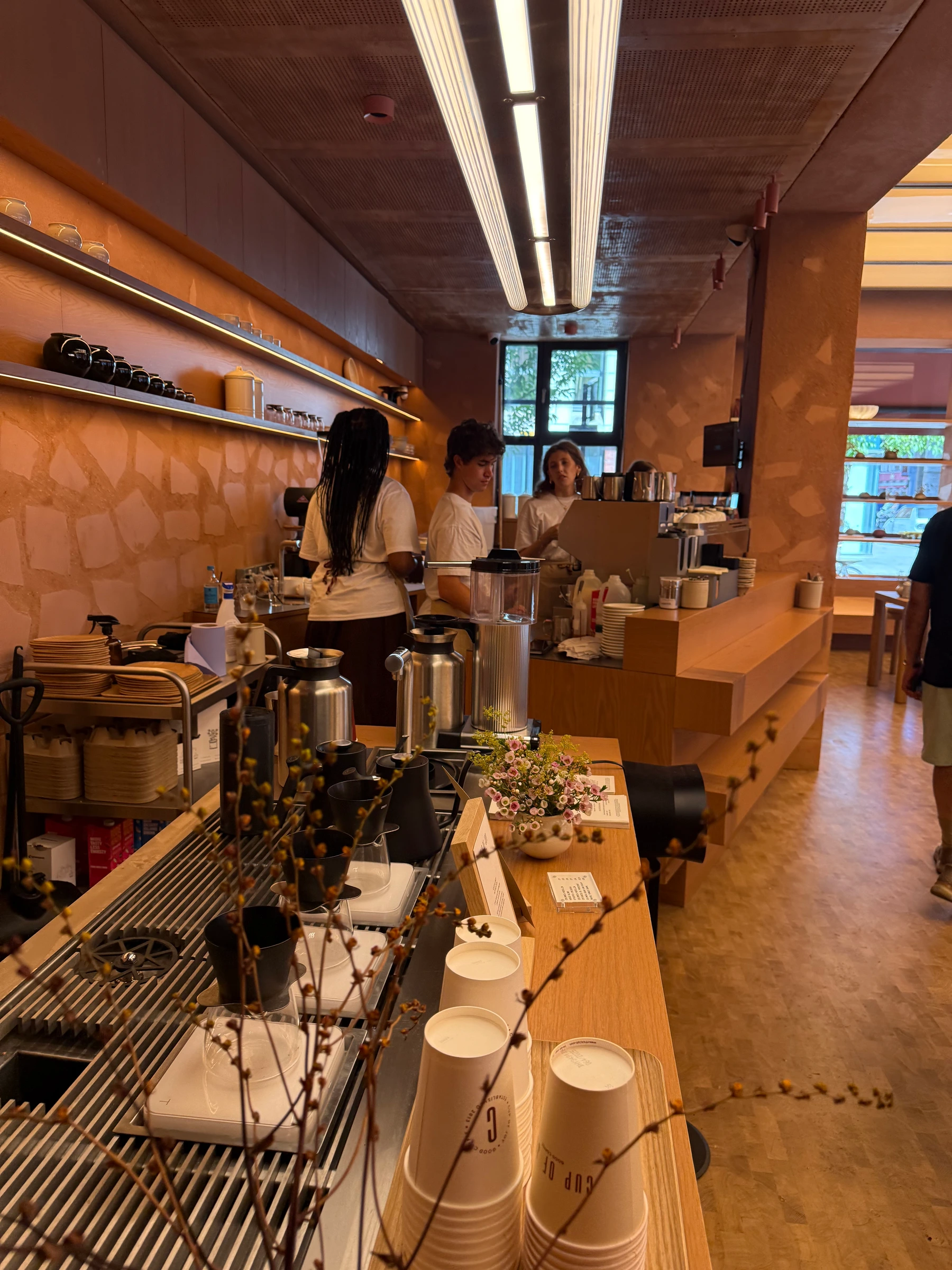
the brew bar dominates everything, eight pour-over stations arranged like a chemistry lab. each station gets its own scale, timer, grinder settings calibrated for specific beans. watching the workflow feels choreographed: precise movements, timing that never rushes, attention to detail that borders on obsessive. the equipment gleams, maintained with the care that expensive tools demand.
service style leans technical without becoming intimidating. baristas engage customers in the brewing process, explaining choices, sharing knowledge, creating educational moments that justify the premium pricing through genuine expertise.
the concrete amplifies every sound: chair legs scraping against floor, cups settling into saucers, the metallic clink of spoons against ceramic. morning conversations carry across the narrow space, creating an intimacy that larger cafes can't match. by afternoon, the acoustic reality shapes behavior: people speak softer, move more deliberately, respect the shared sonic space.
the brewing stations occupy prime real estate, positioned where natural light hits strongest. watch how baristas adjust their bodies throughout the day, chasing optimal visibility as sun angles shift. the pendant lights kick in by mid-afternoon, creating focused work zones that emphasize the precision happening below.
storage happens in plain sight: beans organized by origin, brewing equipment displayed like museum pieces, cleaning supplies arranged with obsessive organization. transparency extends beyond brewing technique to operational philosophy: nothing hidden, everything optimized for quality rather than convenience.
the seating forces interaction with the brewing process. counter stools face the action directly, making spectators of customers. the small tables position people as audience to the performance, creating education opportunities that justify premium pricing through entertainment value.
temperature control runs precise: warm enough for comfort, cool enough for bean storage, humidity managed to preserve coffee quality. your body adapts to the environment rather than the space accommodating your preferences. this prioritization of product over patron comfort sends a clear message about values and focus.
the verdict
special guests succeeds because it commits completely to its vision: filter coffee executed at championship level, rare beans treated with surgical precision, prices that reflect actual quality rather than lifestyle marketing. this isn't for casual coffee drinkers or budget-conscious caffeine seekers. this is for people who understand the difference between good coffee and exceptional coffee, who value technique over trend.
the kenyan filter delivers the complete experience: methodical brewing, expert explanation, flavors that justify every penny of the premium. pair it with the iced matcha if you're sharing, though expect territorial behavior from whoever claims it first. avoid peak weekend hours unless you're committed to the queue experience.
paul ross and his team have created something rare in london's oversaturated specialty scene: a coffee program that cuts through hype with genuine technical excellence. other roasters are taking notes. customers leave understanding they've experienced something special, even if their wallets feel considerably lighter.
come here when you want to understand what specialty coffee can achieve at its highest level. come back when you need reminding why good coffee costs what it does. skip it if you're looking for laptop-friendly workspace or casual neighborhood hangout vibes. this is filter coffee as craft, precision over performance, technique that transforms bean into revelation.
the tactile reality of special guests stays with you: the weight of properly thick ceramic, the temperature progression from scalding first sip to complex final drops, the smooth concrete beneath your feet that broadcasts every footstep. this physical memory reinforces the price point, justifying cost through sensory completeness rather than instagram appeal.
the experience operates on multiple levels: technical education for coffee obsessives, sensory exploration for flavor seekers, performance theater for those who appreciate craft mastery. ross understood that charging premium prices requires delivering premium experiences across every touchpoint, from bean sourcing through final service.
longevity seems built into the concept: rotating bean selections maintain novelty, championship pedigree ensures technical credibility, marylebone location provides affluent customer base willing to pay for quality. this isn't trend-driven business that will fade when instagram moves on. this is craft-focused operation that improves with time, experience, refinement.
the influence extends beyond aybrook street: other london roasters now emphasize technical precision over lifestyle aesthetics, menu pricing reflects actual bean costs rather than market positioning, customers develop more sophisticated palates through exposure to properly extracted coffee. special guests raised the standard citywide simply by demonstrating what's possible when technique meets passion.
the details
— address: 8 aybrook street, london w1u 4aw
— area: marylebone, london
— visited: 2026-05-19