honey processed coffee, told by its makers
dive into the story of honey processed coffee, a method that balances natural and washed techniques to create a unique flavor. hear from the producers themselves.
in this guide
- the journey from cherry to cup
- why honey processing is different
- the taste of honey processed coffee
- voices from the field
- popular origins and regions
- faq
- is there actual honey in honey processed coffee?
- what is the difference between yellow, red, and black honey?
- where can i buy honey processed coffee?
- what is the best brewing method for honey processed coffee?
- is honey processed coffee more expensive?
in a small finca in the heart of costa rica, the aroma of drying coffee cherries mingles with the first light of dawn. the workers, armed with their depulpers, are busy separating the seeds from the cherries, leaving behind a sticky, honey-like mucilage. it's a painstaking process, one that combines the best of the natural and washed methods. but the payoff is worth it. the result is a coffee with a flavor profile that is both sweet and complex, much like biting into a crisp apple.
the journey from cherry to cup
pull a ripe coffee cherry from the branch and you are holding four distinct layers: the outer skin, the mucilage (a sticky, pectin-rich fruit pulp), the parchment, and finally the seed. every processing method is just a decision about when and how to remove each of those layers before the seed gets dried.
honey processing works like this:
- harvesting. only ripe cherries are picked, which often means returning to the same tree six or seven times during a single season, since cherries ripen at uneven rates. this alone adds significant labour cost.
- depulping. within 8 to 12 hours of picking, a depulper strips off the outer cherry skin. speed matters here because the fruit begins fermenting fast in the heat.
- mucilage calibration. a demucilaging machine lets the producer dial in exactly how much of that sticky fruit layer stays on the seed. leave more on, you get a black honey. remove most of it, you get a yellow honey. the amount of mucilage remaining is the single biggest lever the producer has on final flavour.
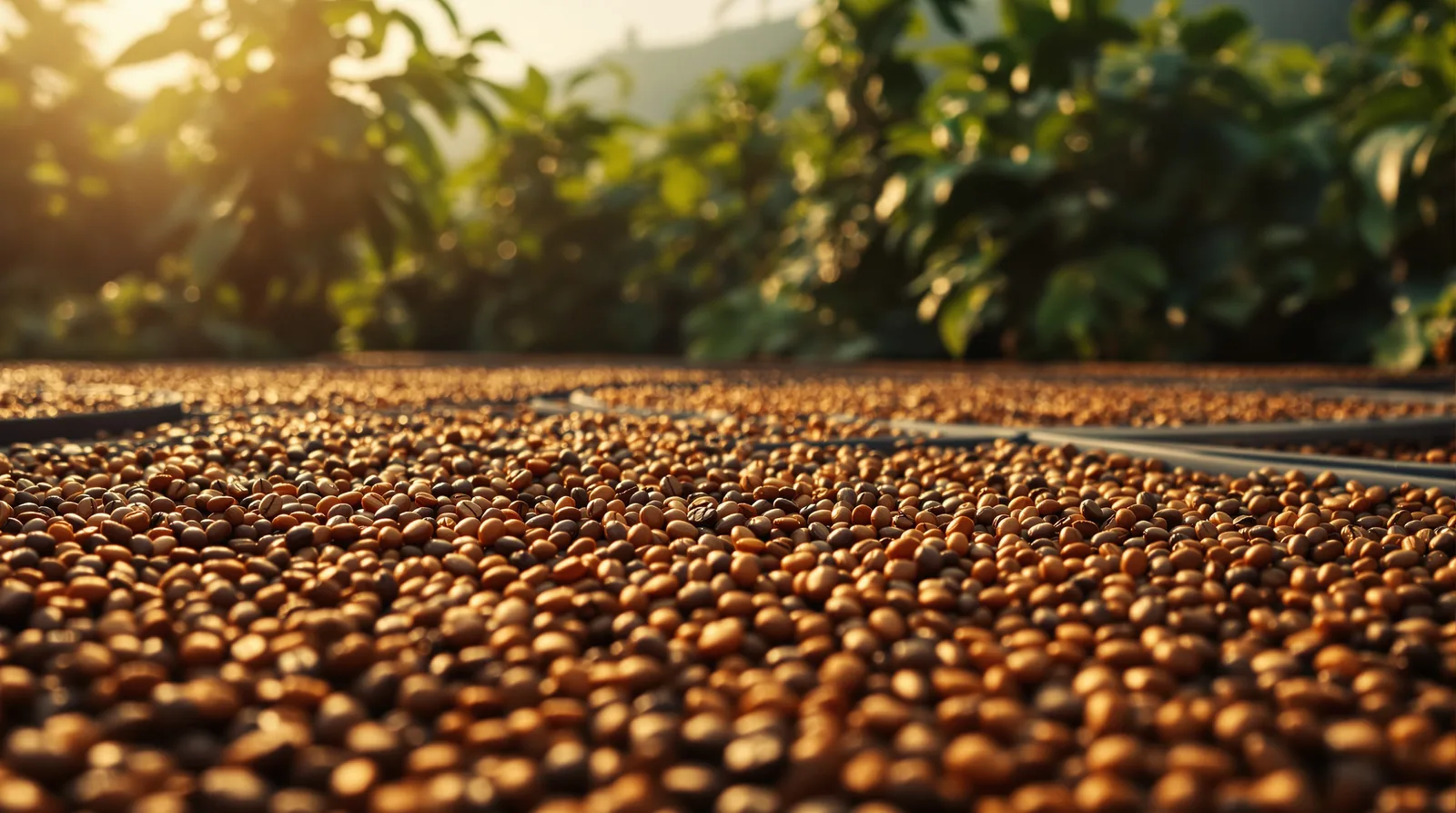
- drying on raised beds. beans are spread out on african beds, typically made of bamboo, and left to dry for anywhere from 10 to 30 days depending on humidity and the honey level. workers rake and rotate the beds constantly. any bean that stays still too long in a pile risks mold.
- nightly covering. sheets go over the beds at dusk to stop overnight moisture reabsorption. back off at dawn. repeat.
- milling. once dried, parchment comes off mechanically and the green beans are bagged for export.
the smell at this stage is genuinely remarkable. at las lajas micromill in costa rica, oscar and francisca chacon describe the freshly pulped coffee as having an almost floral, fermented-fruit warmth that hangs over the drying area in the morning. it is not coffee as you know it from a bag. it smells alive.
---
why honey processing is different
here is the thing: the washed versus natural debate gets most of the attention, but honey sits in genuinely interesting territory that neither camp fully claims.
| method | skin removed? | mucilage removed? | dried in fruit? | fermentation tank? |
|---|---|---|---|---|
| washed | yes | yes (fully) | no | usually yes |
| honey | yes | partially | no | no |
| natural | no | no | yes | no |
washed coffees go through a fermentation tank to dissolve mucilage, then get a full water rinse. that process scrubs a lot of fruit character off the bean and leaves you with a cleaner, brighter cup. natural coffees never get depulped at all before drying, so the seed basically slow-ferments inside the whole fruit for weeks, absorbing heaps of sugar and berry character. honey sits between those two, but it is not just a compromise. it is the one method that gives the producer a real dial to turn.
yellow honey has the least mucilage left on. it dries faster and tastes closer to a washed coffee. red honey is the midpoint: more fruit, more body, longer drying. black honey has nearly full mucilage intact and needs constant attention on the beds to avoid anything going wrong. it is demanding and it produces the most intense, syrupy results.
one practical difference most people overlook: honey processing uses far less water than washed processing. no fermentation tanks, no washing channels. in regions where water is scarce or expensive, this matters a lot, and it is part of why some producers have shifted toward it.
---
the taste of honey processed coffee
balanced is a word people reach for when they describe honey coffees, which sounds faint praise until you realise how hard balance actually is to achieve in a cup.
what you typically get: sweetness that registers without being cloying, stone fruit or apple notes depending on the variety and origin, a mouthfeel that is rounder than a washed coffee but not as thick and jammy as a natural. sprudge describes it well as hitting a sweet spot between the two parent methods, with balanced acidity and what some people call an "intense fruit sweetness" that is not the same as the overripe berry bomb of a natural.
the mucilage ferments slightly during drying. that light fermentation is where a lot of the complexity comes from. you get a faint floral quality sometimes, occasionally vanilla or nougat, and a sweetness that feels like it was built into the bean rather than added on top.
brew a yellow honey as a pour-over on a v60 and the clarity is there. definite sweetness, brighter than you might expect, good length. pull a black honey as espresso and the syrupy body thickens up, the fruit pushes forward, and the crema tends to be dense and amber-coloured. both are the same processing method. they barely taste like it.
one thing worth knowing: many people drink good honey coffees without any milk and without sugar. the natural sweetness of the mucilage fermentation means you are not fighting any harsh bitterness out of the gate.
---
voices from the field
the economics of honey processing do not always make obvious sense to an outside observer. it takes more labour than a standard washed lot. the beds need constant attention. the margin for error, especially with black honey, is slim.
so why do it?
oscar chacon of las lajas, speaking about the mill he runs with his wife francisca in the sabanilla de alajuela area of costa rica, has described honey processing as a way of letting the terroir of their farm come through in a way that washed lots simply cannot. the decision is not purely commercial. it is about what the coffee can become when you let it hold onto a bit of itself during drying.
purity coffee's research into processing sustainability quotes producers who say that specialty-grade honey lots consistently fetch higher prices at auction than their washed equivalents from the same harvest. the extra labour cost can be offset. but only if the execution is right. a poorly managed honey lot, one that molds or ferments unevenly, is unsaleable. the risk is real.
what you hear consistently from producers who have committed to honey processing is a kind of controlled obsession with the drying beds. one mill manager in el salvador described waking at five in the morning to check the beds before temperature climbed. not because anyone told him to. because the coffee needed it.
---
popular origins and regions
costa rica is the country most associated with the honey process, and that association is deserved. the method's modern identity was largely shaped there, with micromills like las lajas turning it into a recognisable, repeatable craft.
a few regions and what they tend to produce:
- costa rica (central valley, tarrazu, west valley). the spiritual home. producers here have decades of experience with honey processing and the infrastructure to support it. expect well-calibrated yellow and red honeys, often with stone fruit and mild citrus character. the chacon family at las lajas remain one of the most-cited references in any conversation about black honey specifically.
- el salvador (apaneca-ilamatepec). smaller volumes but consistently interesting lots. bourbon variety grown at altitude here takes well to honey processing and tends to produce a rounder, caramel-forward profile.
- bolivia and panama. less common but worth seeking. panama's gesha variety processed as a honey can be extraordinary, though production is tiny and prices reflect that.
- brazil. brazilians call it "pulped natural" rather than honey process, but the mechanics are essentially the same. a lot of brazilian espresso blends contain pulped natural lots without the bag ever saying "honey."
- ethiopia. increasingly some producers are experimenting with honey processing on heirloom varieties, though the country's dominant methods remain washed (in yirgacheffe and sidama) and natural (in harrar and parts of guji). honey-processed ethiopian lots are not common but are worth finding when they appear.
the elevation question matters too. higher-altitude farms benefit from cooler nights and slower drying, which extends the fermentation window and can build more complexity into a honey lot. lower-altitude producers have to work harder to prevent uneven fermentation.
---
faq
is there actual honey in honey processed coffee?
no. the name comes from the appearance and texture of the mucilage layer left on the bean after depulping. it is golden, amber-coloured, and sticky in a way that looks and even faintly smells like honey. producers in central america started calling it "miel," the spanish word for honey, and the name stuck. the mucilage itself is a fruit pectin, not any added sweetener.
what is the difference between yellow, red, and black honey?
the colour classification refers to how much mucilage was left on the bean before drying, and the resulting colour the bean takes on during the drying process. yellow honey has the least mucilage, dries fastest, and tastes closest to a washed coffee. red honey has a medium layer, takes longer, and delivers more fruit and body. black honey retains almost all the mucilage, requires the most careful management on the beds, and produces the most intense, syrupy cup. some producers also label "white honey," which sits between yellow and depulped natural with nearly all mucilage removed.
where can i buy honey processed coffee?
most specialty roasters carry at least one honey lot, particularly during the costa rican and central american harvest windows (october through february for new crop). look for the processing method listed on the bag. if it just says "honey" without a colour designation, ask the roaster. a good roaster will know. search on not another sunday for cafes and roasters stocking current honey lots in your city.
what is the best brewing method for honey processed coffee?
it depends on the honey level. yellow and red honeys work beautifully as filter coffee, especially on a v60 or chemex, where their clarity and fruit sweetness come through cleanly. black honeys can be spectacular as espresso or in an aeropress, where the syrupy body and sweetness hold up against the pressure and concentration. if you are brewing a black honey as filter, consider a slightly coarser grind and a shorter steep to avoid amplifying any heavy, over-fermented notes.
is honey processed coffee more expensive?
generally, yes. the additional labour on the drying beds, the selectivity required during harvest, and the smaller batch sizes all push the cost up compared to commodity-grade washed lots. but the price premium is not always dramatic, particularly for yellow and red honeys. black honey and white honey lots from named micromills tend to be where prices climb noticeably. the cost reflects real work, not marketing.
in the end, the magic of honey processed coffee lies in its duality. it's a method that marries tradition with innovation, producing a brew that is as sweet as it is sophisticated. next time you take a sip, remember the meticulous care it took to bring those flavors to your cup. it's a testament to the dedication of the hands that craft it.