how farmers are cutting out the middleman
with the rise of direct sales, farmers worldwide are bypassing middlemen to deliver fresher produce and improve their profit margins. the direct approach fosters transparency and better consumer relationships.
in this guide
- the rise of direct farmer sales
- how technology is playing a role
- challenges of cutting out the middleman
- success stories from around the world
- comparing costs: direct vs traditional selling
- faq
- what is a producer-direct auction and how does it differ from a commodity market?
- do direct sales actually increase farm income, or is the extra work just not worth it?
- what role do csa programs play in direct farm sales?
- what are the biggest risks farmers face when going direct?
- how can a small farm get started with direct sales without being overwhelmed?
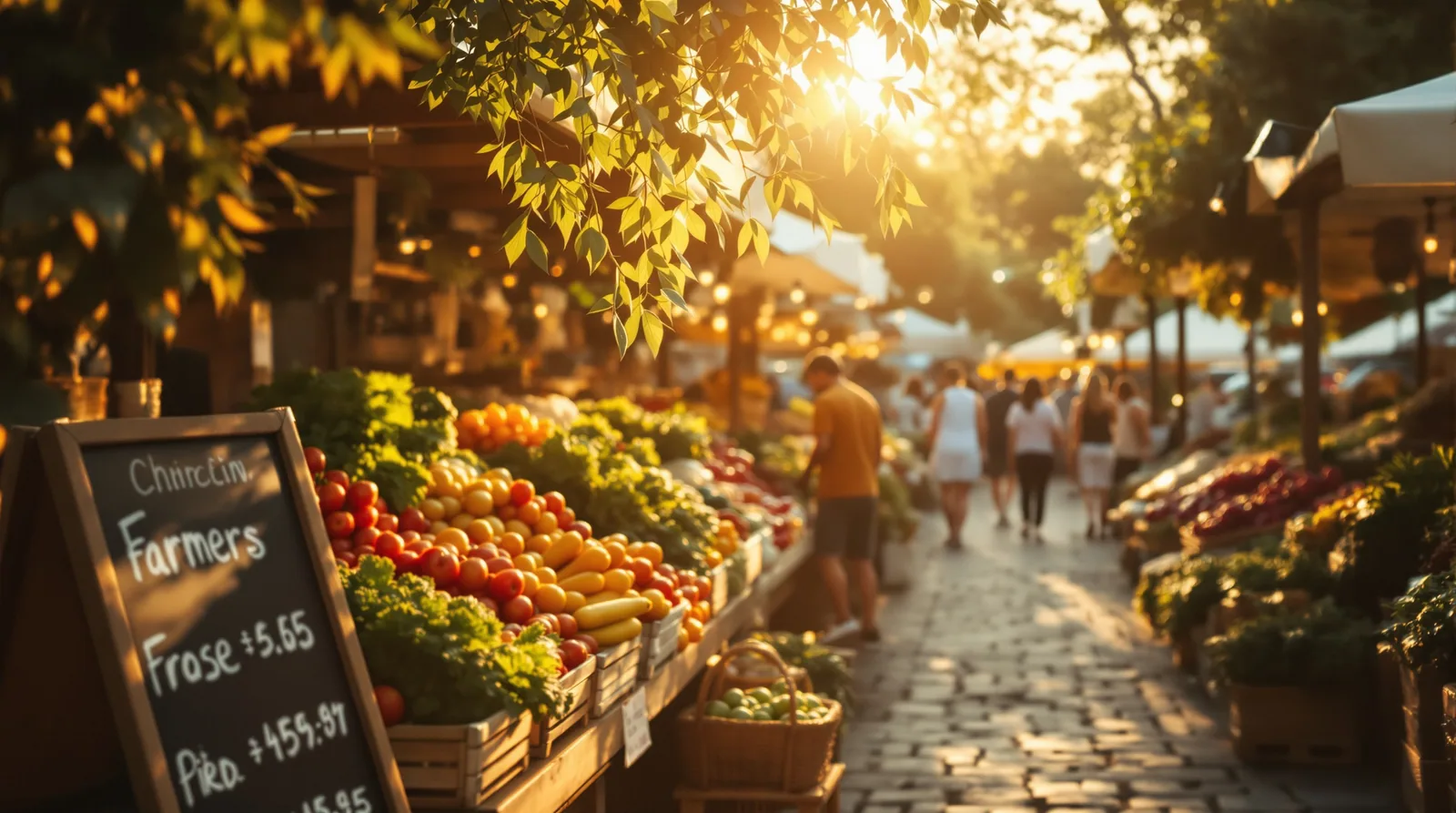
at the crack of dawn, mary sets up her stall at a bustling farmer's market in nashville. the scent of fresh tomatoes mingles with the earthy aroma of just-pulled carrots. in the past, mary would have sold her produce to a distributor, watching a slice of her profit go to middlemen. but now? now she connects directly with her customers, swapping recipes and stories across the table. it's not just about the money; it's a revolution in how food gets from farm to fork.
the rise of direct farmer sales
something shifted. it happened quietly, over a decade or so, and then all at once it was everywhere: farmers deciding the traditional distribution chain was not working in their favour, and doing something about it.
community-supported agriculture programs, farm-gate sales, producer auctions, subscription boxes pulled straight from a single grower's land. according to research from the usda and documented by voa news, the value of direct marketing sales in the us increased by roughly 50 percent over a relatively short period. that is not a blip. that is a structural change in how food moves.
the csa model is the one people know best. customers pay up front, usually in late winter, for a share of whatever the farm produces across the season. margaret evans, who started a farm in vermont, told voa it was the model that made the whole enterprise feel possible: "we saw that this was a way that, not only could we do something we love, but we could make a business out of it." the pre-payment spreads the risk. the farmer gets working capital before planting. the customer gets produce they can trace back to a specific field.
but csas are just one piece of it. producer-direct auctions, where growers bypass commodity exchanges and sell lots directly to buyers, restaurants, roasters, or individual customers, are growing fast. in specialty coffee especially, auctions have become a genuine mechanism for farmers to build relationships that last. perfect daily grind documented how el optimismo, a salvadoran farm that had never had a direct trade relationship, connected with an australian buyer through a single auction. that one transaction changed their forward planning entirely.
direct sales channels give producers something conventional markets rarely offer: control over price, feedback from end customers, and brand equity that accrues to the farm itself rather than disappearing into a distributor's margin.
---
how technology is playing a role
the internet did not invent direct farm sales. but it scaled them in ways that would have been logistically impossible twenty years ago.
e-commerce platforms now let a cattle rancher in montana sell beef directly to a household in denver without a single broker involved. online auction platforms, social media storefronts, farm-management software that automates order fulfilment and customer communications. the infrastructure is there. research published through the nber notes that falling transport costs, improving communication networks, and new matching technologies, specifically e-commerce platforms linking farmers with buyers, have accelerated disintermediation across agricultural markets in india, ghana, uganda, and beyond.
here is how a typical tech-enabled direct sales setup actually works in practice:
- the farmer lists available inventory on a platform (their own website, a regional aggregator, or a specialist auction site).
- buyers, whether individual consumers, restaurants, or roasters, browse and place orders or bids.
- payment is processed digitally, often with some portion collected in advance.
- the farmer handles packing and arranges either drop-off, local delivery, or a third-party courier.
- customer feedback goes directly back to the producer, no intermediary filtering or diluting it.
social media has added another layer. studies on direct marketing strategies confirm that platforms like instagram and facebook have given farmers new ways to reach customers, build loyalty, and market seasonal availability without spending on traditional advertising. a farm with 4,000 instagram followers and a good email list does not need a distributor to find buyers for next season's harvest.
barn2door, one of the more widely used direct-sales platforms for independent farmers, frames it bluntly: when you rely on an auction house or commodity market, you hand other people full control over your outcomes. when you sell direct, you set the price, the packaging, and the terms.
---
challenges of cutting out the middleman
look, none of this is without friction.
middlemen are not purely parasitic. they exist because they perform real functions: aggregating supply, managing logistics, absorbing price volatility, handling compliance, extending credit. when a farmer decides to go direct, those functions do not disappear. they get transferred, usually to the farmer.
a fascinating qualitative case study from arequipa, peru, examined a state-convened alpaca fiber roundtable where 17 producer associations met directly with 5 buyer firms. the finding was uncomfortable: disintermediation did not eliminate the asymmetries that middlemen had previously managed. it relocated them. producers who lacked the negotiating experience, market information, or legal resources that intermediaries typically provide found themselves at a disadvantage in direct negotiations. cutting out the middleman transferred costs and risks onto the people least equipped to absorb them.
the challenges are real:
- time and labour. marketing, invoicing, customer service, logistics coordination. these are hours not spent farming.
- scale problems. a single farm rarely has enough volume to supply a large buyer consistently. aggregation, which is exactly what middlemen do, becomes the farmer's problem.
- cash flow gaps. traditional buyers often pay on net-30 or net-60 terms. direct customers pay faster, but not always, and managing that cycle takes financial literacy.
- regulatory compliance. food safety certifications, labelling requirements, and direct-to-consumer regulations vary by region and can be complicated to navigate without a distributor who already knows the rules.
none of this means direct sales are not worth pursuing. it means going in with realistic expectations. the farmers who do it successfully tend to treat it as a proper business pivot, not just a side channel.
---
success stories from around the world
the anecdotes are where this gets genuinely interesting.
lucia ortiz, co-producer at la avila farm in el salvador, has been direct about what auction-enabled trade means to her operation. "direct trade, for me, is the direct relationship between the roasters or importers and the farmer," she told perfect daily grind, "being the ones that discuss quality, prices, and day-to-day work at the farm." that conversation used to happen through three layers of export brokers. now it happens over whatsapp.
in india, the debate around deregulating agricultural produce market committee markets (the mandis) reflects a broader tension: state infrastructure versus farmer autonomy. nber research documents how the last five years have seen substantial public and private investment in platforms linking farmers with buyers, particularly in india, ghana, and uganda. some of those platforms are genuinely changing outcomes for smallholders who previously had no realistic alternative to selling through a trader at farmgate prices.
the nuffield farming report on short food supply chains documented how farm shops and box schemes across ireland and the uk gave producers not just better margins but something arguably more valuable: direct feedback from the people eating their food. that feedback loop, instant and unfiltered, lets a farmer adjust what they grow based on actual demand rather than a buyer's forecast from six months ago.
in the ranching world, the move from sale barn to direct consumer is producing measurable results. brand value stays with the ranch. repeat customers pay a premium because they trust the source. one ranch that barn2door profiled shifted from commodity auction pricing to direct consumer sales and found that controlling packaging and pricing allowed them to optimise margins while still moving all their product. not faster. not more volume. just more money per unit, and customers who came back.
---
comparing costs: direct vs traditional selling
the financial case for going direct is real, but the picture is more nuanced than "cut the middleman, keep more money."
here is a rough comparison of how the two models stack up for a mid-size produce or specialty crop farm:
| factor | traditional (via distributor/broker) | direct to consumer |
|---|---|---|
| price per unit received | wholesale rate (often 40-60% of retail) | retail or near-retail rate |
| marketing cost | low (handled by distributor) | medium to high (farmer's responsibility) |
| time investment | low | high |
| cash flow predictability | moderate (contract terms) | variable (depends on channel) |
| customer relationship | none | direct, ongoing |
| brand equity built | minimal | high over time |
| volume flexibility | high (buyers absorb surplus) | lower (must match supply to orders) |
research from the university of minnesota's agricultural economics archive confirms that direct marketing strategies allow producers to receive a better price by selling direct to consumers, who increasingly demand fresh, locally identifiable food. but the researchers are careful to note that the gains come alongside real costs in time, infrastructure, and marketing spend.
the concept of double marginalization is worth understanding here. when both a producer and an intermediary each mark up a product, the end consumer pays more while the producer captures less of that total. direct sales collapse that structure. the farmer sets the price, the consumer pays it, and no one in between takes a cut. that is the theory. in practice, the farmer also now absorbs the cost of customer acquisition, delivery logistics, and returns, all things a distributor used to eat.
the honest answer is that direct sales tend to be more profitable per unit but more labour-intensive overall. whether the maths works depends entirely on your scale, your product, and how much of the operational side you can systematise or outsource cheaply.
---
faq
what is a producer-direct auction and how does it differ from a commodity market?
a commodity market prices products based on standardised grades and global supply and demand, with farmers essentially price-takers. a producer-direct auction lets individual farmers list specific lots, often with detailed provenance and quality information, and buyers bid on those specific lots. the farmer retains more control over the minimum acceptable price and can build a relationship with the winning bidder. coffee is the clearest example, where auction platforms like cup of excellence let individual farms compete internationally on quality rather than being lumped into a commodity grade.
do direct sales actually increase farm income, or is the extra work just not worth it?
it depends heavily on the farm's size and product type. for specialty crops with a strong quality story (coffee, heritage breed meat, rare produce varieties), direct sales can significantly increase income per unit. for high-volume commodity crops like wheat or corn, the model is harder to make work because the logistics of selling direct at that scale become unwieldy. most farmers who succeed with direct sales treat it as a separate business line, investing proper time in marketing and customer management rather than bolting it on as an afterthought.
what role do csa programs play in direct farm sales?
community-supported agriculture programs are one of the oldest and most stable direct-sales models. customers pay a subscription fee upfront, usually in late winter or early spring, and receive a share of the farm's output throughout the growing season. the upfront payment gives the farmer working capital before planting, and it spreads risk between farmer and consumer. the model also builds loyalty: a csa member who has skin in the game, financially and emotionally, tends to become a long-term customer.
what are the biggest risks farmers face when going direct?
beyond the time and labour demands, the biggest practical risks are cash flow volatility, compliance complexity (food safety regulations, labelling laws), and over-reliance on a small number of customers. a distributor, for all its margin-taking, also absorbs surplus inventory and smooths out demand fluctuations. when you go direct, a bad harvest or a slow sales month hits your revenue directly, with no buffer. research from the alpaca fiber sector in peru showed that producers without strong negotiating experience or market information could actually end up worse off in direct buyer meetings than they were with an intermediary managing the relationship.
how can a small farm get started with direct sales without being overwhelmed?
start with one channel, not five. a farmers market stall, a small csa with 20-30 members, or a direct listing on a single platform is enough to test the model before scaling. get the operational basics right: consistent pricing, reliable fulfilment, and a way to collect customer contact information for repeat orders. social media helps but is not mandatory. the farmers who overextend into direct sales too fast tend to burn out managing logistics rather than farming. build slowly, systematise early, and only expand a channel when the current one is running without constant firefighting.
so, as the sun sets on traditional distribution chains, the rise of farmer-to-consumer sales signals a return to something more genuine. it's not just a business model; it's a movement towards community, trust, and transparency. for farmers like mary, it's a new dawn, without the middleman.