eudr 2026: what the deforestation regulation means for specialty coffee sourcing
the eudr demands coffee roasters shift gears before 30 december 2026. documentation proving deforestation-free sourcing isn't just encouraged, it's required. this is big.
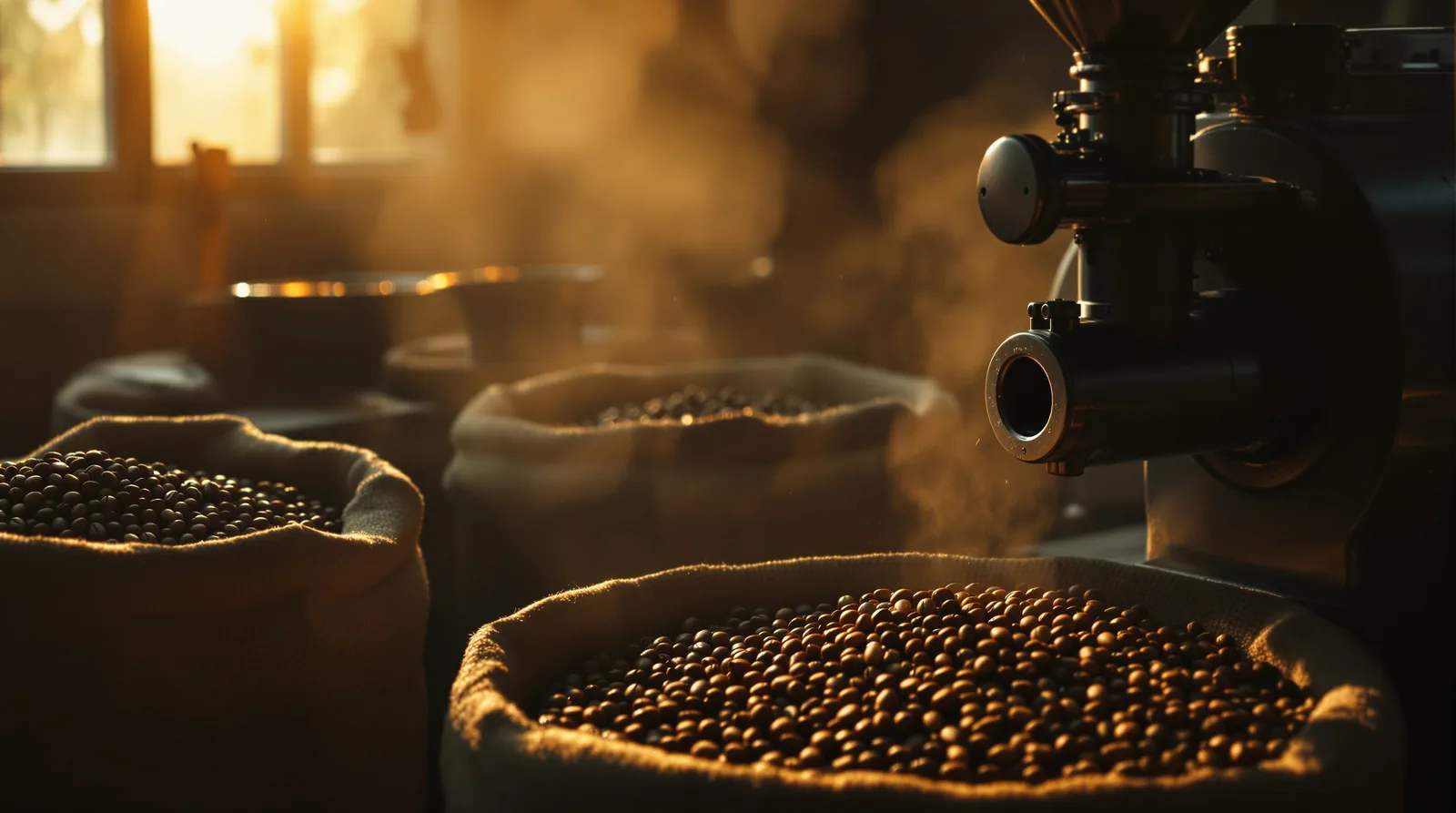
in this guide
- understanding the eudr basics
- why documentation matters now more than ever
- challenges for roasters: navigating new terrain
- traceability at farm level is genuinely hard
- the it infrastructure problem
- costs and sourcing disruption
- eudr-compliant sourcing strategies
- the impact on small vs. large enterprises
- a personal take: what this all means for the industry
- faq
- does eudr apply to roasted coffee, or only green beans?
- what exactly counts as "deforestation-free" under the regulation?
- will certifications like rainforest alliance or organic count toward compliance?
- what are the penalties for non-compliance?
- what should a small roaster do right now if they have not started?
reviewed 4 september 2026: application dates updated to the european commission's 13 july 2026 guidance (30 december 2026 for large and medium operators, 30 june 2027 for most micro and small operators). the detailed applicability wording below should be checked against your own operator status.
at third draught in shoreditch, the air crackles with the scent of fresh roast, mingled with conversations about supply chains and regulation. the buzzword? eudr. from 30 december 2026, this isn't just chatter, it's the law. the eu deforestation regulation may seem like yet another bureaucratic hurdle. but if you're into specialty coffee, it’s a game-changer demanding proof of deforestation-free origins. roasters are scrambling for compliant sources, their livelihood resting on robust documentation. the aroma of accountability is as thick as the steam from a fresh espresso.
understanding the eudr basics
the eu deforestation regulation (officially regulation (eu) 2023/1115, if you want the boring citation) entered into force in june 2023. for medium and large businesses, the application date is 30 december 2026, after co-legislators agreed a further one-year delay in december 2025. micro and small enterprises get until 30 june 2027, unless they were already covered by the eu timber regulation, in which case the december 2026 date applies. that distinction matters, and we will come back to it.
the core demand is straightforward, even if meeting it is not: any coffee placed on the eu market must be demonstrably free from deforestation. not just certified-on-paper free. actually, verifiably, georeferenced free. operators must submit a digital due diligence statement covering the geocoordinates of every plot of land where the coffee was grown, proof that the land was not deforested after 31 december 2020, and documentation showing it was produced in compliance with local laws in the country of origin.
coffee sits alongside cattle, cocoa, palm oil, rubber, soy, and wood products as one of the seven commodities the regulation targets. it is not arbitrary. according to meridia, the eu accounts for roughly 30 to 40% of coffee-related "embodied deforestation" globally. that share is higher than for most other regulated commodities. so yes, coffee is squarely in focus.
what this is not: a voluntary sustainability pledge. non-compliance means losing access to the european market and facing financial penalties of up to 4% of annual eu turnover. that is not a slap on the wrist for a mid-sized roaster.
---
why documentation matters now more than ever
before eudr, many roasters operated comfortably on a layer of certifications: rainforest alliance, organic, fair trade. those still matter for other reasons, but they are not eudr compliance on their own. the regulation demands something more granular: actual geolocation data tied to specific farm plots.
think about what that means in practice. a roaster sourcing a washed ethiopian yirgacheffe through a multi-tier import chain needs to trace that coffee back to the specific kebele where it was grown, verify the land status of those farms against a cut-off date, and file a digital statement with eu authorities before the coffee can cross the border. the chain of custody has to hold at every link.
perfect daily grind notes that the regulation's implications stretch "far beyond paperwork," requiring roasters to restructure green coffee sourcing strategies and potentially reassess long-standing supplier relationships. that is not an overstatement. a roaster who has worked with the same honduran exporter for eight years now needs that exporter to provide plot-level coordinates for every farm in their lot. some exporters are ready. many are not.
the documentation burden falls heaviest on whoever places the product on the eu market for the first time. that is usually the importer or roaster. downstream retailers dealing only in packaged roasted coffee operate as "traders" under the regulation and have slightly lighter obligations, though they still need to be able to trace their supply back up the chain.
---
challenges for roasters: navigating new terrain
traceability at farm level is genuinely hard
most specialty coffee is already better positioned than commodity supply chains, because direct trade and relationship-based sourcing create natural transparency. but "better positioned" is not the same as "ready." even roasters with direct relationships often receive coffee from cooperatives that aggregate hundreds of smallholder plots. getting georeferenced data from each member farmer is a significant lift, particularly in regions with limited digital infrastructure.
cbi's guidance on eudr compliance points out a subtlety many roasters miss: coffee agroforestry systems count as agricultural land use under the regulation. managing shade trees within an existing agroforestry system is fine. but if those trees are growing on land that was natural forest before december 2020, that coffee cannot enter the eu market. the line between "shade-grown" and "converted forest" matters enormously.
the it infrastructure problem
the european commission's own due diligence registry, the system operators must use to file statements, had significant technical issues in late 2025. this contributed to calls for further delays, and the delay came: application moved to 30 december 2026, and the commission published its updated product scope and tools on 13 july 2026. bruegel's analysis at the time was pointed: a second postponement would likely cost another 190,000 hectares of forest, roughly three-quarters the area of luxembourg, due to the extended window of unregulated imports. the delays have costs. they are just borne by forests rather than businesses.
costs and sourcing disruption
some origin countries have been flagged as "high risk" under the regulation's benchmarking system. that does not mean you cannot source from them, but it means more intensive due diligence. roasters reliant on high-volume origins like brazil or indonesia may face significant sourcing reviews.
---
eudr-compliant sourcing strategies
there is no single playbook here, but the practical steps are reasonably clear. here is a working sequence for a roaster starting compliance work now:
- audit your current supply chain. map every origin, exporter, and importer you use. identify where geolocation data exists and where it does not.
- talk to your green coffee importers immediately. ask directly: do they have eudr-ready documentation for your lots? can they provide polygon or point coordinates at farm or cooperative level?
- prioritise your highest-volume origins. you cannot fix everything at once. start with the coffees that move the most volume.
- invest in or access a traceability platform. tools built specifically for eudr data collection (openatlas, xorxios, and others) can handle the data formats the eu registry requires. your current spreadsheet probably cannot.
- review packaging. the regulation applies to the product as placed on market. some packaging uses wood-derived materials that may also require compliance documentation. sounds obscure, but it catches people out.
- get legal clarity on your operator vs. trader status. if you are both importing and roasting, you are almost certainly an operator with full due diligence obligations.
- build supplier relationships with eudr compliance as a selection criterion going forward. sourcing from exporters who are investing in farmer-level data collection is the path of least resistance.
the roasters who will be best positioned are, honestly, the ones who treated relationship-based sourcing as a genuine business practice rather than a marketing talking point. if you already know the names of the farms in your ethiopia lot, you have a head start.
---
the impact on small vs. large enterprises
the regulation creates a genuinely different compliance reality depending on your scale. here is a direct comparison:
| factor | large/medium roasters | small/micro roasters |
|---|---|---|
| application date | 30 december 2026 | 30 june 2027 (30 december 2026 if already covered by the eu timber regulation) |
| due diligence obligation | full operator obligations | potentially lighter under proposed sme exemptions |
| resource capacity | internal compliance teams likely | usually reliant on importers/suppliers |
| sourcing flexibility | can diversify origins quickly | often locked into smaller supplier relationships |
| certification leverage | can fund traceability at origin | limited buying power |
| risk of penalties | up to 4% eu annual turnover | proportional but still significant |
the december 2025 amendment and the commission's may 2026 simplification package ease the load for micro and small enterprises, with certain downstream businesses potentially exempt from filing due diligence statements themselves if the upstream operator has already done so. that could meaningfully reduce the admin burden for small roasters buying from compliant importers.
but here is the thing: even if you are a three-person roastery in bristol buying through a uk importer, your importer needs to be eudr-compliant for you to keep selling into the eu market. the chain does not break at your door just because you are small.
large operators face a different kind of pressure: volume. a major european roaster sourcing hundreds of containers a year from dozens of origins needs a systematic approach to data collection that simply cannot be done manually. the regulatory push may actually accelerate consolidation toward larger, better-resourced green coffee importers who can guarantee compliant documentation at scale.
---
a personal take: what this all means for the industry
a sourcing director at a mid-sized scandinavian roaster, speaking at a trade event in late 2024, put it simply: "we thought we were already doing this. we had direct trade, we had relationships, we had farm visits on the website. then we tried to get plot coordinates for 200 smallholder members in a ugandan cooperative and realised we had no idea where the coffee actually came from."
that story is more common than most roasters would like to admit. the specialty sector has built its identity on origin transparency, but a lot of that transparency has been narrative rather than data. eudr is forcing a conversion from storytelling to evidence.
honestly, that is not entirely a bad thing. the regulation, for all its implementation messiness, is asking coffee businesses to prove what many of them have claimed for years. fairtrade has aligned its standards with eudr requirements and is actively supporting producers and smaller businesses with compliance readiness grants. that kind of infrastructure investment at origin is what makes the regulation more than just a paperwork exercise.
the companies treating this as only a compliance burden are missing something. roasters who build genuinely traceable supply chains now will be in a stronger position with every future tightening of environmental trade policy, and there will be more. the eu is not done.
for smaller independents, the more immediate concern is keeping access to origin coffees they love. if your ethiopian natural from a guji cooperative cannot provide eudr documentation by the deadline, you cannot sell it in the eu. that is a real loss. not just commercially. these are relationships built over years, often over long flights, cupping tables, and a lot of trust. eudr compliance becomes another dimension of that relationship work, which is perhaps the most honest framing of what specialty coffee sourcing has always actually been.
---
faq
does eudr apply to roasted coffee, or only green beans?
both. the regulation covers coffee at all stages of processing, including roasted beans and ground coffee. it applies to any product placed on the eu market that is derived from a covered commodity. so if you are a uk roaster exporting bags of roasted coffee to germany, your product needs to be eudr-compliant regardless of its processing stage. the due diligence obligation applies to whoever places the product on the eu market for the first time.
what exactly counts as "deforestation-free" under the regulation?
coffee must be grown on land that was not subject to deforestation or forest degradation after 31 december 2020. deforestation means conversion of forest to agricultural use. forest degradation includes structural changes to forest, such as conversion from primary forest to a plantation. importantly, converting natural forest to an agroforestry system also counts as deforestation under the regulation, even if the system itself is considered more sustainable than monoculture farming.
will certifications like rainforest alliance or organic count toward compliance?
not on their own. certifications can form part of a due diligence system and may reduce the overall risk assessment burden, but they do not replace the requirement to submit a due diligence statement with actual geolocation data. the regulation is explicit that third-party certification does not provide automatic compliance. it can, however, be used as a supporting element in your risk assessment process.
what are the penalties for non-compliance?
financial penalties of up to 4% of total annual eu turnover, confiscation of the products in question, and exclusion from public procurement processes. in serious cases, temporary prohibition from placing regulated products on the eu market. the regulation also requires member states to establish effective, proportionate, and dissuasive penalties, so exact enforcement will vary by country.
what should a small roaster do right now if they have not started?
start with your green coffee importer. ask them directly whether their lots are eudr-documented and what data they can provide. if they cannot answer clearly, that is your answer. move on to suppliers who can. then check your own operator or trader status under the regulation (your importer or a trade association can help clarify this). the extra six months for most small enterprises (30 june 2027 rather than 30 december 2026) gives you some breathing room, but using it all is a risk given how long supply chain documentation takes to get right.
so, where does this leave the humble coffee lover standing in line for their daily fix? perhaps with a newfound appreciation for the journey of their morning brew. the eudr demands that every sip acknowledges a sustainable path from bean to cup. in the labyrinth of new rules, one thing is certain: coffee isn’t just a drink, it's a statement.