slow down: the premium return of table service in coffee
table service in coffee shops is making a comeback, offering a relaxed, intentional experience that aligns with casual dining rather than the rush of takeaways.
in this guide
- why table service is making a comeback
- table service vs drive-thru: different lanes, different gains
- case study: the grindhouse, hackney
- the economics of slowing down: is it worth it?
- customer expectations: more than just coffee
- faq
- does table service make sense for small indie cafes, or is it only viable for larger spaces?
- won't customers miss the interaction at the bar?
- how do you handle the coffee-getting-cold problem when it has to travel from bar to table?
- is there a risk table service makes specialty coffee feel unapproachable or expensive?
- do you need a full pos overhaul to support table service?
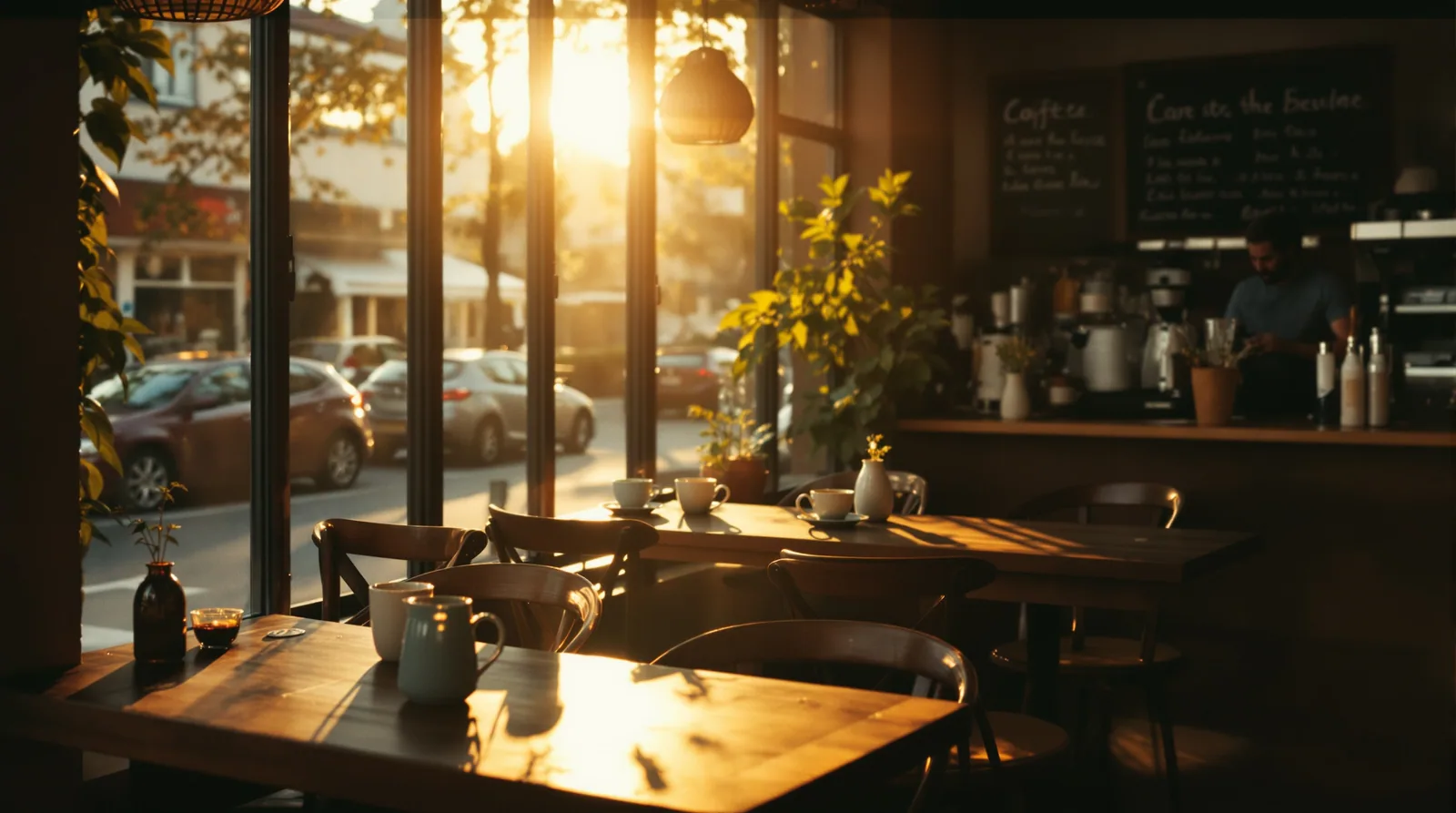
picture this: you're nestled into a corner booth at the grindhouse in hackney, the aroma of a hand-brewed v60 wafting through the air. a barista in a linen apron approaches with a smile, setting down your order without the need for counter chaos. this isn't your usual grab-and-go coffee run. this is table service, the ultimate nod to the slow coffee movement. a growing number of cafes are trading speed for a more intentional experience, offering patrons a moment of calm amid the urban hustle.
why table service is making a comeback
something shifted quietly. not overnight, not with a manifesto, just a gradual reordering of what people actually want when they walk into a cafe.
for years the specialty coffee world was laser-focused on the bar. the barista as performer, the brew method as spectacle, counter service as the natural architecture of all that theatre. you queued, you watched, you paid, you found a seat if you were lucky. the whole thing was calibrated around throughput. and for a while, that worked fine.
but consumer expectations have been changing, particularly post-pandemic. people go out less often now, broadly speaking, but when they do go out they want it to count. inflation has made casual spending feel more deliberate. and there is a growing fatigue, if you talk to enough regulars, with having to decode a chalkboard menu while someone waits impatiently behind you. table service, with its implied permission to just sit, answers something that counter service increasingly cannot.
the cultural context matters here too. as kopi roasters put it, the evolution of specialty coffee has always been tied to a philosophy of slowness, of paying attention to where something comes from and how it was made. table service is not a departure from that. it's arguably the logical endpoint of it.
there are real risks, and we'll get to those. but dismissing this as a pretentious affectation misses the point entirely.
---
table service vs drive-thru: different lanes, different gains
here's the thing that gets lost in the debate: these two models are not competing for the same customer at the same moment.
drive-thru coffee is booming. return-to-office patterns have pushed out-of-home coffee consumption back to pre-pandemic highs in the us, and a significant chunk of that demand is grab-and-go, transactional, time-pressured. the person ordering from a drive-thru at 7:45am on a tuesday is not the same person, in the same headspace, as the one settling in with a v60 at 10:30 on a saturday.
this is what coffee intelligence describes as staying in separate lanes. convenience and intentionality can coexist in the market. they just shouldn't try to coexist in the same room.
| | table service | drive-thru / counter service |
|---|---|---|
| primary value | experience, occasion, dwell time | speed, convenience, volume |
| avg spend per visit | higher (food attachment, second drinks) | lower (single item, quick transaction) |
| staffing model | more floor staff, lower bar staff pressure | concentrated bar staff, minimal floor presence |
| ideal customer moment | leisure, weekend, work-from-cafe | commute, lunch break, on-the-go |
| risk | higher labour cost, slower table turns | brand commodification, no loyalty beyond habit |
the honest read: a cafe that tries to be both, without clearly signalling which it is, ends up doing neither well. pick your lane and commit to it completely. jack stratten, writing about the fast-slow split playing out even in new york, makes the point well: both ends of the spectrum are getting sharper. the middle is where you get lost.
---
case study: the grindhouse, hackney
the grindhouse on amhurst road is not a huge space. maybe sixteen covers on a good day, a small bar tucked to one side, a la marzocco humming behind the counter. what it does differently from most cafes on that stretch is simple: someone comes to you.
when they rolled out table service properly, there was internal scepticism. would it slow down the morning rush too much? would regulars find it strange? one of the baristas there told me they half-expected pushback from the old guard of grab-and-go customers. what actually happened was the opposite. average visit time went up. so did spend per head, particularly on filter coffee and food. the second-drink order, which almost never happened at the counter, became a normal part of the rhythm.
the detail that sticks with me is this: the barista described the moment you bring someone their coffee without them having to watch for it, without them craning their neck at the bar, as the moment the cafe becomes theirs for a bit. that's not small. that's the whole thing.
the coffee vine flagged the complexity of this well, noting that table service doesn't automatically translate into a better experience. a lot depends on execution and context. a poorly trained floor team can make a guest feel ignored in a way that counter service never would. but when it works, it changes the texture of a visit entirely.
---
the economics of slowing down: is it worth it?
honestly, the numbers are not straightforward. and anyone telling you table service is a simple profitability win is selling something.
the cost side is obvious: more staff hours, more plates in the air, slower table turns during peak periods. a busy saturday morning at a counter-service cafe might push through fifty covers in an hour. the same room running table service might manage thirty. if your margin is built on volume, that gap is brutal.
but the revenue side has its own logic. here's how it tends to stack up when table service is done well:
- average transaction value rises. customers who sit and have coffee brought to them order more. food attachment rates climb. second drinks happen. a flat white that cost £4.50 at the counter becomes part of a £14 spend.
- lower waste on premium items. when a barista brings a guest a £9 single-origin filter with thirty seconds of context, the return rate on that drink drops. people understand what they ordered.
- retention improves. regulars at table-service cafes tend to visit with more frequency and stay longer per visit than those at comparable counter-service spots, anecdotally at least.
- the upsell is frictionless. "can i get you another?" from someone standing at your table converts at a higher rate than a sign above a counter.
the caveat from fresh cup's look at new service models is worth repeating: the model has to fit the room, the neighbourhood, and the brand. in a high-footfall commuter location, table service is probably the wrong call. in a residential neighbourhood where people come to stay, it might be the only call that makes sense.
layout matters too. optimising a cafe's physical layout can increase revenue by 15 to 20 percent without adding staff. table service changes the geometry of a room. design for it deliberately, not as an afterthought.
---
customer expectations: more than just coffee
what do people actually want when they sit down in a cafe in 2025? not a lecture on terroir. not a quiz about processing methods. not the implied obligation to perform enthusiasm for a washed yirgacheffe at 9am.
what they mostly want is to feel looked after. to feel like someone noticed they arrived.
table service answers this in a way counter service structurally cannot. the barista behind the bar is doing three things at once: pulling shots, calling orders, watching the queue. a floor person has one job, and it's you. that asymmetry of attention is what creates the sense of occasion that coffee intelligence describes as being built by the best bar professionals: "high-level baristas sit somewhere between fine cocktail bartenders and sommeliers. the role combines technical skill and precision with palate, hospitality, and storytelling."
that quote usually gets applied to the person behind the bar. but it describes table service at its best too.
there's a broader cultural current here. in greece, jonathan tells coffee intelligence, coffee is consumed as ritual, not fuel. the european cafe tradition, from viennese salons to parisian terraces, was always selling time and an experience. specialty coffee in the english-speaking world is slowly catching up to something that other cultures never lost sight of. the global food service coffee market reflects this: contemporary coffee shops are "social spaces where visitors seek beyond simple sustenance," and foot traffic keeps growing even as takeaway scales up.
the customer who chooses a table-service cafe is not necessarily a coffee obsessive. they might not know the difference between a natural and a honey process. they just want to sit down, have something good arrive, and be left alone with it for a bit. that's a customer worth designing for.
---
faq
does table service make sense for small indie cafes, or is it only viable for larger spaces?
it's more about layout and staffing ratios than raw size. a twelve-cover room with one dedicated floor person can run table service better than a thirty-cover space where the bar team is stretched across both duties. the question to ask is whether you can staff the floor without pulling from the bar during peak hours. if the answer is no, the experience will be inconsistent, which is worse than not offering it at all.
won't customers miss the interaction at the bar?
some will. regulars who come partly for the barista chat, who enjoy watching their drink being made, might find the transition disorienting at first. the smarter cafes handle this by keeping the bar visible and accessible, so guests can still wander over for a conversation. table service doesn't have to mean invisible walls between the floor and the bar. it just means the default transaction moves.
how do you handle the coffee-getting-cold problem when it has to travel from bar to table?
this is the operational detail that kills table service in a lot of cafes. the fix is workflow design: drinks should not sit at the pass. the moment a drink is ready it goes. this means the floor person needs to be watching the bar constantly, not clearing tables at the other end of the room. pre-warming cups properly, reducing the physical distance between bar and seating where possible, and training the floor team on urgency without rushing all make a real difference to what arrives in the cup.
is there a risk table service makes specialty coffee feel unapproachable or expensive?
there is, and it's worth taking seriously. if table service is framed as a premium tier, with the price list adjusted accordingly and the atmosphere tilted toward formality, it can alienate exactly the customers who make neighbourhood cafes work. the cafes doing this well keep it relaxed. the apron is linen but the vibe is not stiff. think the difference between a good local bistro and a restaurant trying to earn its second michelin star. one of those feels welcoming; the other makes you self-conscious about your shoes.
do you need a full pos overhaul to support table service?
not necessarily. plenty of small cafes run table service with a basic tableside ordering pad and a pos system that took five minutes to learn. the technology should follow the service model, not define it. if your system requires significant training or slows down the ordering process, that's a problem regardless of whether you're doing counter or table service.
as the world speeds up, the choice to slow down with table service is a bold one. it's a reminder that coffee is more than just fuel; it's a ritual, a pause, a moment to savour. maybe the real luxury today is time, served with a side of perfectly brewed coffee.