brazilian coffee: the world's origin story
explore brazilian coffee's journey from smuggled seeds in 1727 to its role as a global coffee giant. discover the regions, history, and unique flavours.
in this guide
- the smuggled seeds that started it all
- the rise of são paulo's coffee boom
- a diverse landscape of coffee regions
- from local brew to global dominance
- unpacking the flavour profiles
- faq
- why is brazil the world's largest coffee producer?
- is brazilian coffee good for specialty coffee?
- what processing methods are used in brazil?
- what coffee varietals come from brazil?
- how does brazilian coffee compare to colombian or ethiopian coffee?
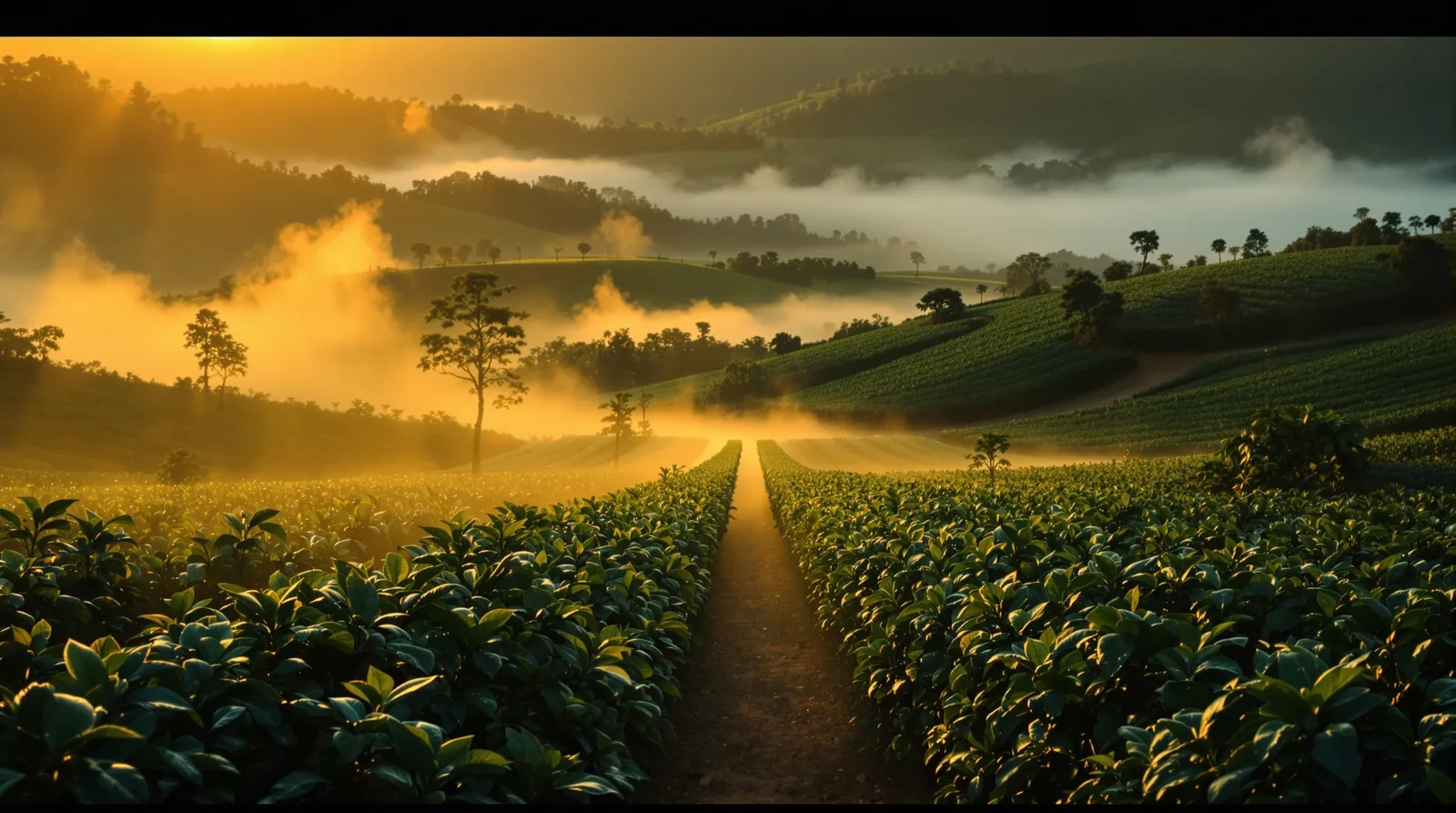
picture a dusty são paulo street, late 1800s. air thick with roasting coffee from somewhere close, that particular smell that gets into your clothes and never really leaves. not romantic. just real. it all technically kicked off in 1727, when lt. col francisco del melo palheta charmed his way into some arabica seeds from french guiana in what is, honestly, one of the better pieces of smuggling history you'll come across. and from there, brazil became the thing it is now. biggest coffee producing country on earth, by a margin that still makes you do a double-take when you actually look at the numbers.
the smuggled seeds that started it all
the version most people know is already good. lt. col francisco del melo palheta, sent to french guiana in 1727 on a diplomatic mission, came back with considerably more than anyone intended. according to driven coffee's origin account, he seduced the governor's wife, who hid coffee cuttings inside a bouquet of flowers and handed them over as a parting gift. whether every detail holds up or not, the outcome isn't in doubt (and look, if you're going to smuggle something across a border, flowers are a genuinely decent choice). those seeds took root in the state of pará, up in brazil's north, and from there coffee moved slowly southward.
not a fast climb. for the first several decades the crop was grown mostly for domestic use by european colonists. but by 1802 exports were gathering momentum, and by 1820 brazil was responsible for roughly 30 percent of global coffee production. staggering pace. for a country that had only been growing the stuff less than a century.
the timing worked out in ways that had nothing to do with brazil's own effort. in the mid-to-late 1800s, coffee leaf rust tore through asian plantations, particularly in ceylon and parts of indonesia, gutting those industries almost overnight. central and south america stepped into the gap. brazil, with its vast interior and relatively cheap labour (much of it, to be clear, enslaved), was best placed to fill the void. by the 1910s brazil was growing somewhere around 80 percent of all the coffee in the world. that figure has come down as vietnam, indonesia, and colombia scaled up, but even today, according to wikipedia's production data, brazil still produces roughly a third of global supply and remains unmatched in total output of green coffee, arabica, and instant coffee. unmatched. full stop.
---
the rise of são paulo's coffee boom
ask anyone in specialty coffee what they associate with são paulo and you'll probably get answers about the restaurant scene, the sheer relentless size, the traffic. but the city's modern identity was largely built on coffee money. and the period that cemented that was the café com leite era.
in the 1880s, brazil's political and economic power was shared between two states. são paulo held the coffee. minas gerais held the dairy. the landowners running these agricultural estates, the so-called agrarian oligarchs, essentially ran the country too (and i mean that literally, not as a loose metaphor). they shaped trade laws, infrastructure investment, and labour policy around the commodity. coffee wasn't just an export product. it was the spine of the entire national economy.
the abolition of slavery in 1888 reshuffled everything. suddenly the labour that had built the industry wasn't bound to it anymore. what followed was a wave of immigration, workers arriving from italy, japan, and germany to work the expanding estates. production surged, and the infrastructure of coffee export, the railways, the warehouses, the port facilities at santos, grew with it. santos remains brazil's primary coffee export port to this day.
a friend of mine spent a week cupping with a co-operative near campinas and described driving through the interior of são paulo state as "looking at money that already got spent." the old fazenda houses with their faded grandeur, the railroads barely used now. beautiful, and slightly melancholy. the bones of a boom, still visible under the skin of the place.
---
a diverse landscape of coffee regions
so here is the thing. brazil is enormous. the country covers roughly half of south america's total landmass, so it should not surprise anyone that "brazilian coffee" isn't a single thing. the regions are genuinely distinct. the coffees reflect that.
one clarification worth making upfront: brazil's altitudes are generally lower than other major arabica origins. compared to ethiopia or colombia, the elevations are modest. são paulo's growing areas reach between 900 and 1,100 metres above sea level, which is considered relatively high for brazil but would be mid-range in east africa. lower altitude means cherry development plays out differently. that shapes the cup. and if you've ever cupped a washed ethiopian next to a brazilian natural back to back, you already know exactly what i mean.
here is a breakdown of the main regions:
| region | state | key characteristics |
|---|---|---|
| sul de minas | minas gerais | sweet, medium body, mild acidity, most planted area |
| cerrado mineiro | minas gerais | dry climate, clean cup, consistent harvests |
| mogiana | são paulo / minas gerais border | deep red soil, full body, rounded sweetness |
| chapada diamantina | bahia | higher altitudes, brighter acidity, more complex |
| montanhas do espírito santo | espírito santo | humid, mist-covered, washed and semi-washed processing |
minas gerais is the big one. it accounts for close to 50 percent of all brazilian coffee production, and the specialty infrastructure here, co-operatives, brokers, associations, exporters, is more developed than anywhere else in the country (i had a wholesale rep from origin coffee in shoreditch once pull out a spreadsheet of minas gerais producers mid-cupping session like it was completely normal behaviour). according to research published in scientific reports, roughly 82 percent of brazil's certified specialty coffee area sits within minas gerais. right.
cerrado mineiro deserves a specific mention. high semi-arid plateau, drier and more predictable than sul de minas. the reliable dry season during harvest is a genuine advantage for natural processing, and the coffees tend to be cleaner and more consistent than people sometimes expect from brazilian naturals. fine, the acidity is never going to thrill you. but the consistency is real.
espírito santo is interesting precisely because it breaks the pattern. it produces mostly robusta, known locally as conilon, and its humid highland sub-regions use washed and semi-washed methods that are unusual for brazil. not much of it lands in specialty roasters' bags yet, but that is slowly changing. and another thing, the specialty world's habit of dismissing robusta wholesale is going to age badly. mark that down.
---
from local brew to global dominance
the numbers are almost absurd when you line them up:
- by 1820, brazil supplied 30 percent of global coffee output.
- by the 1840s, that share had climbed to 40 percent, making brazil the unambiguous world leader.
- by the 1920s, the peak, brazil was producing 80 percent of all coffee consumed on earth.
- today, after 150 years at the top and rising competition from vietnam, indonesia, and colombia, brazil still accounts for roughly one-third of world supply.
- brazil recently overtook the united states to become the world's largest consumer of coffee as well, adding a domestic demand layer that genuinely complicates its export economics.
that last point matters more than it might seem. brazilians drink a lot of coffee, and they drink it differently from the specialty-forward markets of northern europe or the us west coast. traditionally it's sweetened, brewed strong through a cloth filter, drunk in small frequent doses throughout the day. the domestic market's appetite for lower-cost commodity coffee has historically meant brazil's industry optimised for volume over complexity. that is changing, gradually. but the legacy shapes what most of the world's grocery-store blends taste like.
brazil's investment in mechanisation also played a role no other origin has matched. much of the harvest is done by machine, strip-picking entire branches at once rather than selectively hand-picking ripe cherries (anyone who has sorted through a poorly picked natural on a cupping table knows the chaos that can follow). it sacrifices some cup quality but enables the kind of scale no other producing country can touch. brazil has, by some estimates, more than 18 billion coffee trees and around 8 million people working in or around the industry. eight million.
---
unpacking the flavour profiles
here is the thing about brazilian coffee that trips people up. the country produces such a wide range, from anonymous commodity filler to competition-winning naturals, that saying "it tastes like brazil" means very little. i remember pulling shots at a small place in peckham, we had a cerrado mineiro single origin on espresso for about three months, and customers kept being surprised it wasn't "weird" enough to be specialty. as if interesting had to mean sharp.
but there are tendencies. real ones.
- low acidity. the altitude and climate combination produces beans that are rounder and softer than kenyan or ethiopian coffees. no bright citric punch. more of a gentle curve.
- chocolate and nut. milk chocolate, dark chocolate, almond, walnut, peanut. these flavour notes show up consistently across most brazilian lots regardless of region.
- medium to full body. in espresso especially, brazilian beans add weight to a blend. that is why they end up in so many espresso bases. the mouthfeel is substantial.
- natural processing dominates. most brazilian coffee is dried in the cherry, which adds fruit character and sweetness. good naturals from cerrado or sul de minas will show stone fruit, dried fig, or even a hint of dark berry alongside the chocolate base.
- varietals worth knowing. brazil's producers have developed some of the most widely planted arabica varietals in the world. catuai, mundo novo, bourbon, yellow catuai, topazio. the country is genuinely a pioneer here, not just a commodity supplier.
when you pull a shot with a brazilian component in the blend, pay attention to the crema. thick, almost tawny, and it holds. that texture is part of why italian espresso tradition leaned so heavily on brazilian beans for so long. the cup is forgiving. it does not punish small brew errors with sharpness the way a high-acid ethiopian might. and honestly, that is not a flaw. that is a feature. contrarian take, maybe, but i'll stand behind it: the specialty world's obsession with brightness has made a lot of people unnecessarily snobbish about what brazil does well.
have you ever tried dialling in a natural ethiopian on an ek43 on day three of a new season's crop, going full chaos on the grind size, and then pulled a brazilian natural straight after just to recalibrate your palate? night and day. not better or worse. just different tools for different things.
---
faq
why is brazil the world's largest coffee producer?
a combination of scale, climate, geography, and infrastructure. brazil has the land, it sits in the right climate band, and it invested heavily over two centuries in getting coffee from farm to port. the abolition of slavery in 1888 brought a labour influx from europe and asia that accelerated production further (and it is worth sitting with the violence underneath that history, not just the romance of the commodity). no other country has had the same combination of factors over the same sustained period.
is brazilian coffee good for specialty coffee?
yes. genuinely. the reputation for mediocrity comes from brazil's role as the backbone of commodity blends, which is real but incomplete. specialty producers in cerrado mineiro, chapada diamantina, and the highlands of minas gerais are producing some remarkable lots, particularly naturals with clean chocolate and stone-fruit character. if the bag says something specific, a named farm, a named region, a processing method, it's worth taking seriously. we ran a fazenda santa inês bourbon on filter at the bar for six weeks once and had three customers ask what the "fancy single origin from africa" was. so.
what processing methods are used in brazil?
the vast majority of brazilian coffee is naturally processed, dried in the cherry under the sun. pulped natural (also called honey process) is also common, where the skin is removed but some mucilage is left on the bean during drying (this is sometimes the sweet spot for espresso blends, fruit character without the wilder fermented edge). washed coffees exist but are a minority, mostly in espírito santo's higher, wetter sub-regions. the natural dominance gives brazilian coffee its characteristic sweetness and body.
what coffee varietals come from brazil?
several that now grow all over the world were either developed in brazil or refined here. mundo novo, a cross between bourbon and typica, was developed by brazilian agricultural scientists. caturra, a dwarf mutation of bourbon, originated in brazil. catuai, one of the most widely planted varietals globally, came from a brazilian breeding programme crossing mundo novo with caturra. the country's contribution to arabica genetics is genuinely significant. more significant, probably, than most casual coffee drinkers realise.
how does brazilian coffee compare to colombian or ethiopian coffee?
brazilian coffee tends to be lower in acidity, heavier in body, and more chocolate-forward than either colombian or ethiopian coffees. colombian arabicas, grown at higher altitudes, usually show brighter fruit and caramel notes. ethiopian coffees, depending on region and process, can be floral, tea-like, or intensely fruity in ways brazilian coffees rarely are. brazil is the reliable, grounding base note. ethiopia and colombia are the top notes. many of the best espresso blends use all three for exactly that reason. and if you've ever stood at the bar at monmouth in borough market or somewhere like sey in bushwick watching a barista build a blend on paper, that three-origin logic tends to show up again and again.
so yeah. from a handful of smuggled seeds to roughly a third of everything the world drinks. the history is messy and complicated and occasionally genuinely cinematic. and next time someone tells you brazilian coffee is "just for blending," hand them something from chapada diamantina and let the cup do the talking.