choosing the right espresso machine for 300 cups daily
for cafes serving up to 300 cups daily, selecting an espresso machine isn't just about capacity but also efficiency and speed. understand the best options for high-volume.
in this guide
- understanding your daily demand
- the 2-group versus 3-group debate
- considering semi-automatic versus automatic options
- real-world insights from notting hill cafes
- top recommended models for high-volume cafes
- faq
- how often does a commercial espresso machine need servicing at 300 cups a day?
- is it worth buying a used commercial machine to save money?
- how do i know when my current machine is the problem rather than something else?
- does my grinder matter as much as my espresso machine?
- what's the biggest mistake operators make when choosing a high-volume machine?
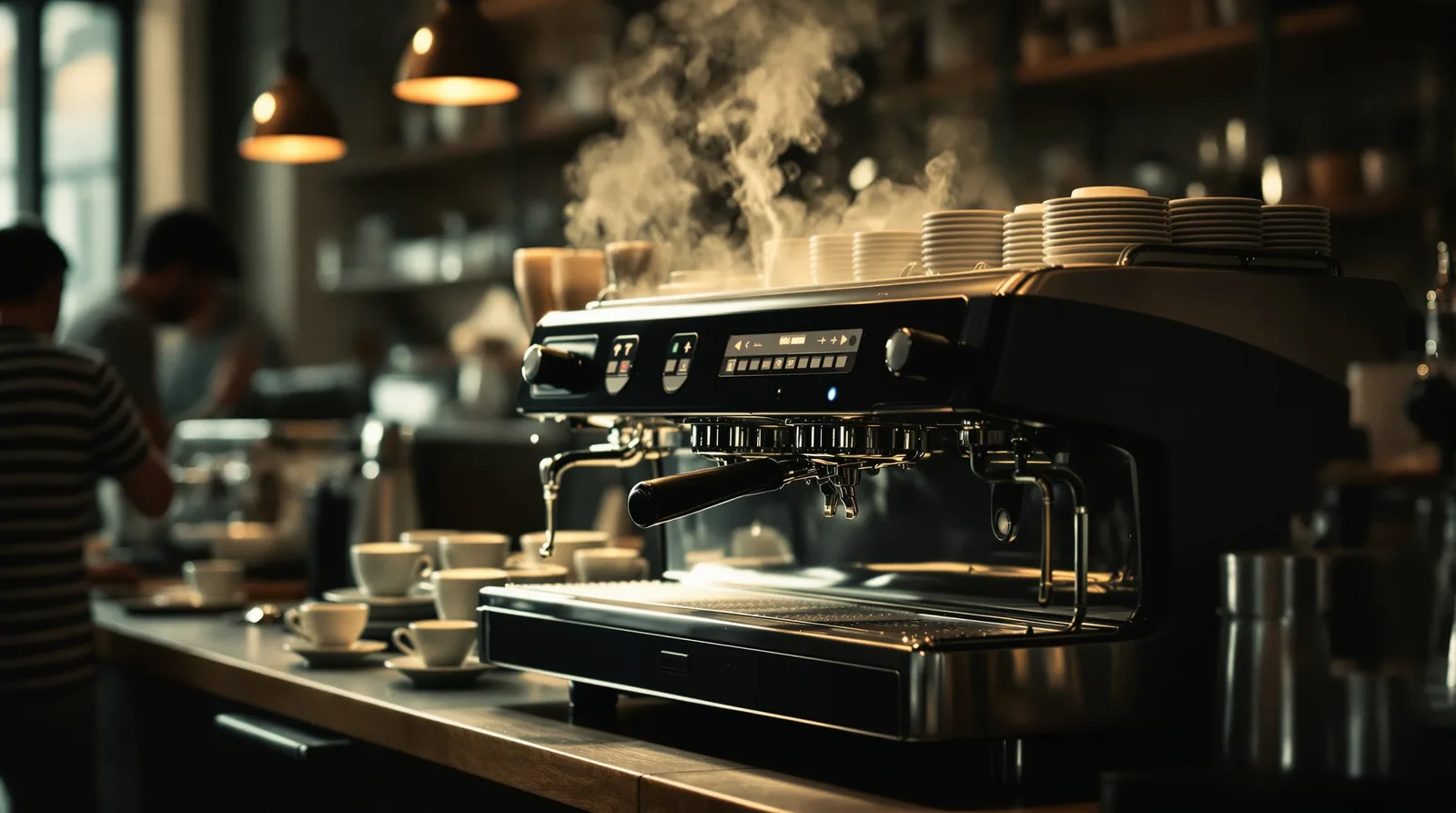
in the heart of notting hill, the early morning queue snakes out the door of bean scene. the air buzzes with the familiar hiss and clatter of the espresso machine. baristas work in tandem, navigating around a gleaming 3-group beauty that stands as the cafe's backbone. for a spot serving 300 coffees a day, the choice of this machine wasn't random. each shot of espresso pulled is a testament to understanding peak-hour demands and ensuring no customer waits too long for their caffeine fix.
understanding your daily demand
three hundred cups sounds like a clean number. it isn't, really. what matters far more is how many of those cups happen between 8am and 9:30am, when the queue backs up past the door and every second of idle machine time costs you a paying customer.
estimating peak-hour output is where most cafe owners get it wrong. they divide 300 by eight hours, arrive at roughly 37 cups per hour, and think they're fine. but if 120 of those drinks land in a 90-minute morning rush, you're not running a 37-cup-per-hour operation. you're running an 80-cup-per-hour operation for a very stressful chunk of the day.
the practical formula is this: count your drinks during your single busiest hour, then multiply by 1.5. that's the minimum throughput capacity you need your machine to handle comfortably. not occasionally manage. comfortably handle, shot after shot, without temperature drop or recovery lag.
visions espresso's buying framework puts it plainly: undersizing your machine costs more than oversizing. lost sales, thermal stress on the boiler, and a shortened equipment lifespan add up faster than you'd think. a machine that's constantly working at its ceiling will start showing the strain within eighteen months.
there's also the question of drink type. if your 300 cups skew heavily toward milk-based drinks, like flat whites and lattes, your steam demand is going to be punishing. a machine that pulls shots fine but can't keep up with steaming will create a different kind of bottleneck. espresso-based drinks make up around 70-80% of total sales in most coffee shops, which means steam capacity isn't an afterthought. it's half the job.
---
the 2-group versus 3-group debate
here is the thing: at exactly 300 cups a day, you're sitting right on the fence. the dazheng buyer's guide classifies 150-300 cups as the territory for a 2-group commercial machine, while 300-600 cups pushes you toward 3-group or automatic. so the honest answer is: it depends on your peak hours, your staff count, and how much buffer you want.
a 2-group machine handles 80 to 150 drinks per hour when run by a competent barista. that's enough for many 300-cup-a-day cafes with a spread-out trade. but if your morning rush hits 100 drinks in an hour, you're already at the ceiling, and any hiccup, a slow grind, a blocked spout, a customer who can't decide, tips you over.
a 3-group gives you headroom. it lets two baristas work simultaneously without fighting over equipment. it means one group can be backflushing while the other two keep pulling. and it means when your best barista calls in sick and you're running the floor with one less pair of hands, the machine isn't the thing that breaks your service.
the tradeoffs are real though.
- a 3-group machine is physically larger. measure your bar before you fall in love with anything.
- it draws more power. check your site's electrical supply early, not after you've signed a purchase order.
- it costs more upfront, typically 30-50% more than a comparable 2-group.
- water consumption is higher, which matters if you're paying for filtration cartridges.
- cleaning time increases. more group heads, more daily backflushing, more labour at close.
a 2-group can be the smarter call if your trade is genuinely spread across the day and your peak hour stays under 100 drinks. but if you're reading this because your current machine is already struggling, go 3-group. you won't regret the headroom.
---
considering semi-automatic versus automatic options
the word "automatic" in espresso machine terminology covers a lot of ground, and it's worth being precise about what you're actually buying.
semi-automatic machines require the barista to start and stop the shot manually. the pump runs when they activate it; they stop it based on yield, time, or visual cues. this gives experienced baristas real control over extraction but also means every shot is only as consistent as the person pulling it. on a busy saturday with a newer staff member, that variability shows up in the cup.
automatic machines (sometimes called volumetric) use pre-programmed dose volumes. the barista locks in the portafilter, hits a button, and the machine stops the shot at a set water volume. this doesn't eliminate skill requirements, grind setting, tamping pressure, and milk work still matter enormously, but it removes one variable and speeds up workflow during peak hours.
super-automatics grind, dose, tamp, and extract without barista input. they're faster, require less training, and produce drinks of acceptable consistency. they also strip out a lot of what specialty coffee is actually about. most independent cafes serving quality espresso won't touch them.
for a 300-cup-a-day operation with trained staff, a volumetric automatic is usually the sweet spot. the nuova simonelli aurelia wave, for example, includes auto-purging and programmable shot volumes alongside features like soft infusion that extend the machine's range. if you have high commuter traffic and your team includes people still building their skills, the ergonomic and automation assists genuinely matter.
one practical note: auto steam wands (sometimes called auto-frothers) are a legitimate time-saver at volume. a skilled barista produces better milk texture, but an auto wand on a busy group head keeps pace when the queue is ten deep. this isn't a compromise on quality so much as an honest acknowledgment of what peak service actually looks like.
---
real-world insights from notting hill cafes
a manager at a small roaster-retailer on westbourne grove told me something that stuck. they'd spent months agonising over whether to go 2-group or 3-group when they opened, eventually choosing a 2-group sanremo opera on the basis that their site wasn't that big and they didn't want to over-invest. by their sixth month, the machine was being pushed hard every morning. "we were pulling shots back to back with no recovery time," she said. "the boiler was doing its best but the drinks at 9:15 just weren't the same as the drinks at 8:00." they replaced it with a 3-group before their first anniversary.
the lesson isn't that 2-group machines are bad. it's that 300 cups can hide a brutal morning rush, and when you're in it, you notice every degree of temperature inconsistency in the shot.
a separate conversation worth having: the community discussion on barista exchange around machine reliability is illuminating. operators who'd invested in prestige machines without checking on local service coverage found themselves in difficult positions when something went wrong. one forum contributor pointed out that a machine with exotic electronics and no local technician is functionally worse than a simpler machine with service two streets away. that's not an exaggeration. a three-week wait for a part, mid-trade, is catastrophic.
portobello road has a few cafes that have quietly settled on mid-tier italian machines for exactly this reason: reliable, repairable, and not so precious that a firmware issue takes down service for a fortnight.
---
top recommended models for high-volume cafes
these are the machines that come up most often in conversations with operators running 250-400 cup days. not necessarily the flashiest, but consistently capable.
- la marzocco linea pb (2 or 3-group), the benchmark for a reason. dual boilers, excellent temperature stability, modular enough for on-site servicing. the 3-group version is what you'll find behind the bar at some of london's busiest specialty spots. not cheap, but the total cost of ownership over five years is often lower than budget alternatives that need more frequent repair.
- nuova simonelli aurelia wave (2 or 3-group), strong choice for high-traffic sites. soft infusion, auto-purging, ergonomic group height. the digit version adds programmable dose control. common in airport concessions and busy urban cafes for a reason.
- victoria arduino black eagle maverick (2 or 3-group), gravimetric dosing built in, which removes a lot of the shot-to-shot variance at volume. beloved by baristas who care about precision. heavier investment upfront, but the shot consistency at 11am after 150 drinks is genuinely impressive.
- sanremo opera 2.0 (2-group), well priced for the build quality. solid thermal stability, intuitive for baristas moving from other machines. a good call if your trade is steady rather than spike-heavy and your budget doesn't stretch to the la marzocco tier.
- eversys cameo (super-automatic, 2-group), for operators where staffing is unpredictable or barista training time is limited. produces consistent drinks across a full menu. not for cafes where craft is the brand identity, but worth considering if throughput and consistency are the primary needs.
| model | groups | best for | approx. price range | serviceability |
|---|---|---|---|---|
| la marzocco linea pb | 2 or 3 | specialty, high-skill teams | £12,000-£20,000+ | excellent uk coverage |
| nuova simonelli aurelia wave | 2 or 3 | mixed-skill, high volume | £8,000-£15,000 | good uk coverage |
| victoria arduino black eagle | 2 or 3 | precision-focused cafes | £14,000-£22,000+ | good coverage |
| sanremo opera 2.0 | 2 | steady trade, mid-budget | £6,000-£10,000 | moderate uk coverage |
| eversys cameo | 2 | high throughput, lower training | £18,000-£25,000 | growing uk network |
one note on budget: the machine price is only part of what you're signing up for. water filtration, installation (commercial power draw, plumbing, drain), and a service contract should all be in your planning from day one. a decent filtration setup runs a few hundred pounds but protects a five-figure investment from scale damage. annual professional servicing costs roughly a few hundred pounds per group head at commercial volumes. factor it in.
---
faq
how often does a commercial espresso machine need servicing at 300 cups a day?
at that volume, you're looking at a professional service visit at minimum once a year, ideally twice. daily backflushing and weekly cleaning are non-negotiable on top of that. most la marzocco and nuova simonelli dealers offer service contracts. they're worth it: a machine that fails during a friday morning rush will cost you more in lost revenue and stress than a year's service contract.
is it worth buying a used commercial machine to save money?
sometimes, but approach it carefully. a used machine from a reputable dealer who has serviced and reconditioned it is a different proposition from a second-hand machine off a classified listing with no service history. check the boiler condition, the group head gaskets, and whether parts are still available for that model. older machines from discontinued lines can be cheap to acquire and expensive to maintain.
how do i know when my current machine is the problem rather than something else?
inconsistent shot times at the same grind setting, temperature drops during peak service, and increasing repair frequency are the clearest signs. if your baristas are complaining that the machine feels "off" at 9am compared to 11am, that's usually thermal recovery struggling with demand. a machine audit by a qualified technician can confirm it, and many dealers offer this as part of a pre-purchase consultation.
does my grinder matter as much as my espresso machine?
yes. this is the point that gets skipped in machine-focused conversations. a brilliant espresso machine fed inconsistent, poorly ground coffee will produce inconsistent espresso. at 300 cups a day, you need a grinder (or grinders) that can keep up with demand without overheating and that hold their calibration across a full service. budget for the grinder at the same time as the machine, not as an afterthought.
what's the biggest mistake operators make when choosing a high-volume machine?
buying on brand prestige without checking local service availability. spending significantly more on a machine than your operation needs is one version of this. but the more costly version is choosing a machine with no certified technician within reasonable distance. when something goes wrong mid-week, the brand on the front panel matters a lot less than whether someone can be there tuesday morning with the right part.
the right espresso machine can turn chaos into crafted efficiency. it's not just about keeping pace but about making every shot count. at 300 cups a day, this choice defines the rhythm of your service and the satisfaction of your patrons. whether it's a 2-group or a 3-group powerhouse, the right machine is the unseen conductor of your cafe's symphony.