colombia's record coffee year and your cup
colombia's coffee harvest hits a historic high, impacting global markets. from the steep slopes of tolima to your local café, this surge changes the coffee game.
in this guide
- colombia's bountiful harvest: what's behind the numbers
- the economic paradox: abundance meets adversity
- global market ripple effects: what this means for prices
- a closer look at the tolima region: heart of the surge
- from bean to brew: what changes in your cup
- faq
- why did colombia have such a big harvest in 2025?
- if colombia produced record amounts of coffee, why are prices still high?
- are colombian farmers actually benefiting from the boom?
- what happens to colombian coffee supply in 2026 and beyond?
- does this affect what i should buy at a specialty café or roaster?
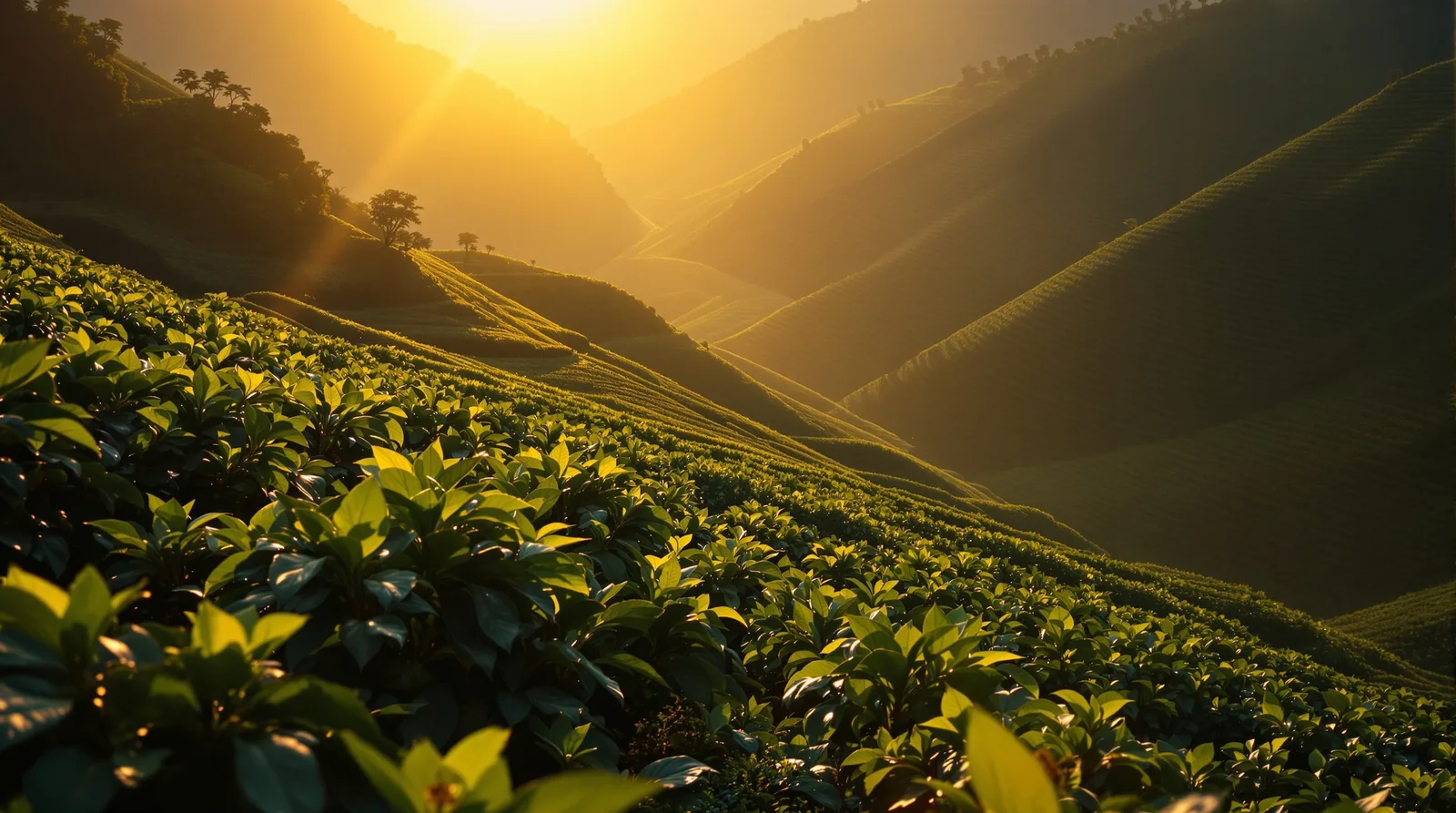
in the lush, misty hills of tolima, the scent of ripe coffee cherries hangs in the air. mary luz pérez arrubla and her brother rodrigo, fourth-generation farmers, are overseeing a harvest like no other. their family plots are bursting with fruit, thanks to a rain-blessed season that has pushed colombia's coffee output to a record high. but as the world indulges in this bounty, the local reality is more complex. skyrocketing prices and the struggle to hire pickers paint a picture of a boom with hidden strains.
colombia's bountiful harvest: what's behind the numbers
the numbers are genuinely striking. colombia's coffee output climbed to record levels through 2025, driven by something deceptively simple: it rained at the right times, in the right places. high-altitude growing regions across antioquia, huila, nariño, and tolima received the kind of sustained, well-timed rainfall that coffee trees absolutely love. the cherries set. they filled out. and farmers who had spent years grinding through underperforming seasons suddenly had more fruit on their trees than their infrastructure could comfortably handle.
this isn't entirely a story about luck, though. colombia grows washed arabica almost exclusively, a deliberate identity the country has protected for over a century. the national federation of coffee growers (fnc), founded in 1927 and owned entirely by its more than 500,000 cafetero members, has spent decades pushing quality standards and tree renovation programs. those renovated, higher-yielding castillo and cenicafé 1 varieties responded well to the favorable season. good rain plus better trees plus years of agricultural investment. that combination produced the surplus.
but here is the thing: colombia's record output didn't happen in a vacuum. brazil and vietnam, the world's two largest producers, were hammered by el niño-driven drought in the same period. their shortfalls made colombia's surplus hit global markets at a moment of genuine supply anxiety. the timing amplified everything.
one number worth holding onto: arabica hit over $4 per pound on the c market in early 2025, the highest price since 1977. record colombian output arriving into that environment is not a soft landing for prices. it's a complicated collision.
---
the economic paradox: abundance meets adversity
you'd think a record harvest at record prices would mean record profits for farmers. it should. the math looks obvious from the outside. but stand on a steep plot near líbano and talk to anyone who actually harvests the stuff, and the picture looks very different.
the cost of picking has roughly doubled since before the pandemic. according to reporting from the guardian, harvesting a kilo of coffee that previously cost 450,000 to 500,000 colombian pesos now runs closer to 1,000,000 pesos. two main forces drove that. colombia raised its minimum wage. and rural colombia is running out of young people willing to do the backbreaking, repetitive work of hand-picking cherries on 30-degree slopes.
the harvest window also stretched longer than usual. when cherries ripen in staggered waves across a large crop, pickers have to return to the same trees multiple times, which sounds fine until you realise you're paying daily rates for each pass. a concentrated harvest is cheaper to manage. this one wasn't.
so some farmers faced a genuinely painful calculation: pay the going rate for pickers and break even (or worse), or leave fruit on the tree. some left fruit on the tree. the guardian reported that portions of the crop rotted in the field. a record harvest, and some of it went to waste.
production costs in colombia remain among the highest of any major origin, according to usda analysis. fertiliser prices have eased slightly from their 2022 peak, but labour is now the dominant pressure. the paradox lands hard: more coffee, higher prices, thinner margins.
---
global market ripple effects: what this means for prices
colombia holds a specific and somewhat irreplaceable position in global coffee trade. it's the world's largest producer of washed arabica, and its existing free trade agreement with the united states gives it more trade stability than origins currently caught in tariff disputes. that matters a lot right now. brazil faced significant us import tariffs during the same period. vietnam too. roasters who had built sourcing programs around those origins had to reconsider quickly, and colombia was one of the few large-volume alternatives with both quality and trade access.
here's a rough comparison of how the major origins stacked up during the 2025 cycle:
| origin | 2025 output trend | us tariff exposure | arabica / robusta |
|---|---|---|---|
| colombia | record high | low (fta in place) | 100% arabica |
| brazil | below average (el niño) | high (tariffs imposed) | mix |
| vietnam | recovering, up ~7% yoy | high (tariffs imposed) | predominantly robusta |
| ethiopia | stable | moderate | arabica |
that "tariff arbitrage" advantage for colombia won't last forever, and it doesn't fully offset internal cost pressures. but in a market where buyers were scrambling, colombian green coffee became more attractive to importers who previously leaned harder on brazilian natural arabica for blends.
the c market price hit an all-time high of $4.08 per pound in february 2025, then softened through the year as colombian supply increased. by may 2026, the external market price for colombian coffee sat around $3.25 per pound. still historically high. still more than most roasters budgeted for two years ago.
the downstream effect on retail is real. roasters absorbed some of the increase; cafes absorbed some; consumers absorbed the rest. a flat white that cost £3.50 in 2022 now sits closer to £4.50 in many independent shops across london, manchester, and edinburgh. that's not purely colombian, but colombian pricing is part of the story.
---
a closer look at the tolima region: heart of the surge
tolima sits in the central andes, south of bogotá, and it is one of colombia's most storied growing departments. the town of líbano, where the pérez arrubla family farms, is typical of the region: steep slopes, elevations between 1,400 and 2,000 metres, rich volcanic soil, and a bimodal rainfall pattern that, when it cooperates, produces some of the cleanest, most structured washed coffees in the country.
this past season, tolima cooperated. the rains came in the right windows. cherries developed slowly at altitude, building sugars and acidity. farmers who had done tree renovation work in recent years saw their newer plants deliver for the first time at proper volume. a roaster friend who sources directly from a cooperative outside planadas told me the separation tables at the wet mill were running almost continuously through peak harvest. "we had more cherry than we could process without rushing," she said. rushing is the enemy of quality in washed processing, so it was a genuine logistical headache dressed up as good news.
tolima's challenges mirror the national ones, but with extra intensity. the region has historically relied on seasonal migrant workers from other departments. that internal labour migration has slowed as urbanisation pulls younger colombians toward bogotá and medellín. some farms have started experimenting with mechanical aids on more accessible plots, but the steep terrain that produces tolima's best coffee is almost impossible to mechanise. the hands that pick it have to be human.
unesco recognised colombia's coffee cultural landscape for its symbolic significance. tolima sits at the heart of that recognition. the identity is real. so is the strain.
---
from bean to brew: what changes in your cup
if you've been ordering colombian single origins at a good roaster over the past year, you may have noticed more of them on the menu. that's not coincidence. greater availability of green coffee from colombia meant roasters who'd been allocating colombian lots carefully could finally take on more volume or try producers they'd been watching from a distance.
the quality story is actually quite good, for a few reasons:
- volume doesn't automatically dilute quality. because colombia's record harvest came from better-than-average climatic conditions, not shortcuts in farming or processing, the underlying cup quality held up. heavy, even rains at the right growth stages produce denser beans. denser beans roast more predictably.
- specialty channels stayed selective. the cup of excellence colombia auction remains one of the most competitive in the world. producers like diego samuel bermúdez at finca el paraíso and wilton benitez at granja paraíso 92 didn't suddenly compromise their experimental processing work because the mainstream harvest surged. if anything, the contrast sharpened.
- more lots reached export. with larger harvests, exporters had more volume to sort, which meant a wider range of separated microlots reaching international buyers. more choice for roasters. more colombian diversity on café menus.
- prices stayed elevated at retail. more supply did soften the green price somewhat from its february 2025 peak, but not enough to bring roaster costs back to pre-2023 levels. don't expect your local specialty café to drop the price of a filter.
a few things to look for in the cup itself:
- washed tolima and huila lots from this harvest tend toward bright malic acidity, stone fruit, and a clean caramel finish. longer, wetter cherry development builds complexity without tipping into ferment.
- natural and honey-processed colombian lots, still a smaller share of overall production, showed more intensity than usual this year. more sugar in the cherry means more to work with in processing.
- screen size tends to run larger with well-nourished crops. bigger, denser beans hold heat in the roaster differently. if your regular colombian roast tastes slightly different, that's a plausible reason.
the "colombian supremo" label you'll still see on supermarket cans, by the way, is purely a screen-size grade, not a quality indicator. a supremo bean is simply one large enough not to fall through a 17/64-inch screen. it tells you nothing about region, altitude, variety, or process. worth knowing when you're comparing it to what your local roaster is offering.
---
faq
why did colombia have such a big harvest in 2025?
a combination of well-timed rainfall, investment in tree renovation programs over the previous decade, and the relative misfortune of competing origins. brazil and vietnam both suffered from el niño-related dry spells, which reduced their output and drew more attention to colombian supply. colombia's high-altitude regions received the kind of consistent moisture that promotes strong cherry development, and newer, higher-yielding castillo and cenicafé 1 cultivars delivered volume that older tree stock wouldn't have managed.
if colombia produced record amounts of coffee, why are prices still high?
because supply and demand don't reset neatly. arabica prices hit historic highs in early 2025 primarily because of shortfalls in brazil and vietnam, tariff disruptions, and general supply chain volatility. colombia's record output helped soften prices from that peak, but not enough to offset the structural cost increases roasters had already baked into their pricing. the c market price remained above $3 per pound well into 2026. high by any historical standard.
are colombian farmers actually benefiting from the boom?
some are, particularly those with lower-cost operations or better access to specialty markets. but many are squeezed. harvesting costs doubled relative to pre-pandemic levels due to labour shortages and longer picking windows. production costs remain high. some farmers couldn't afford to harvest all their cherry and lost fruit to waste. the coffee intelligence analysis describes it as a "paradoxical moment of surplus" with real risks ahead.
what happens to colombian coffee supply in 2026 and beyond?
early indicators from radarcrop suggest colombia's 2026 harvest is running approximately 14% below the 2025 record. physical availability is tightening again. climate stress is the longer-term threat: average mountain temperatures in colombia's coffee belt have risen roughly 1.2°c since the 1980s, and annual sunshine hours have decreased by around 19%. that combination pushes the optimal growing altitude higher and compresses the available land. the record year may prove to be an outlier, not a new baseline.
does this affect what i should buy at a specialty café or roaster?
practically, yes. colombian lots are more plentiful on menus right now than they were in 2023 or early 2024, and the cup quality from this harvest is genuinely strong. if you've been curious about regional colombian differences, this is a good moment to compare a tolima against a nariño against a huila at a roaster who sources by department. the harvest gave buyers more to work with. take advantage of it while availability holds.
so as you sip your next colombian brew, remember it's not just about the flavours hitting your tongue. it's a story of abundant harvests and economic tensions balancing on the edge. this year's coffee might be rich, but it carries the weight of a paradox: prosperity wrapped in challenge.