which coffee labels actually matter in specialty brews?
ever wondered which coffee labels deserve your attention? from the buzzword-laden bags to those flaunting serious credentials, we dig into what labels truly mean.
in this guide
- the allure of the cup of excellence
- anaerobic processing: a game-changer or a gimmick?
- decaf: breaking the stigma
- budget vs luxury: do you get what you pay for?
- personal stories: barista picks and consumer tips
- faq
- is cup of excellence coffee always better than non-coe specialty coffee?
- does anaerobic processing actually change the taste, or is it just a selling point?
- what is the best decaffeination method to look for?
- why does specialty coffee cost so much more than supermarket coffee?
- can i tell a good coffee label from a bad one without being an expert?
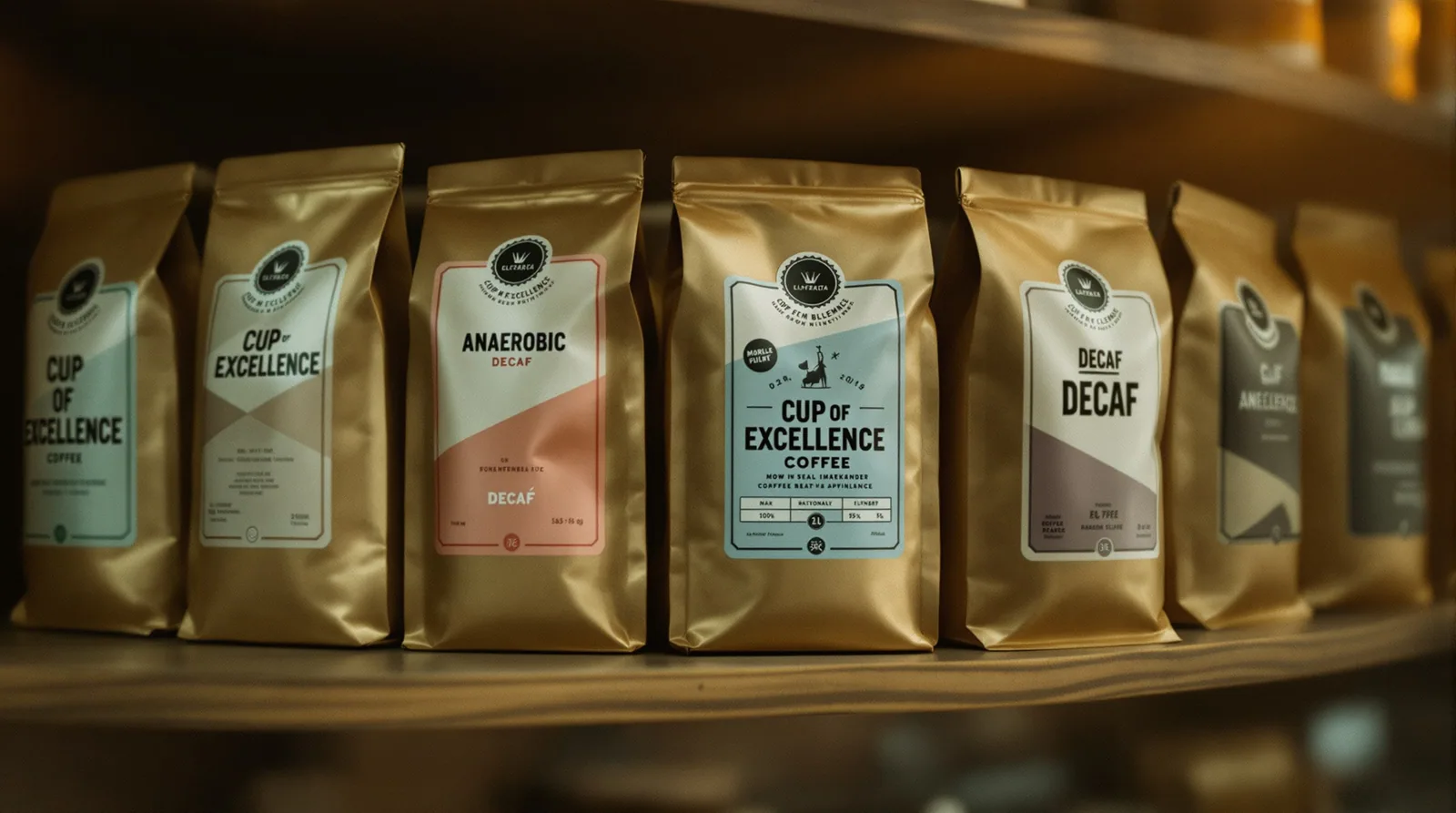
ever braved the bustling aisles of your local coffee haunt only to be stumped by the avalanche of labels? cup of excellence, anaerobic, decaf, each bag promises something unique. but what really defines a great coffee? let's start with a real gem: stumptown coffee roasters' trapper creek decaf blend. the aroma wafts up as the barista grinds it, filling the room with a warm, nutty fragrance. it's a medium roast, gentle yet full-bodied, promising a smooth, jitter-free sip. elsewhere, the debate rages on whether these labels are worth the extra quid.
the allure of the cup of excellence
there is a moment during a good cupping session when a coffee just stops you. you put the spoon down. the room noise fades. that is roughly what the cup of excellence programme is designed to find, at scale, with rigour.
run by the alliance for coffee excellence, the coe competition sends international panels of trained judges into producing countries to cup and score lots, blind, across multiple rounds. coffees that score 87 points or above get the label. the winning lots then go to auction, where roasters from tokyo to toronto bid for them. the traceability is real: you can look up the producer, the farm, the region, the score. that is not marketing. that is a paper trail.
here is the thing, though. a coe label on a bag in a shop does not tell you how that coffee was stored, how long ago it was roasted, or whether the roaster treated it well. the specialty coffee sourcing guide from ebru coffee co puts it plainly: if a label is all mood and no information, skip it. a roaster worth buying from will print the roast date, the origin detail, sometimes the cupping score. coe provenance plus a roast date within the last four weeks? that bag is almost certainly worth the premium. coe provenance plus no date and a vague "notes of chocolate" descriptor? be more careful.
what the label genuinely signals is producer investment. farmers who enter coe spend money and time selecting and processing their best lots. winning changes their income. that chain of incentive matters for long-term quality. so yes, pay the extra for a cup of excellence lot from a roaster you trust. just check the roast date first.
---
anaerobic processing: a game-changer or a gimmick?
the word "anaerobic" gets thrown around on bags like it automatically means better. it does not. what it means is that the coffee cherry (or just the bean inside) was fermented in a sealed, oxygen-free environment, usually a tank, before drying. the absence of oxygen changes the microbial activity during fermentation, which changes the acids and esters that develop, which changes the flavour. sometimes dramatically.
at its best, anaerobic processing produces coffees that taste like nothing else: tropical fruit, fermented plum, hibiscus, a kind of wine-like weight that washed coffees rarely hit. coffee review's 2026 decaf round-up scored five anaerobic-processed decaf lots at 93 to 94 points, including a red bourbon from producer wilton benitez that reviewers described as "brilliantly eccentric." that is not hype. benitez has built a reputation across the specialty world precisely because his process is meticulous, not just novel.
at its worst, anaerobic processing is a mask. a mediocre bean put through a badly controlled ferment produces something funky in an unpleasant way: barnyard, astringency, a sourness that sits wrong. the process amplifies what is already there. good fruit in, more interesting fruit out. dodgy raw material in, more aggressively dodgy cup out.
so how do you tell a good anaerobic from a bad one? a few things to look for:
- named producer or cooperative, not just a country
- specific variety listed (pink bourbon, red bourbon, gesha, not just "heirloom")
- fermentation time or processing detail mentioned, even briefly
- a roaster with a track record, not one that launched six months ago with a bag full of jargon
the label alone tells you nothing. the label plus context tells you a fair amount.
---
decaf: breaking the stigma
decaf has a reputation problem it is finally starting to shake. for years, the category was dominated by commodity beans stripped of caffeine via harsh chemical solvents, then roasted dark to cover the damage. the result was flat, acrid, slightly sad. that version still exists. but it is not the whole story anymore.
modern specialty decaf starts with good green coffee and uses either the swiss water process (no chemicals, water and carbon filters), sugarcane ethyl acetate (a naturally derived solvent, widely used in colombia), or supercritical co2 extraction (expensive, precise, increasingly popular). the decaffeination method matters, but it matters less than the quality of the bean going in. a reddit thread in r/pourover made this point well: a los nogales lot processed via ea decaf wasn't ea at all, yet it won the 2024 us brewers cup. the bean, not the process badge, carried it.
that win was historic. weihong zhang, founder of blendin coffee club in houston, competed with a decaf typica variety at the sca us brewers cup and took the title. perfect daily grind covered it in full. a decaf on a brewers cup stage, winning, not as a novelty entry but on merit. the specialty industry noticed.
for everyday buying, the practical upshot is this: specialty-grade decaf from a roaster who cares is genuinely good. serious eats' decaf testing found that supermarket decafs (folgers, maxwell house, dunkin') were consistently flat, bitter, or stale, while roaster-led options held their own against caffeinated equivalents. the gap is real. so is the price difference, but it is not as wide as it used to be.
---
budget vs luxury: do you get what you pay for?
honestly, sometimes. not always. the relationship between price and quality in coffee is real up to a point, then it gets complicated by rarity premiums, auction speculation, and branding.
here is a rough breakdown of what price tiers actually tend to deliver:
| price tier (per 250g) | what you're usually getting | worth it? |
|---|---|---|
| under £8 / $10 | commodity grade, often dark-roasted to mask defects | rarely, for flavour |
| £8-14 / $10-18 | entry specialty, basic traceability, decent freshness | often yes |
| £14-22 / $18-28 | single origin, named farm or coop, score 85-89 | usually yes |
| £22-35 / $28-45 | coe lots, experimental process, micro-lot | yes, if roast date is recent |
| £35+ / $45+ | auction lots, geisha, extreme rarities | depends on your priorities |
the middle tier is where most of the genuine value lives. a £16 bag from a good independent roaster, single origin, freshly roasted, will beat a £40 coe lot that has been sitting in a warm shop since march. freshness is not a luxury feature. it is the baseline.
budget decaf is a slightly different conversation. kicking horse decaf dark roast at around $15 gets consistent praise for the price point, using swiss water process on decent-quality beans. it is not revelatory, but it is honest. the budget end of caffeinated specialty is harder to navigate well; the budget end of decaf has a few reliable options because the swiss water process certification gives you a minimum quality signal the regular commodity market lacks.
what you should never pay a premium for: vague descriptors with no data, "bold" as a flavour note, any bag that does not print a roast date.
---
personal stories: barista picks and consumer tips
ask a barista at a good shop what decaf they actually drink at home and you often get a more useful answer than any review. a barista at prufrock coffee on leather lane in london once told me she brews decaf for her afternoon v60 not out of necessity but because some of the ea-processed colombian lots she had been tasting were genuinely more interesting than half the caffeinated menu. "people think it's a compromise," she said, wiping down the bar. "some of this stuff is just better coffee."
that tracks with what is happening at the roaster level. companies like frequent coffee in san diego and flower & moon in oakland now build their entire identity around specialty decaf, sourcing anaerobic-processed lots that would hold their own in any blind cupping. when a roaster's whole business depends on decaf being excellent, the incentive structure shifts. they are not offering decaf as an afterthought.
for anyone trying to get more out of their coffee buying, here is what actually works:
- buy from roasters who print the roast date visibly on the bag. if it is not there, ask why.
- start with a £14-18 single origin before spending £40 on a coe lot. learn what you like first.
- try at least one specialty decaf from a dedicated roaster before writing the category off.
- ask your local cafe what they are currently dialing in. not the menu. the stuff they are excited about right now.
- ignore "notes of dark chocolate and caramel" on any supermarket bag. those are aspirational, not descriptive.
the best cup you will have this month probably does not come from the most expensive bag on the shelf. it comes from a freshly roasted single origin bought from someone who can tell you when it arrived green, where it was grown, and why they chose it.
---
faq
is cup of excellence coffee always better than non-coe specialty coffee?
not automatically. coe is a competition that identifies exceptional lots from specific harvest seasons. a well-sourced 87-point ethiopian from a trusted roaster, bought fresh, can be more satisfying than a coe lot from two years ago that has been badly stored. the label signals rigorous selection at origin; it does not guarantee what happens after. use it as a starting point, not a guarantee.
does anaerobic processing actually change the taste, or is it just a selling point?
it genuinely changes the taste. fermentation in sealed, oxygen-free tanks alters the microbial environment around the coffee, which produces different organic acids and esters, which register as different flavours in the cup: tropical fruit, florals, a heavier body. the risk is that a badly managed ferment produces off-flavours instead. good anaerobic coffee from a careful producer is distinctive and worth trying. bad anaerobic coffee tastes like a mistake. the process is the method; the quality is still down to the people doing it.
what is the best decaffeination method to look for?
swiss water process and sugarcane ethyl acetate (ea) are the two most common in specialty. both preserve flavour reasonably well when the base coffee is good. co2 extraction is considered the most precise but is less widely used because of cost. the honest answer is that the quality of the green coffee matters more than the decaf method. a mediocre bean processed via co2 is still a mediocre cup. that said, avoid anything that does not disclose its decaffeination method at all.
why does specialty coffee cost so much more than supermarket coffee?
several things drive the gap: higher prices paid to producers for better-quality lots, smaller batch roasting, faster turnover (freshness has a cost), and the labour involved in sourcing and quality control. some of the premium is justified by what is in the bag. some of it is brand margin. ebru coffee co's breakdown is a useful read on where the money actually goes. the short version: if the bag tells you the farm, the variety, the process, and the roast date, the premium is probably real. if it just says "premium blend," it probably isn't.
can i tell a good coffee label from a bad one without being an expert?
yes. look for a roast date within the last four to six weeks, a specific origin (country plus region or farm name, not just "south america"), a named processing method, and a variety if possible. that is it. you do not need to know what pink bourbon tastes like to recognise that a roaster who tells you it is pink bourbon is being more transparent than one who just says "fruity notes." transparency is the tell. the more specific the information, the more the roaster has to be accountable for it.
so, are these labels just fluff or the real deal? maybe it's a mix of both. some, like cup of excellence, promise quality through rigorous selection. others, like anaerobic and decaf varieties, offer something new and exciting. yet, the true test lies in the cup. what do you taste? that's what matters most, after all.