guatemalan coffee: regions and flavour profiles
dive into the sensory world of guatemalan coffee, where volcanic ash, chocolate notes, and creamy textures create a rich tapestry of flavours across its regions.
in this guide
- introduction to guatemalan coffee regions
- the volcanic influence on flavour
- key flavour notes and their origins
- the chocolate question
- fruit and acidity
- the full flavour spectrum, region by region
- ideal brewing methods for guatemalan beans
- for the fruity, high-acidity regions
- for the full-bodied, chocolatey regions
- espresso
- personal stories from guatemalan farmers
- comparison with other central american coffees
- faq
- what are the best guatemalan coffee regions for beginners?
- how should i store guatemalan coffee once i've opened the bag?
- is guatemalan coffee good for espresso?
- what does "shb" mean on a guatemalan coffee bag?
- can i find guatemalan single-origins at independent coffee shops?
imagine the first sip of a huehuetenango natural you've been staring at for three days on the ek43, finally dialled. velvety, a little wild, chocolate that hits somewhere between cocoa powder and brownie batter. the story behind that flavour is genuinely layered, and it took thousands of smallholder families and a few active volcanoes to get there. guatemala spans eight distinct growing regions, from antigua's balanced, chocolate-forward cups to the bright, wine-like acidity you get way up in the highlands. coffee there isn't just an export crop. it's generational.
introduction to guatemalan coffee regions
eight regions. that's what you're working with when you start pulling guatemalan coffees apart. and they are not interchangeable. guatemala was actually the first origin country to formally profile its regions, developing a system through the asociación nacional del café (anacafé) long before "single origin" became something cafes put in chalk on a menu board. the slogan was "a rainbow of choices," which sounds like marketing, but honestly isn't far off when you taste across the full range.
the eight regions are antigua, huehuetenango, acatenango valley, atitlán, san marcos, cobán, fraijanes plateau, and nuevo oriente. guatemala currently ranks 11th among global coffee producers, with around 125,000 families involved in production, roughly 44% of them smallholder farms. so when you buy a single-origin guatemalan, you're almost certainly buying something grown on a relatively small plot of land by people who've been doing this for generations. and that matters when you're deciding what to put on your filter bar.
what ties all eight regions together: altitude above 1,300 metres (mostly above 1,500), volcanic or mineral-rich soils, and a washed processing tradition that keeps the cup clean and the acidity bright. what separates them is more interesting (and is basically why you should never just order "a guatemalan" from your importer without asking which region).
---
the volcanic influence on flavour
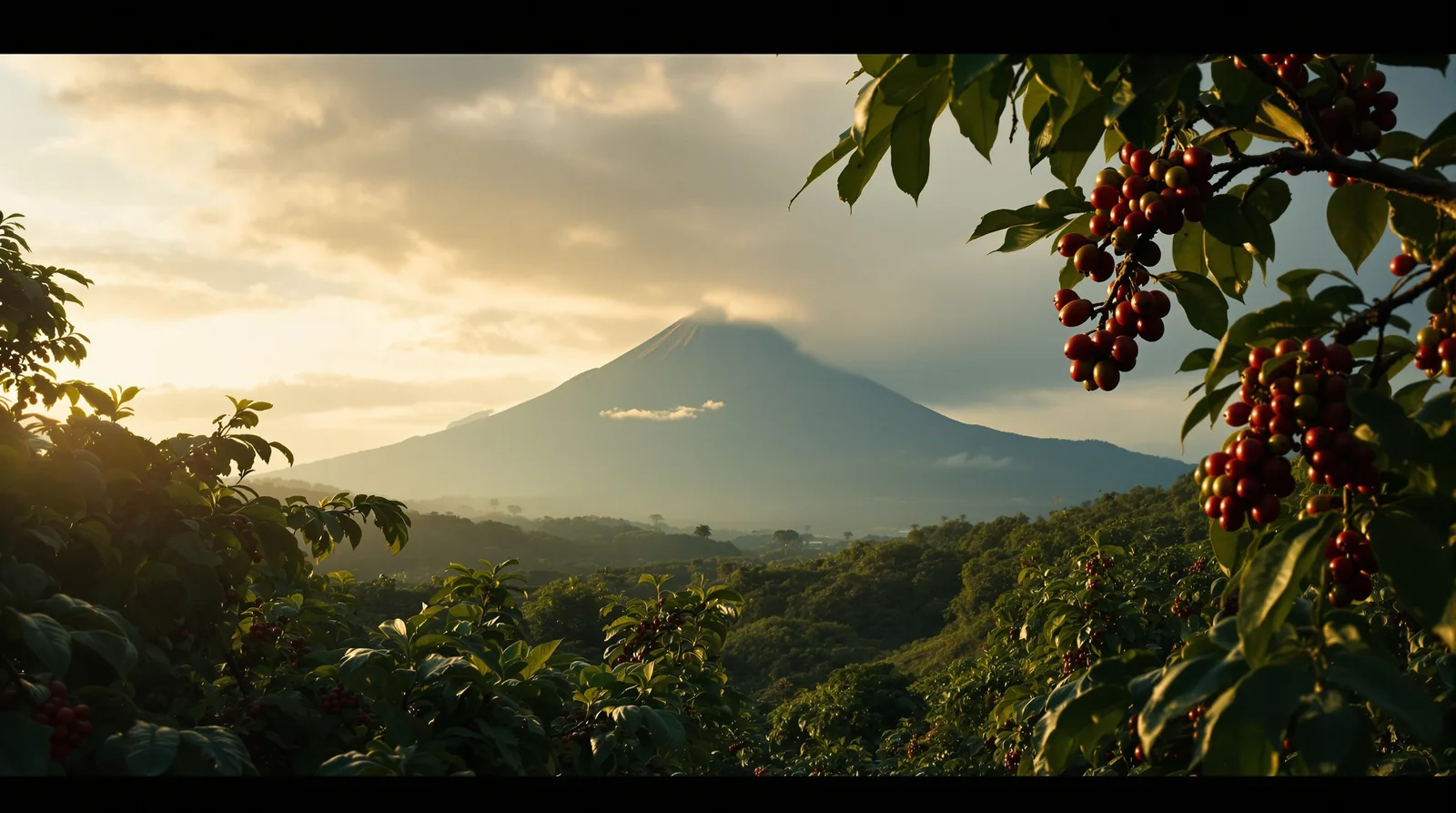
fuego. pacaya. agua. acatenango. these aren't just dramatic names on a map. active or semi-active, all of them, and the ash they deposit into the surrounding soils is one of the most direct explanations for why guatemalan coffee tastes the way it does.
in acatenango valley specifically, ashfall from fuego volcano continuously fertilises the soil, adding minerals that feed the plants and influence bean density. the result is coffees with fragrant aromatics, citrusy brightness, and a lingering clean finish. not subtle. crack open a bag of acatenango and you notice before you even brew, the dry fragrance has a floral lift that most other central american origins simply don't carry.
antigua sits between three volcanoes (agua, fuego, and acatenango itself) at 1,500 to 1,700 metres, and that convergence of volcanic soils and daytime warmth with cool nights pushes sugars in the cherry to develop slowly. the cup ends up with high sweetness, rich body, and that signature dark chocolate note that roasters love because it holds up across roast levels (and because customers at a place like onyx coffee lab in rogers, arkansas or workshop coffee in london will recognise it immediately). fraijanes plateau, a bit less talked about, gets its own mineral signature from nearby pacaya and produces a bright, full-bodied cup that deserves more attention than it gets.
the volcanic influence isn't uniform across guatemala, and that's the point. soil composition, elevation, and how recently ash has deposited all shift the profile from one farm to the next. that's why microlot buying from guatemala makes sense in a way it doesn't with more homogenous origins.
---
key flavour notes and their origins
let's be specific, because "chocolate and spice" covers a lot of ground. so does "fruity." neither tells you anything useful when you're standing at a grinder at 7am with a line forming.
the chocolate question
chocolate is the signature flavour in guatemalan coffee, but it takes different forms depending on where the beans are from. antigua and fraijanes tend toward the deeper cocoa end, sometimes bordering on dark chocolate or even a slight bittersweet quality. nuevo oriente goes sweeter, more milk chocolate, with a lower acidity that makes it easy and approachable. the body on guatemalan coffee is typically medium to full, with a silky or creamy texture that makes the chocolate note feel coating rather than sharp. right, that's the thing that makes an antigua the one you want when a customer asks for "something that tastes like coffee, not fruit."
fruit and acidity
huehuetenango, grown at 1,600 to 2,200 metres in the country's northwest highlands (and benefiting from hot, dry winds off mexico that protect it from frost), shows a different side entirely. lively acidity, wine-like fruit notes, buttery body. atitlán gives you bright citrus and a clean, pronounced aroma. cobán, wrapped in cloud forest and receiving rainfall almost year-round, trends toward fresh fruit with a balanced cup and a slightly winey quality that can surprise people who weren't expecting it.
honestly, the contrarian take here: huehuetenango gets overhyped. yes, it's spectacular when it's good. but it's also the region that punishes you hardest when your dial-in is slightly off, the fermented notes turn funky instead of complex, and suddenly you're explaining to a customer at your filter bar why their £4.50 pourover smells like kombucha.
the full flavour spectrum, region by region
here's a quick reference for what to expect:
| region | altitude (m) | primary flavour notes | body |
|---|---|---|---|
| antigua | 1,500-1,700 | dark chocolate, spice, floral | full |
| huehuetenango | 1,600-2,200 | stone fruit, wine, bright acidity | full, buttery |
| acatenango | 1,400-2,000 | citrus, floral, brown sugar | medium, clean |
| atitlán | 1,500-1,700 | citrus, bright acidity, clean | medium |
| san marcos | 1,300-1,800 | floral, juicy, sometimes wild | medium |
| cobán | 1,300-1,500 | fresh fruit, balanced, winey | medium |
| fraijanes | 1,400-1,800 | bright acidity, chocolate, mineral | full |
| nuevo oriente | 1,500+ | milk chocolate, nutty, low acid | full |
one practical tip: let your guatemalan cool slightly before you start really tasting it. as it drops from scalding to warm, the chocolate deepens, the fruit brightens, and any floral hints hiding under the heat start to show. i watched a barista at revolver coffee in vancouver once gently stop a customer who was rushing through a pourover, said "give it five minutes, it'll taste like a different coffee," and she was absolutely right (the customer looked slightly annoyed and then completely convinced).
---
ideal brewing methods for guatemalan beans
there's no single answer here, because antigua isn't huehuetenango and nuevo oriente isn't acatenango. the brewing method should follow the bean. not the other way around.
for the fruity, high-acidity regions
huehuetenango, atitlán, san marcos, and acatenango all benefit from methods that keep things clean and let acidity express itself without becoming harsh. v60 or chemex is the obvious move. you want full control over temperature and pour rate, and you want the clarity of a paper filter. brew water around 92 to 93°c, not boiling, which flattens the fruit notes. use a 30-second bloom and take your time with the pours. the bloom on a fresh huehuetenango will dome up with that slightly fermented, fruity off-gassing that tells you the coffee is genuinely fresh and not three months off roast.
for the full-bodied, chocolatey regions
for antigua, fraijanes, and nuevo oriente, french press or drip coffee lets the body and sweetness come through without losing them to a paper filter. the oils stay in the cup. mouthfeel gets that silky, coating quality. brew at 94 to 95°c and give it a full four minutes before pressing. fine, it's not glamorous, but a well-made french press antigua is a seriously good morning drink.
espresso
guatemalan coffees, particularly antigua and nuevo oriente, pull beautifully as espresso. the medium-to-full body holds up under pressure, the sweetness amplifies, and you get that dark chocolate finish that works brilliantly as a straight shot or under a small amount of milk. most roasters doing guatemalan espresso-only offerings are using antigua or a fraijanes-antigua blend, and for good reason. have you ever pulled a really good antigua as a 38-gram lungo and just drank it black? worth doing.
- choose your region first (fruity and bright vs. chocolatey and full).
- match the method: v60 or chemex for high-acidity regions, french press or espresso for the heavier profiles.
- adjust grind to your method, not to any general guatemalan rule.
- water temperature: 92°c for the floral and fruit-forward stuff, 94 to 95°c for the denser, chocolatier beans.
- taste it hot, then again when it's warm. you'll often find the better cup is the second one.
---
personal stories from guatemalan farmers
the numbers are almost abstract until you put them next to an actual farm. around 44% of guatemalan coffee producers are smallholders, working plots that in some cases have been in the family for four or five generations. the varieties they grow, typica, bourbon, caturra, catuai, pache, and maragogipe, are largely the same ones planted when guatemala first developed its coffee identity in the 1800s. many farms aren't running the latest processing experiments (though some are). they're running the same pulping and fermentation practices their grandparents used, refined by accumulated knowledge rather than agronomic consulting.
an importer who sources from huehuetenango described a conversation with a farmer near la democracia in the highlands. the farmer had separated out a small lot of typica from the rest of his harvest because he'd noticed a different taste from a particular set of trees growing at the edge of his land, slightly higher, catching more afternoon mist. he didn't have the vocabulary for "microlot" but he knew exactly what he was doing (which is, honestly, more than you can say for some roasters writing tasting notes). that lot ended up being the best coffee the importer brought back that year: bright, honeyed, with a peach-skin acidity that none of the blended lots from the same farm could touch.
that kind of attention to a single row of trees, to how afternoon shadow falls differently in one corner of a plot, is part of why guatemalan specialty coffee has the depth it does. the traceability culture is real. many farms now offer variety separations and individual fermentation experiments, but even before that became a selling point, farmers were quietly doing it because they could taste the difference.
---
comparison with other central american coffees
guatemala sits in interesting company. honduras, costa rica, el salvador, and nicaragua all produce excellent coffees, and they all get lumped under "central american" in a way that flattens real differences. so where does guatemala actually sit?
here's where it diverges from its neighbours:
- versus costa rica: costa rica tends toward a cleaner, lighter cup with brighter, more delicate acidity. guatemalan coffee generally carries more body and more pronounced sweetness. if costa rica is a white wine, guatemala is often closer to a light red.
- versus honduras: honduras has been producing increasingly impressive specialty coffee, often with great fruit and complexity. but guatemalan coffees tend to have more consistency at the regional level, partly because the anacafé origin system has been running longer and buyers have clearer expectations.
- versus el salvador: salvadoran bourbon lots can be extraordinary, with a particular washed elegance, but the country's coffee sector has faced significant production challenges. guatemalan supply is more stable and the range of profiles broader.
- versus nicaragua: nicaraguan coffees often show a slightly earthier, nuttier character with lower acidity. guatemalan cups tend to be brighter and more complex at the top end, though nicaraguan coffees often represent strong value at the mid-range.
guatemalan coffee is typically washed (wet-processed), which means the fruit is removed before drying. this is the dominant processing tradition across most of central america, so it's not a differentiator in itself. what is distinctive is the combination of volcanic soil, altitude range (up to 2,200 metres in huehuetenango), and an origin classification system that's been in place long enough to actually mean something. philly fair trade roasters note that guatemala was the first country to develop an official origin system, and that headstart in traceability is still visible in how guatemalan coffees are bought and sold on the specialty market today.
the short version: if you want a balanced, reliably complex, chocolate-forward central american origin with genuine regional variation, guatemala is where you start. that's not a knock on its neighbours. it's just where the range sits.
---
faq
what are the best guatemalan coffee regions for beginners?
antigua is the most forgiving starting point. the profile is balanced, the chocolate and spice notes are approachable rather than challenging, and it's consistently available from roasters worldwide. nuevo oriente is another good entry: low acid, nutty, full-bodied, easy to drink black without needing to think too hard about it. both pull well through most brew methods.
how should i store guatemalan coffee once i've opened the bag?
in an airtight container, away from light and heat, at room temperature. not in the freezer (unless it's sealed and you're storing it long-term before first opening). ground coffee goes stale fast, so buy whole bean and grind as you brew. most guatemalan specialty coffees are at their best between five and twenty-one days off roast.
is guatemalan coffee good for espresso?
yes. antigua and fraijanes in particular pull well under pressure. the full body holds up, the sweetness amplifies, and the chocolate finish works in a straight shot or under milk. look for a medium to medium-dark roast from either region if you're dialling it in on a home machine. a medium or medium-dark roast is generally the sweet spot for getting the full range of guatemalan flavours without burning off the subtler notes.
what does "shb" mean on a guatemalan coffee bag?
strictly hard bean. it's guatemala's top elevation grade, applied to coffees grown above 1,350 metres. the high altitude means slower cherry development, denser beans, and generally more complex flavour. most specialty-grade guatemalan coffees you'll see in independent roasters are shb or shb-adjacent (below that you have hard bean and a few lower classifications, but shb is what you're looking for if you want the best the origin has to offer).
can i find guatemalan single-origins at independent coffee shops?
absolutely. it's one of the more accessible origins in specialty coffee. most roasters with any central american focus carry at least one guatemalan at any given time, often antigua or huehuetenango. if you're in a city with a strong independent scene, worth asking what's currently on the shelf. the regional variation makes it worth trying different sources throughout the year, because the harvest window and seasonal lots mean what's available in spring will taste genuinely different from what arrives in autumn.
so yeah, next time you're handed a guatemalan pourover at your local, let it cool for a few minutes before you judge it. the volcanic soil, the altitude, the families who've been farming those same plots for generations. it's all in there. you just have to give it a minute.