from ethiopia to your cup: the coffee journey explained
experience the intricate journey of ethiopian coffee from farm to cup. explore each step and uncover how this rich tradition ends in your morning brew.
in this guide
- the farm: where everything actually starts
- processing: the step that shapes flavour more than almost anything else
- washed process
- natural process
- honey process
- milling: the unsexy bit that determines the grade
- the ethiopia commodity exchange and getting coffee to export
- shipping: the long, slow middle of the journey
- import, roasting, and what happens at the other end
- who gets paid what: the uncomfortable arithmetic
- faq
- how long does it take for ethiopian coffee to travel from farm to cup?
- what is the difference between g1 and g2 ethiopian coffee?
- why does ethiopian coffee taste so different from, say, colombian or brazilian coffee?
- what is the ethiopia commodity exchange (ecx) and does it affect the coffee i buy?
- is ethiopian coffee actually sustainable?
you're in shoreditch, sipping a cup of ethiopian yirgacheffe, and the aroma fills the room like a bouquet of wildflowers. that first sip, a dance of acidity and sweetness, transports you back to the highlands of ethiopia where it all began. but have you ever wondered how this exceptional cup ended up in your hands? it’s not just a journey of miles but also a tale of meticulous care and tradition. from the careful cultivation of arabica plants to the bustling dry mills of addis ababa, every step is a chapter in the story of your morning ritual.
the farm: where everything actually starts
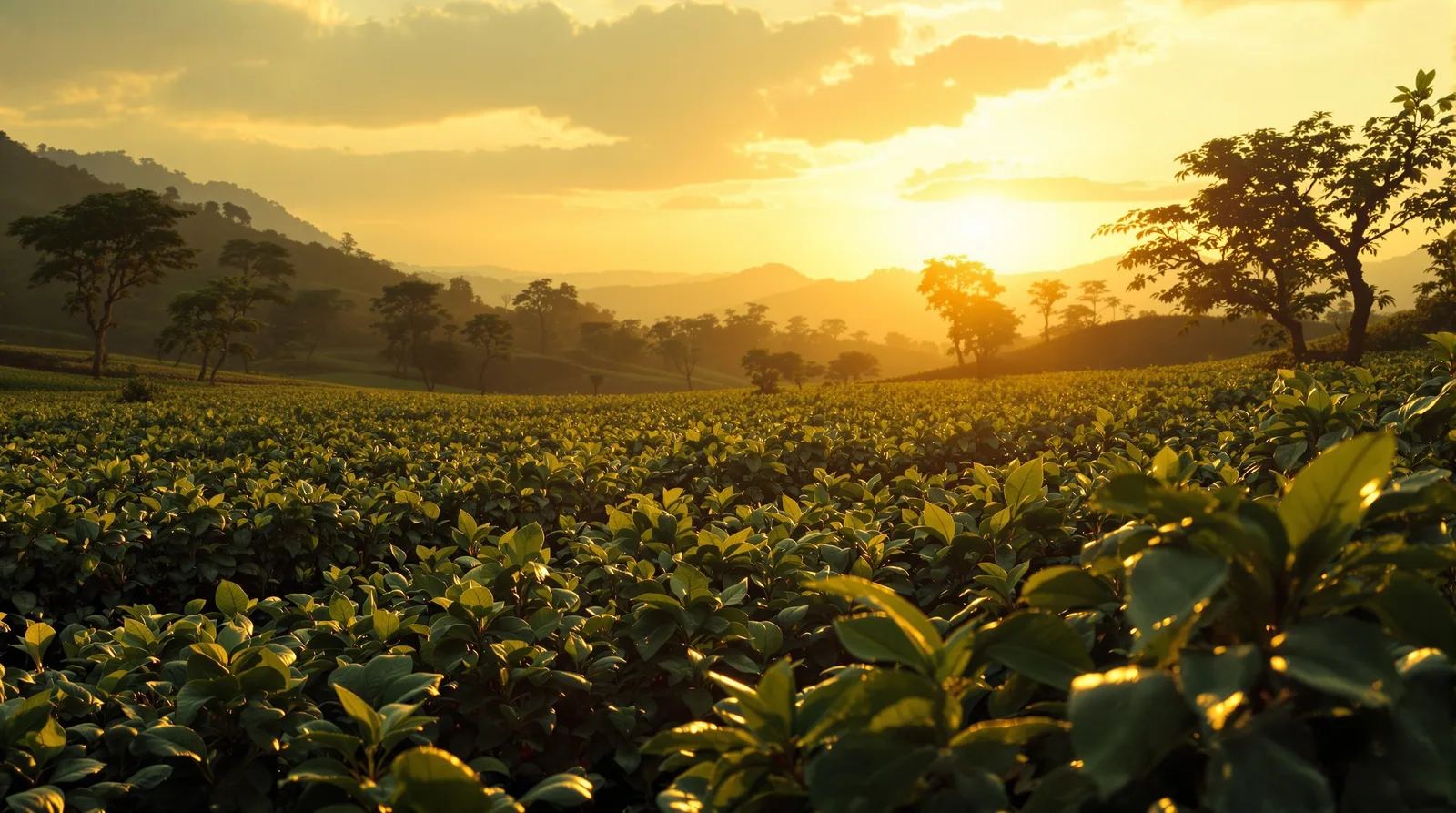
most ethiopian coffee is grown by smallholder farmers working plots of one or two hectares, sometimes less. not vast plantations. family land, often intercropped with food crops, shade trees, sometimes wild forest canopy overhead. the altitude matters enormously here. yirgacheffe, sidamo, guji, harrar, these regions sit at 1,500 to 2,200 metres above sea level, and that elevation slows the cherry's development, concentrating sugars and building the complexity that specialty buyers will later pay a premium for.
the coffee supply chain begins with these growers, and their role goes beyond planting. they're harvesting too, which in ethiopia almost always means selective hand-picking. cherries ripen at different rates on the same branch, so pickers return to the same tree multiple times across a harvest season. strip picking, where you pull everything off at once, happens in volume-focused operations, but the specialty market increasingly rewards the slower, more selective approach. you can taste the difference in the cup. not metaphorically, literally. an unevenly harvested lot carries fermented, overripe notes that no amount of careful roasting will fix.
ethiopia's harvest cycle runs roughly october through january, with exports peaking in the months that follow. according to usda figures, june and july consistently see the highest export volumes, sometimes exceeding 500,000 bags in a single month, a direct reflection of that post-harvest processing window.
processing: the step that shapes flavour more than almost anything else
once cherries are picked, they need to be processed. fast. ripe coffee left sitting in a pile generates heat and ferments unevenly. what happens in the next 24 to 48 hours will define the character of the cup more than most people expect.
washed process
in the washed (or wet) method, the outer skin and pulp are removed from the cherry, and the beans are fermented in water tanks to break down the remaining mucilage. then they're washed and laid out to dry, usually on raised beds in open air. the result is cleaner, brighter, more transparent to origin. yirgacheffe washed coffees carry that characteristic jasmine and lemon verbena quality precisely because the fruit is removed early and the bean's intrinsic character dominates.
natural process
natural (or dry) processing means the whole cherry goes straight to the drying bed, fruit intact. the bean sits inside that drying fruit for weeks, absorbing sugars from the pulp. it's a slower, more labour-intensive process to manage well, beds need turning several times a day to prevent mould, but when it works, the results are extraordinary. blueberry, strawberry jam, a kind of wine-like body. harrar naturals are probably the most famous example, and they've been made this way for centuries.
honey process
the honey process sits between the two. pulp is removed, but some or all of the sticky mucilage layer is left on the bean during drying. as msc's ethiopian coffee guide explains, this produces richer, fruitier profiles with smooth texture, and it's been gaining ground in ethiopian specialty production in recent years. the amount of mucilage left on determines the "colour" of the honey, yellow, red, black, each producing a different intensity.
all three methods share one thing: sun drying on raised african beds. the smell of drying naturals on a warm afternoon is something else entirely, sweet and fermented and faintly alcoholic, like a very good fruit wine evaporating in the heat.
milling: the unsexy bit that determines the grade
after drying, coffee is stored as parchment (washed) or as dried whole cherry (natural), and it stays that way until it's ready for export preparation. the dry milling stage is where raw, dried coffee becomes export-ready green coffee, and it happens primarily at large milling facilities in addis ababa.
dry milling involves several sequential steps:
- hulling: removing the parchment layer or the dried fruit husk
- screen grading: sorting beans by size through a series of screens (screen 15, screen 17, and so on)
- density separation: removing lighter, defective beans using density tables
- colour sorting: electronic optical sorters pass the beans under sensors that kick out discoloured beans at high speed, sometimes backed up by hand-picking lines
- hand picking: final human inspection, often by women working at long sorting tables, removing anything the machines missed
this stage determines the lot's official grade. ethiopian coffee grades run from g1 (specialty, very few defects) down to g5 and below for commodity-grade material. the grade directly affects the price the exporter can ask and the cup quality the buyer receives. a g1 yirgacheffe and a g4 sidamo might come from farms 50 kilometres apart. they will taste nothing like each other.
the ethiopia commodity exchange and getting coffee to export
ethiopia's domestic coffee trade runs through a fairly specific national structure. the ethiopian commodity exchange (ecx) has historically been the central auction mechanism, with most coffee passing through government-managed trading floors before reaching licensed exporters. washing stations buy from farmers, processors aggregate lots, and the ecx provides a price discovery and quality verification function.
in recent years this has loosened slightly. direct specialty licences (dsls) allow exporters to source directly from washing stations, bypassing the ecx for specialty-grade lots. this is significant for traceability. it's the difference between a bag labelled "yirgacheffe g1" and one labelled with the specific washing station, village, and lot number. buyers in london and tokyo pay meaningfully more for the latter, and increasingly they're asking for it.
once sourced and milled, the exporter handles quality inspection at the coffee liquoring unit (clu), the government lab that cupping-approves every lot before export is authorised. no stamp, no export. the whole process from contract to vessel departure typically takes 30 to 60 days, according to ethio coffee's export guide.
shipping: the long, slow middle of the journey
ethiopia is landlocked. that's an important logistical fact. all export coffee travels overland to the port of djibouti, roughly 900 kilometres from addis ababa by road, before loading onto container vessels. the containers are almost always 20-foot or 40-foot refrigerated or standard dry units, with green coffee loaded in 60-kilogram jute or grainpro-lined bags, stacked on pallets.
from djibouti, vessels head to europe (rotterdam, antwerp, hamburg are the main hubs), north america (primarily new york, new orleans), and increasingly to asian markets, particularly japan and south korea, where ethiopian specialty coffee has developed a serious following.
the ocean leg takes two to four weeks depending on destination. green coffee is stable during transit if moisture is controlled, most specialty-grade ethiopian coffee ships in grainpro bags specifically to protect against humidity fluctuations at sea. still, the container ship is not a controlled environment, and the best importers track their shipments closely.
ethiopia exported approximately 469,000 metric tons of coffee in 2024/25, earning a record $2.65 billion in revenue. coffee accounts for roughly one-third of the country's total export earnings. fifteen million people, farmers and market workers and processors and logistics staff, are supported by this trade in some form.
import, roasting, and what happens at the other end
when a container arrives at an importing country, it clears customs and moves to a bonded warehouse, usually operated by a specialist green coffee importer or broker. in the uk, importers like falcon coffees or dr wakefield hold large stocks in warehouse facilities. specialty roasters can buy spot lots off the shelf or pre-purchase specific microlots directly from origin, using the importer as a logistics partner.
the roaster is where the green bean finally becomes something you'd recognise. roasting is, at its core, a heat transformation: green beans go in at roughly 180 to 230 degrees celsius over 8 to 15 minutes, undergoing maillard reactions and caramelisation that develop colour, aroma, and soluble flavour compounds. light roasts preserve more of the floral, fruit-forward character ethiopian coffees are known for. darker roasts shift toward chocolate and roast-derived bitterness. most specialty roasters working with yirgacheffe and guji coffees stay on the lighter end for this reason.
after roasting, beans are packaged with one-way degassing valves (roasted coffee off-gasses co2 for days after roasting, and sealed bags without valves would burst) and shipped to wholesale accounts, retail customers, or direct-to-consumer subscribers. the window between roast date and peak flavour is generally one to four weeks for most brewing methods, though this varies by roast level and bean density.
at the cafe end, a barista like the one at /cafe/assembly-coffee-london will dial in the grinder for the specific lot, tasting and adjusting until extraction is where it needs to be. the bloom on a v60 pour-over, that first 30-second saturation of the grounds with a small pour of just-off-the-boil water, is releasing the co2 still trapped from roasting. what you smell at that moment, sometimes bergamot, sometimes peach, sometimes stone fruit and dried flowers, is the cumulative result of everything above. the farm, the picker, the drying bed, the mill worker, the exporter, the ship, the roaster. all of it, right there in the steam rising from your cup.
who gets paid what: the uncomfortable arithmetic
here is the thing most coffee branding doesn't tell you. the retail price of a bag of specialty ethiopian coffee in a london roastery might be £14 to £20. the farmer who grew those beans likely received between 70p and £1.50 worth of value per kilo of cherry, sometimes less, often depending on the year's international price fluctuations and the number of intermediaries between them and the exporter.
as green coffee collective lays out clearly, value accumulates as coffee moves through the chain, each stage adds cost and margin, but the distribution is deeply uneven. growers do the most physically demanding, weather-dependent, and financially precarious work. they also capture the smallest share of the final price.
this is starting to shift, slowly, through direct trade relationships, cooperative models, and certification schemes. some roasters publish their cost-of-green figures alongside tasting notes, which is a start. the specialty coffee premium does flow back to origin in some supply chains, more reliably than commodity coffee channels. but it's not automatic, and "ethically sourced" on a bag is a claim worth interrogating.
what you can do, practically:
- buy from roasters who name the washing station and the farmer or cooperative, not just the region
- ask your cafe where they source and whether they've visited origin
- pay the extra £1 or £2 for the traceable microlot over the anonymous house blend when you can
- look for roasters publishing their green coffee prices and farm relationships publicly
none of this requires becoming a supply chain expert. it just requires asking the same questions about your coffee that you might ask about your food.
faq
how long does it take for ethiopian coffee to travel from farm to cup?
the full journey typically spans four to six months from harvest to your cup, sometimes longer. harvesting runs october to january, processing and milling takes several weeks, export procedures and inland transport add another 30 to 60 days, ocean freight takes two to four weeks, and then there's time in import warehousing and at the roastery before retail. a cup you drink in february or march in london might contain coffee picked the previous november.
what is the difference between g1 and g2 ethiopian coffee?
ethiopian coffee is graded after dry milling based on defect count, screen size, moisture content, and cup quality scores. g1 is the highest grade, with the fewest defects and the cleanest cup, and it's what most specialty roasters source. g2 allows for slightly more defects but still represents a quality tier above commodity coffee. grades g3 and below are generally traded on commodity markets and end up in blends or soluble coffee production.
why does ethiopian coffee taste so different from, say, colombian or brazilian coffee?
a lot of it comes down to genetics. ethiopia is the origin of arabica coffee, and the country holds an extraordinary diversity of heirloom varieties, many of them still unclassified, that simply don't exist anywhere else. on top of that, the high altitude slows cherry development and builds complexity, the processing methods (particularly naturals) add fruit-forward ferment character, and ethiopian coffees are typically roasted lighter by specialty roasters to preserve those origin characteristics. the result is a flavour profile, floral, stone fruit, tea-like, sometimes almost wine-adjacent, that has no real equivalent from other origins.
what is the ethiopia commodity exchange (ecx) and does it affect the coffee i buy?
the ecx is a government-managed trading system that facilitates price discovery and quality verification for commodities including coffee. for most of its history, the majority of ethiopian coffee moved through the ecx auction system before reaching exporters. in recent years, direct specialty licences have allowed exporters to source directly from washing stations for specialty-grade lots, improving traceability and enabling the farm-specific lot information you sometimes see on specialty roastery bags. if your coffee is labelled with a specific washing station name, it likely came through a direct-source channel rather than the ecx.
is ethiopian coffee actually sustainable?
the honest answer is: it depends entirely on the specific supply chain. ethiopian smallholder farming is often low-input by default, many farmers can't afford synthetic fertilisers or pesticides, which means the coffee is effectively organic without certification. but "sustainable" also means economically sustainable for the farmer, and as discussed above, that's not guaranteed just because the coffee is labelled specialty. certifications like fairtrade or rainforest alliance provide some assurance but are not universal. the most reliable signal is a roaster who has a direct, ongoing relationship with a specific cooperative or washing station and publishes what they pay.
next time you're enjoying a cup of ethiopian coffee, remember the journey it took to get there. each sip is a testament to the dedication of farmers, the intricate process of milling and sorting, and the vibrant history of coffee cultivation in ethiopia. it's more than just a drink, it's a narrative in a cup.