coffee bag labels decoded: read before you brew
coffee bag labels unlock the secrets of your brew. learn to decode the origin, roast profile, and freshness to ensure your next cup is a masterpiece.
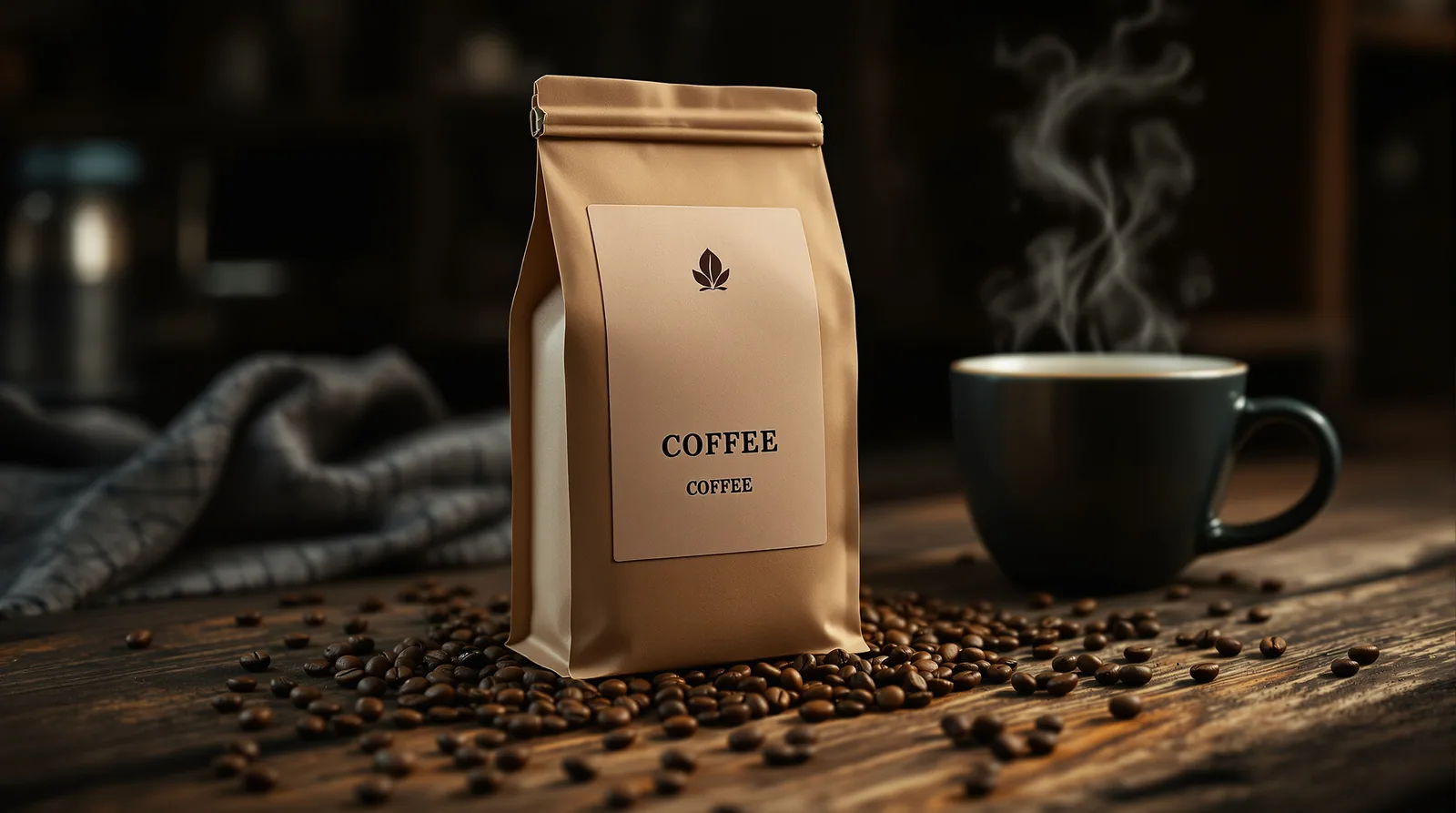
in this guide
- what's on the front: brand and origin
- single origin vs. blend
- the importance of roast date and freshness
- decoding roast profiles and flavour notes
- how to actually use flavour notes when choosing
- the role of certifications and sustainability
- custom labels: marketing or meaningful?
- faq
- what does "honey process" mean on a coffee bag?
- how fresh is fresh enough? is two-month-old coffee undrinkable?
- what is "single origin" and does it actually taste better than a blend?
- what does "masl" mean and why does elevation matter?
- why do some bags list a varietal like bourbon or gesha?
walk into bean & bean on fulton in brooklyn right now and the bags will stop you cold. label is almost aggressively specific, origin front and centre, roast date stamped by hand, flavour notes that actually match what ends up in the cup. i picked up a honey-processed ethiopian there last tuesday and stood on the pavement for a solid two minutes reading the back panel. real information, if you know where to look. most people don't, though. and the labels don't exactly hold your hand. so let's just go through the whole thing.
what's on the front: brand and origin
the front of most coffee bags does two things: it tells you who roasted the coffee and where the coffee came from. brand name, usually the biggest thing on the bag. origin, usually just below or beside it. simple enough in theory. but the gap between a roaster who genuinely knows their sourcing and one who slaps "ethiopia" on a bag without much else to say? enormous.
origin can mean a country, a region, or a specific farm or washing station. the more specific, the more useful. "colombia" tells you roughly what to expect. "colombia, huila, finca el paraiso" tells you a lot more: the microclimate, the likely varietals, the producer's approach (and honestly, once you've started tracking those details cup to cup you cannot stop). according to perfect daily grind, once you start paying attention to specific farms and regions the flavour differences become something you can actually track. and they're right. you really can.
the brand section matters too, even if it feels like background noise. a roaster that lists their location, their sourcing philosophy, and a name or face behind the coffee is usually one that has thought carefully about traceability. not always. but usually. look for it on the side or back panel. if there's nothing there except a toll-free number and a barcode, that tells you something.
single origin vs. blend
a single-origin coffee comes from one place: one country, one region, sometimes one lot or one producer. a blend is two or more origins combined, typically to hit a consistent flavour profile across seasons. neither is better by default. blends built by a careful roaster for espresso can be extraordinary. single origins can be one-note and dull. the label should tell you which you're holding.
---
the importance of roast date and freshness
here is the thing most people skip right over: the roast date. not the best-before date. the roast date. these are not the same thing, and conflating them costs you a lot of good cups.
coffee goes stale. not dramatically, not like bread going mouldy on the counter, but the aromatic compounds that make a good bag sing do break down after roasting. crema coffee roasters suggest brewing between 3 and 21 days after roasting, giving the beans a few days to off-gas co2 before they hit their window. bean & bean recommend at least 1 to 2 weeks post-roast for peak freshness. the specific window varies by roaster and by bean (naturals tend to need a bit longer), but the principle is the same everywhere: buy fresh, brew fresh.
a best-before date set 12 or 18 months out tells you very little about when those beans were actually roasted. supermarket coffee often carries only this date. which is part of why supermarket coffee often tastes flat. specialty roasters stamp the actual roast date, sometimes by hand, sometimes printed on the bottom of the bag. if a bag has no roast date at all, that is information too.
> freshness is not a luxury feature. it is the baseline.
a practical checklist when checking freshness at the shelf or online:
- find the roast date (not the best-before date).
- count forward at least 3 days. if it was roasted yesterday, let it rest.
- check you will drink it within roughly 3 weeks of that roast date for the best experience.
- if buying online, look at the roaster's dispatch schedule. some roast to order, which is ideal. others hold stock.
- when in doubt, ask. a roaster worth buying from will tell you.
---
decoding roast profiles and flavour notes
light, medium, dark. that is the standard spectrum, and it matters more than most people give it credit for because roast level dramatically changes what ends up in your cup. a light roast from ethiopia might give you blueberry and bergamot. the same beans taken to a dark roast will give you chocolate and ash, the origin character mostly burned away. gone.
so here is the question worth sitting with: have you ever actually tasted the same bean at two different roast levels side by side? because it is not subtle.
i was at ozone in shoreditch last week and watched the person behind the bar spend a good five minutes explaining to a customer why their "i only drink dark roast" rule was limiting them. she brewed a light-roast kenyan alongside their usual. no fanfare, just set both cups down. they sat there quietly after the first sip (genuinely unsettled, you could see it on their face). "it tastes like blackcurrant juice," they said. she just nodded. i have had that exact conversation myself, from the other side of the bar, probably fifty times.
flavour notes are the most misunderstood part of the label for people new to buying specialty coffee. they are not added flavourings. nobody is pumping toffee into your bag of guatemalan. the notes describe what the natural sugars, acids, and compounds in that specific bean, processed and roasted in a specific way, actually produce in the cup. as fratello coffee put it, good coffee does not need artificial flavouring to taste delicious. the notes are just the vocabulary for what is already there.
how to actually use flavour notes when choosing
so do flavour notes actually help you pick a better bag, or are they just marketing copy dressed up as sensory analysis?
the listed notes are a guide, not a guarantee. your water temperature, grind setting, and brew method all shift the expression. but the notes do tell you the general flavour family: fruit-forward and bright, or sweet and round, or bitter and deep. and look, honestly, a 1:18 ratio is the lazy answer when someone asks how to dial in a fruity natural. you might need to go tighter, maybe 1:15, to stop it tasting like fermented juice. the notes on the bag at least tell you which direction you are pushing toward. also, if you are on an ek43 and you have been chasing a washed yirgacheffe for three days and the bag says "lemon curd and jasmine," trust the bag more than your recipe sheet.
| flavour note | what it usually signals | works well as |
|---|---|---|
| citrus, berry, floral | high acidity, light body | filter, pour-over, v60 |
| caramel, brown sugar, chocolate | medium acidity, balanced | espresso, flat white, aeropress |
| dark chocolate, tobacco, smoke | low acidity, heavy body | french press, moka pot, milk drinks |
| stone fruit, honey, wine-like | natural or honey process | filter or espresso, depends on roast |
rough. starting point. don't tattoo it on your arm.
---
the role of certifications and sustainability
certifications take up a small amount of label real estate and generate a disproportionate amount of confusion. organic. fair trade. rainforest alliance. direct trade. they are not all the same thing, and they are not all equally meaningful.
organic certification means the coffee was grown without synthetic pesticides or fertilisers and has been verified through an official certifying body. the process is expensive (this is the bit most people miss). some small producers farm organically in practice but cannot afford the paperwork to prove it, which means "uncertified" does not automatically mean "conventionally farmed."
fair trade certification sets a minimum price floor for coffee, intended to protect farmers from volatile commodity market swings. it is a structural support, not a quality indicator. you can find extraordinary fair trade coffee and very mediocre fair trade coffee. the certification tells you about the trade relationship, not the cup.
"direct trade" is not a certification at all. it is a term roasters use, sometimes meaningfully and sometimes loosely. a genuine direct trade relationship means a multi-year connection with a specific producer, paying well above market rate. sometimes it means they bought through an importer who visited the farm once. ask the roaster what it means to them specifically. if they cannot answer that without hesitating, you know.
rainforest alliance focuses on environmental and social standards on farms, with a tiered certification model. as the labelling guidelines covered by inkjet, inc. note, coffee companies are required to follow the fair packaging and labeling act at minimum, but certifications layer additional standards on top of those baseline legal requirements.
so: certifications are useful signals, not guarantees. use them alongside origin specificity, roast date transparency, and what you actually know about the roaster.
---
custom labels: marketing or meaningful?
plenty of roasters now treat the bag as a canvas. illustrated botanicals, abstract colour washes, bold typography, qr codes linking to producer profiles. some of it is genuinely useful. some of it is lovely packaging around mediocre coffee. both things are true at the same time.
honestly, a lot of the time the design is doing work the coffee cannot. the questions worth asking are simple. does the label include the roast date? does it name the origin with some specificity beyond a country? does it describe the process? if yes to all three, the custom design is sitting on top of real information. fine. but if the bag looks incredible and the only thing on it is "dark roast blend" and a best-before date from next year, the design is covering for the coffee inside.
mtpak coffee, who work with roasters on sustainable packaging, note that the best labels manage to be both visually engaging and genuinely informative, including origin, tasting notes, and a roast date stamp as baseline (reasonable standard for any bag, regardless of how it looks). i would add: a hand-stamped roast date on a plain kraft bag, like the ones workshop coffee use at their clerkenwell shop, is more useful than an elaborate illustration that tells you nothing about what is inside.
custom labels are not inherently marketing fluff. a qr code that links to a producer's story, a harvest year, or a cupping score is real information. but it has to actually be there. does your current bag have that, or does the qr code just go to an instagram page?
what to look for on any bag, plain or custom:
- roast date (stamped or printed, not just a best-before)
- origin with at least regional specificity
- processing method (washed, natural, honey, or similar)
- roast level
- net weight and roaster contact details (legally required under the fpla)
- flavour notes (optional but useful)
- certifications, if relevant and verifiable
if a bag ticks those first four, you can make an informed decision. the rest is context.
---
faq
what does "honey process" mean on a coffee bag?
honey process sits between washed and natural processing. in a washed coffee, all the fruit and mucilage (the sticky layer around the bean) is removed before drying. in a natural, the whole cherry dries intact. in a honey process, the outer skin is removed but some or all of the mucilage is left on the bean during drying. the amount left on varies: yellow honey, red honey, and black honey refer to roughly how much mucilage remains, with black honey being closest to a natural in sweetness and body. the result is typically a coffee with more body and fruit sweetness than a washed but less wild ferment character than a full natural.
how fresh is fresh enough? is two-month-old coffee undrinkable?
no. not undrinkable. crema coffee roasters have noted they have brewed their own coffees two months out and found them still enjoyable, just with muted flavour. the full expression of the bean is best in roughly the first three weeks after roasting. after that, flavours flatten. after three months in an opened bag, you are mostly tasting stale carbon. keep it sealed, store it away from light and heat, and drink it reasonably promptly. simple.
what is "single origin" and does it actually taste better than a blend?
single origin means the coffee comes from one defined source: one country, one region, or one farm lot. blend means two or more origins combined. and single origin is not automatically superior. a well-designed espresso blend can be more consistent, more balanced, and more enjoyable for milk drinks than a single origin that is too acidic or too delicate to handle steaming. single origins shine in filter brewing, where you want to taste the specific character of a place. the label should tell you which you have.
what does "masl" mean and why does elevation matter?
masl stands for metres above sea level. altitude affects coffee flavour because higher elevations mean cooler temperatures, slower cherry development, and denser beans with more concentrated sugars and acids. coffees grown above 1,800 masl tend to have brighter acidity and more complex flavour. below 1,200 masl, the profile is often softer, earthier, more straightforward. useful number when comparing two coffees from the same origin at different altitudes.
why do some bags list a varietal like bourbon or gesha?
coffee varietals work similarly to grape varietals in wine. bourbon, typica, caturra, gesha (sometimes spelled geisha), sl-28: these are all different cultivars of the coffea arabica species, each with distinct flavour tendencies, yield levels, and disease resistance. gesha is associated with jasmine, peach, and bergamot notes and commands high prices partly because of its flavour reputation and partly because it is low-yielding and difficult to grow. if a varietal is listed, it is usually because the roaster considers it significant to the flavour story of that particular coffee (worth knowing). worth remembering the next time you see it on a bag and wonder why it costs £22 for 250g.