how new roasters can buy green coffee without the mistakes
starting your coffee roasting journey? learn how to navigate buying green coffee without common mistakes. choose wisely, build relationships, and avoid pitfalls.
in this guide
- the importance of choosing the right supplier
- building relationships: why it matters
- understanding coffee profiles and regions
- a note on lot size and seasonality
- navigating online marketplaces for green coffee
- tips for sampling and experimenting
- common pitfalls and how to avoid them
- faq
- how much green coffee should i buy when starting out?
- how do i store green coffee beans properly?
- do i need to cup every green coffee before buying?
- what's the difference between a spot offer and a forward contract?
- how do i know if a green coffee lot is fresh?
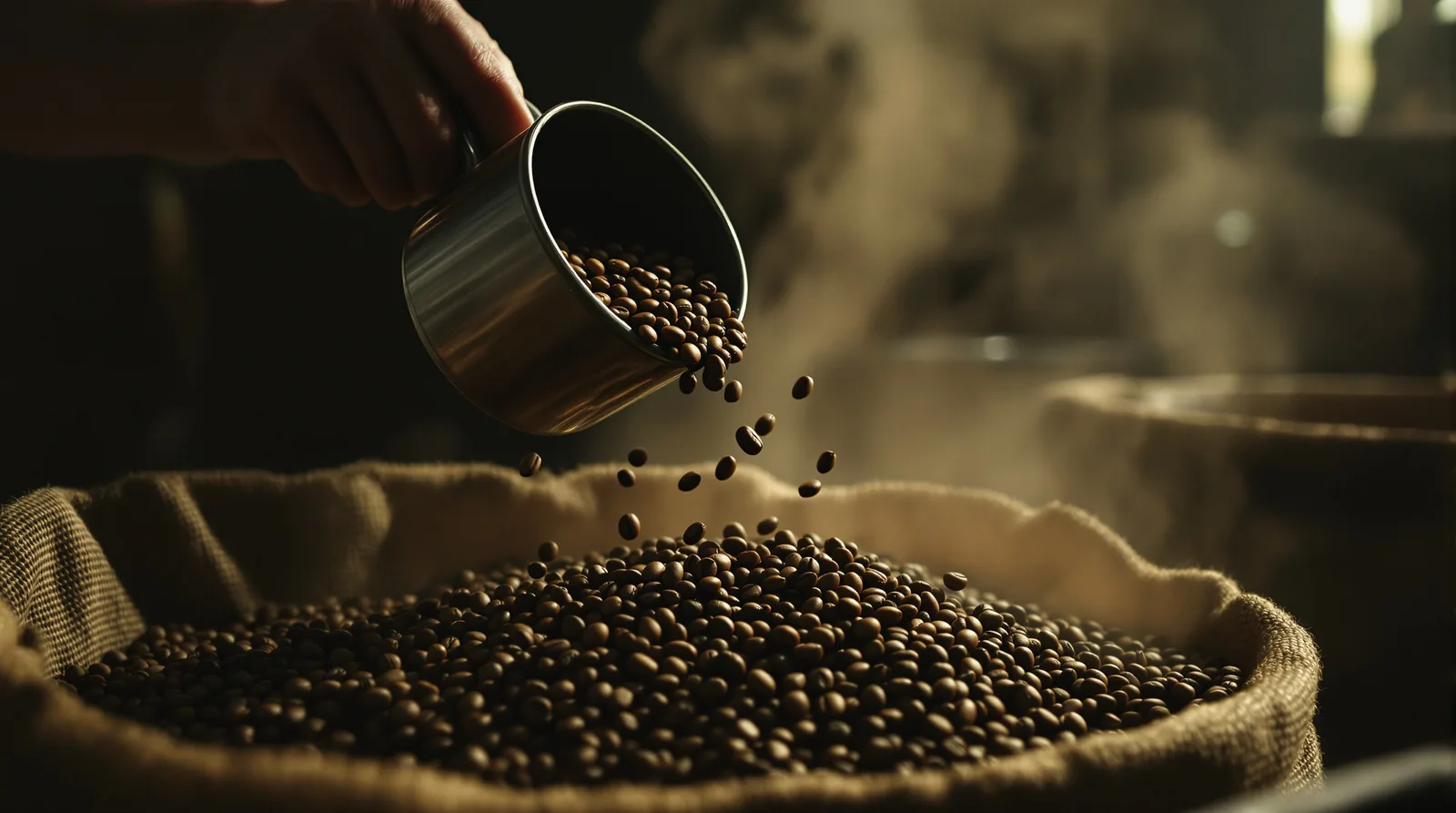
the room hums with the soft chatter of a burr grinder in the corner. you’re in the back room of third draught in shoreditch. a burlap sack spills open, revealing its treasure of green coffee beans inside. you’ve finally made it to the first step of your roasting journey. but now the real challenge begins: buying green coffee without stepping on every rake in the yard. at genuine origin, you can click your way to unroasted beans like it's any online purchase, but the real magic lies in relationships. building trust with a seasoned importer, like the ones at mill city roasters, can save you a world of uncertainty.
the importance of choosing the right supplier
not all green coffee suppliers are built the same. some cater to large commercial roasters placing container orders; others have carved out space for small-batch buyers who are still figuring out their first roast profile. the supplier you start with will shape almost everything downstream: the quality and traceability of what you roast, the consistency you can promise to customers, and whether you burn through budget on coffees that were never right for you to begin with.
here is the thing most new roasters don't hear early enough. your supplier isn't just a vendor. they're the first link in your quality chain. a good importer will be able to tell you a coffee's cultivar, altitude, processing method, and harvest date. a mediocre one will hand you a vague tasting note and a pdf. the difference shows up in the cup.
when you're evaluating a potential supplier, look for a few concrete things:
- transparent, publicly listed pricing (no "call for quote" stonewalling)
- clearly labelled lot information: farm or cooperative, region, processing method, altitude
- a willingness to sell smaller quantities, at least until you've built confidence in the relationship
- sample availability before you commit to a full bag or box
- some form of traceability, even if it's just farm-level rather than single-producer
platforms like genuine origin have made entry-level sourcing considerably less painful. no minimum order quantities, free us shipping, and pricing that doesn't require a phone call to unlock. that kind of friction removal matters enormously when you're still learning what you actually want.
the smell when you first open a properly sourced green coffee bag is something. grassy, vegetal, faintly sweet. it's not coffee yet, not in any recognisable sense. but it hints at what it could become, and that potential is entirely dependent on where it came from and who got it to you.
---
building relationships: why it matters
there's a reason experienced roasters talk about their importers the way chefs talk about their farmers. the relationship is the work.
when you're new, the temptation is to be entirely transactional. click, order, roast. and honestly, that works fine up to a point. but the roasters who develop fastest are usually the ones who start asking questions early. not "what's your cheapest colombian?" but "what are you excited about right now?" or "what do you think would suit a medium roast with a long development time?"
mill city roasters put it plainly: a good relationship with a professional importer reduces uncertainty, anxiety, and risk. if the trust is there, you might get three sample suggestions instead of nine. that's time and money saved, and a clearer path to coffees that actually fit your style.
these relationships don't materialise overnight. you build them by showing up consistently, asking genuine questions, paying invoices on time, and giving feedback on samples even when the coffee isn't quite right. an importer who knows you will flag a lot they think you'll love before it sells out. that's worth more than any discount.
one useful exercise if you're not used to relying on others' recommendations: start with the small stuff. ask a barista what they'd order if they were sitting in your seat. take the suggestion. see what happens. you start to build the muscle of trusting informed opinions, which is exactly what you'll need when an importer says "this ethiopian natural from guji is going to be something special, trust me."
---
understanding coffee profiles and regions
green coffee is not a uniform ingredient. the same species, grown in different countries, at different altitudes, processed through different methods, will taste startlingly different in the cup. getting your head around this early will save you from buying coffees that fight against the roast style you're trying to develop.
here is a rough orientation of what different regions tend to produce, though every lot will have its own character:
| region | typical flavour notes | processing styles | best for |
|---|---|---|---|
| ethiopia | floral, stone fruit, bergamot | washed, natural | light roasts, filter |
| colombia | red fruit, caramel, balanced | washed | espresso, medium roast |
| brazil | nuts, chocolate, low acidity | natural, pulped natural | espresso blends, dark roast |
| guatemala | brown sugar, citrus, mild spice | washed | medium roast, pour over |
| kenya | blackcurrant, bright acidity, winey | washed (72-hr) | filter, light-medium roast |
| indonesia | earthy, cedar, full body | wet-hulled (giling basah) | dark roast, blends |
processing method matters as much as origin. a washed ethiopian will be clean, bright, floral. a natural from the same farm will be fruit-forward, heavier, sometimes almost wine-like. if you're roasting primarily for espresso on a la marzocco linea, a dense natural from yirgacheffe might be overwhelming at first. start with something a little more forgiving.
perfect daily grind's breakdown of green coffee sourcing makes a point worth repeating: the more you know about a coffee's variety, elevation, and processing, the better equipped you'll be to roast it. altitude affects bean density, which affects how heat transfers during roasting. a dense, high-grown kenyan aa will need a different approach than a low-grown brazilian natural. these are not abstract variables.
a note on lot size and seasonality
green coffee has a harvest cycle. when you're buying from a reputable importer, the fresher the crop the better. "current crop" means the beans were harvested and processed within roughly the last twelve months. "past crop" isn't necessarily bad, but flavour and aromatics do fade over time, and you should pay less for it. ask your importer directly. they'll tell you, if the relationship is worth anything.
---
navigating online marketplaces for green coffee
buying green coffee online has never been more accessible. for a new roaster, this is mostly good news.
platforms like genuine origin have removed much of the gatekeeping that used to make green coffee sourcing feel like you needed an industry contact and a minimum order of 300kg just to get started. you can browse, compare specs, read cupping notes, and buy a single 65lb box without speaking to anyone. for a lot of new roasters, especially those coming from a home setup who are scaling up slowly, this is exactly what's needed.
the risk, though, is the one that mark al-shemmeri's writing on green buying flags clearly: when the process is entirely transactional, you can end up relying on the accuracy of an online description rather than your own sensory assessment. for home roasters, that's probably fine. for someone building a production roastery with a menu of four or five single origins, it's a real risk. you might receive something that was accurately described but completely wrong for your profile.
the smarter approach is hybrid. use the platforms for discovery, for browsing what's in season, for comparing regions. but always request samples before committing to larger quantities. most reputable suppliers will send them, sometimes for a small fee, sometimes free.
a few things to keep in mind when buying online:
- read the full spec sheet, not just the tasting notes. altitude, variety, and processing are more reliable indicators than "notes of jasmine and peach"
- check when the lot arrived in-country. shipping time matters for freshness
- factor in shipping costs if you're outside the supplier's free-shipping zone. a cheap per-kilo price can evaporate fast
- look for moisture content data if available. green coffee should sit somewhere between 10-12%. outside that range, you're asking for problems
---
tips for sampling and experimenting
this is where roasting actually gets interesting. sampling is not a box-ticking exercise before you commit to a purchase. it's a genuine skill, and one worth treating seriously from day one.
- order samples across multiple origins at the same time. roasting them back to back, within the same session, is the only reliable way to compare. your palate has context. a colombian roasted on a tuesday and a rwandan roasted the following friday are almost impossible to evaluate fairly against each other.
- roast each sample to the same profile as closely as you can. you're evaluating the green coffee, not your roast development. keep the variable to the bean, not the process.
- cup them properly. you don't need sca-certified equipment to do a basic cupping. a gram scale, hot water just off the boil, and identical grind size is enough. let it bloom, break the crust, slurp it. take notes while it's hot, at room temperature, and as it cools.
- don't throw away coffees you don't immediately like. what tastes harsh or flat at first can reveal something useful once you adjust the roast. as mill city roasters puts it, approaching every coffee with the idea that "all coffee is good" opens up possibilities that a binary good/bad judgment closes off.
- keep a sample log. write down the supplier, lot name, price per kg, your roast profile, and your tasting notes. your future self will thank you. memory is not a reliable record-keeping system.
- revisit samples across multiple roast levels. a coffee that tastes too bright and acidic as a light roast might be exactly right at medium. don't write off an origin based on a single data point.
- ask your importer for their own cupping notes before you taste. then taste blind. compare. when your notes match theirs, you're calibrating correctly. when they diverge, ask why.
---
common pitfalls and how to avoid them
new roasters tend to make the same cluster of mistakes. not because they're careless, but because nobody told them.
buying too much, too soon. the economics of green coffee are seductive. the per-kilo price drops meaningfully when you buy in volume. but green coffee does go stale, just more slowly than roasted. unroasted beans stored well can last up to twelve months without significant degradation, but "stored well" is doing a lot of work in that sentence. cool, dry, away from sunlight, off the ground. most new roasters don't have ideal storage conditions, and they overestimate how quickly they'll move through a 60kg bag.
ignoring the spec sheet and trusting only the tasting notes. tasting notes are marketing. not dishonest marketing, necessarily, but they are written to make a coffee sound appealing. the altitude, variety, processing method, and moisture content are the actual data. learn to read the former and be appropriately sceptical of the latter.
skipping samples to save time. this one is almost always a false economy. a sample might cost you a few days and a small fee. a full bag of something that doesn't work for your setup costs significantly more, in money and in the time you spend trying to rescue it in the roast.
treating all greens as interchangeable. bean density varies. moisture content varies. variety affects how heat behaves. a roast profile that works perfectly on a washed colombian will not automatically translate to a sumatran wet-hulled lot. perfect daily grind makes the point well: every bean has its own idiosyncrasies, and learning them is half the craft.
chasing trends rather than building a menu. it's tempting to buy what's generating buzz. gesha lots, experimental ferments, anaerobic naturals. but if your customers are mostly drinking flat whites and your espresso machine is a traditional italian setup, an intensely funky anaerobic lot from honduras might be a spectacular misfire. buy for your context, not for instagram.
poor storage from the start. stack bags or boxes on pallets, not directly on concrete floors. concrete holds moisture and temperature changes dramatically. keep green coffee away from anything with a strong odour, it absorbs ambient smells faster than you'd expect. a corner of your roastery that smells like cleaning products is not where your green coffee lives.
---
faq
how much green coffee should i buy when starting out?
start small. genuinely small. even if the economics of a larger order look attractive, resist until you know a coffee works for your setup. many suppliers, including genuine origin, have no minimum order quantity, which exists specifically for this reason. buy one box, roast it, evaluate it properly, then decide whether to commit to more.
how do i store green coffee beans properly?
cool, dry, dark, and off the floor. moisture is the enemy. green coffee stored correctly, in a climate-controlled space away from direct sunlight and strong odours, will hold its quality for close to a year. if you're using jute bags, get them on pallets. if you're buying boxed greens in food-grade lined packaging, they're somewhat more forgiving, but the same environmental principles apply. don't store green coffee near roasted coffee, cleaning supplies, or anything else with a pronounced smell.
do i need to cup every green coffee before buying?
for any coffee you're planning to put on your menu, yes. cupping before committing to volume is standard practice, not extra effort. for one-off experimental purchases or very small quantities where the financial risk is low, you might reasonably skip it. but building the cupping habit early, even when it feels unnecessary, pays off quickly. your palate sharpens with repetition.
what's the difference between a spot offer and a forward contract?
a spot offer means the coffee is warehoused and available now. you pay and it ships. a forward contract means you're committing to a future harvest before it arrives in-country, often at a locked price. for new roasters, spot buying is almost always the right call. forward contracts make sense once you know a specific lot or farm well enough to commit in advance, and when your volume justifies the planning.
how do i know if a green coffee lot is fresh?
ask for the harvest date and the arrival date. current crop generally means harvested within the last twelve to fifteen months. anything significantly older is past crop, and while it's not necessarily unusable, you should expect some loss of brightness and aromatics and negotiate the price accordingly. reputable importers will tell you. if they're evasive about it, that's useful information in itself.
in the end, the art of roasting isn't just about the beans or the process; it's about the connections you forge along the way. each sack of beans carries a story from farm to your roaster. as you learn to navigate the world of green coffee buying, remember that every choice shapes your roasting narrative. happy roasting, and may your beans always be just right.