is asia the new center of specialty coffee?
asia's coffee landscape is transforming, with countries like vietnam and china driving a specialty coffee boom. could asia be the new center of global coffee culture?
in this guide
- the rise of asian coffee consumption
- urbanisation and the cafe boom
- diverse coffee experiences
- global economic impact
- personal tales from the asian coffee scene
- comparing asian and western coffee cultures
- faq
- is asia producing more specialty-grade coffee now, or just consuming more?
- which asian countries are the biggest specialty coffee markets right now?
- how does asian specialty coffee differ from what you'd find in european cafes?
- are western coffee chains losing ground to asian competitors?
- is the asian coffee boom sustainable, or is it a middle-class consumption spike that will plateau?
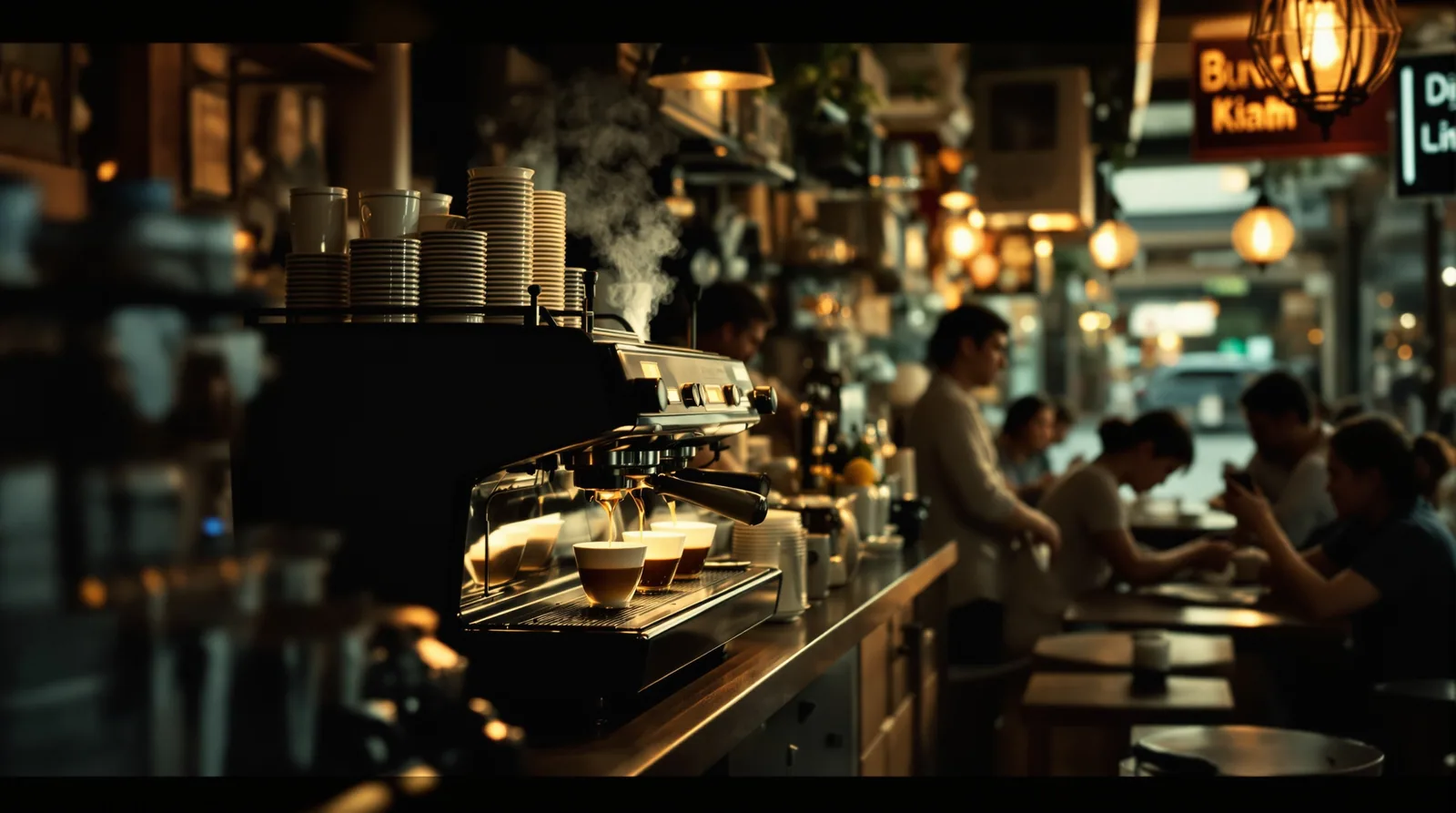
in the heart of hanoi’s old quarter, the hiss of a vintage espresso machine mingles with the chatter of young, trendy locals. nearby, a barista expertly prepares a pour-over, the aroma of freshly ground beans enveloping the room. this isn’t your typical european café scene; it's asia's rising coffee culture in full swing. nations like vietnam, china, and india are redefining what it means to be part of the global coffee map. with a young middle class eager for new experiences and urbanization fostering trendy café cultures, the region is becoming a formidable player in the specialty coffee world.
the rise of asian coffee consumption
the numbers are hard to argue with. asia's coffee demand has grown 14.5% since 2018, and the two largest consuming markets in the region right now are china and japan. both are pulling in opposite directions stylistically, which is part of what makes the story interesting.
japan's relationship with coffee goes back decades. the kissaten culture, those quiet counter-service coffee houses that treat extraction like a form of meditation, gave the world a template for obsessive quality long before the phrase "specialty coffee" existed anywhere in marketing copy. today japan's specialty segment is growing at a cagr of around 10.5% through to 2029, driven less by new drinkers and more by existing drinkers spending significantly more per cup.
china is a different beast entirely. the country's cafe market jumped 58% in a single year, reaching over 50,000 stores in 2023. shanghai and shenzhen now set beverage trends for the whole region. walk into a specialty shop on wulumuqi road in shanghai and you'll find single-origin yunnan beans sitting beside ethiopians and colombians, staff who can talk about process and terroir without breaking a sweat, and a queue that suggests none of this is niche. china isn't chasing the west's specialty scene. it's building its own version, faster.
south korea runs at a pace that would make most european markets dizzy. korean adults average around 405 cups of coffee per year, one of the highest rates globally, and the market has shifted heavily toward premium formats. india is next. domestic consumption rising steadily, a young urban population, and coffee exports that more than doubled over the past decade to reach usd 1.8 billion in fy24.
---
urbanisation and the cafe boom
there's a specific energy to a cafe that opens in a city that didn't really have specialty coffee five years ago. the staff are learning in real time. the regulars are forming. the menu is a work in progress, sometimes literally crossed out and rewritten. that energy exists across dozens of asian cities right now, and it's directly connected to one of the fastest urbanisation curves in modern history.
when people move from rural areas into cities, their disposable income goes up, their social habits shift, and they start spending money in cafes. this isn't a theory; it's what happened in seoul, tokyo, and taipei, and it's now happening in ho chi minh city, jakarta, chengdu, and bengaluru simultaneously.
indonesia is probably the clearest current example. according to world coffee portal data, the country's branded coffee shop market is projected to exceed 4,000 stores by 2025. kopi kenangan, which started as a tech-backed grab-and-go format in jakarta, is already testing regional expansion into neighbouring markets where the sweet, iced coffee format travels well culturally.
the cafe in asia isn't just a place to drink coffee. for a lot of young urban professionals, it's where you work for four hours on a laptop, where you take your first date, where you hold a meeting you don't want to have in an office. that social function accelerates growth in ways that pure coffee enthusiasm alone never could. the third space function is doing real work here.
---
diverse coffee experiences
one thing that gets missed when western coffee media covers asia: the region didn't arrive at specialty coffee by way of third-wave dogma. it arrived via its own existing traditions, and those traditions are producing something genuinely different.
vietnam's ca phe trung (egg coffee), thick and sweet and served in a tiny cup at a pavement stall in the old quarter, has nothing to do with scandinavian light-roast orthodoxy. and yet the country that perfected that tradition is also producing specialty-grade arabica and robusta lots that are starting to appear on menus in london and copenhagen. vietnam now produces more coffee than all african countries combined, having grown from around 5,000 tonnes in the early 1980s to roughly 2 million tonnes today.
the hybrid formats coming out of asia deserve attention too. here's what the region's diversity actually looks like on the ground:
- japan: precision filter work, kissaten counter culture, canned coffee as an everyday ritual
- south korea: specialty shops with cafe-as-design-object aesthetics, dalgona foam drinks that went genuinely global
- vietnam: robusta-forward, condensed milk traditions, egg coffee, growing single-origin arabica production
- china: speed-meets-quality formats, heavy customisation, local origin (yunnan) gaining serious traction
- indonesia: wet-hulled sumatran naturals, kopi tubruk, burgeoning specialty roaster scene in cities like bandung and yogyakarta
- thailand: well-established cafe culture in chiang mai, local arabica from hill tribe farms, strong flavoured coffee market
- india: filter kaapi in the south, growing espresso culture in metros, single-estate coorg and chikmagalur beans getting international recognition
the % arabica chain out of japan, now operating 154 stores across 13 countries in the asia-pacific region, is one visible sign of how regional coffee identity is starting to export itself. it's a regional status symbol built on minimalist aesthetics and a very deliberate origin story. that kind of brand doesn't emerge from a market that's just copying the west.
---
global economic impact
the global coffee market is projected to hit usd 161.66 billion by 2030, and asia pacific holds the most growth potential of any region, per research and markets' 2024 figures. a 5.2% cagr from 2024 to 2029 for the asia-pacific market specifically. those aren't numbers that allow the rest of the industry to look the other way.
here's what this actually means at a trade and strategy level:
- green coffee sourcing is shifting. specialty importers who built their books around ethiopia, colombia, and guatemala are now fielding serious interest in yunnan, aceh, and coorg lots. cafe imports' world specialty coffee maps, now in their second edition, reflect this; the asia-pacific producing regions are drawn in considerably more detail than they were in the 2017 first edition.
- roasters are repositioning. asian capital is backing roaster acquisitions and partnerships at a pace that would have seemed unusual ten years ago. % arabica's model proves there's appetite for a specialty-positioned chain that scales without abandoning product integrity.
- consumption markets are becoming production advocates. china buying more yunnan coffee isn't just domestic pride. it's market development for a producing region. japan paying premium prices for washed indonesians pushes those farmers to invest in processing infrastructure.
- retail formats are innovating fastest here. mobile-first ordering, delivery platform integration, hyper-customisation at the point of sale: these formats are being refined in shanghai and seoul before they appear anywhere else.
- flavoured and hybrid coffee is a serious category. the global flavoured coffee market is projected to grow from usd 6.56 billion in 2021 to usd 8.64 billion in 2028, and asia is driving a significant portion of that growth. dismiss it if you like, but the category is funding the specialty infrastructure underneath it.
the old model, where asia grew the beans and the west decided what good coffee meant, is done. not fading. done.
---
personal tales from the asian coffee scene
chen wei runs a small roastery in chengdu's kuanzhai alley district. he spent three years working at a specialty shop in melbourne, came back, and started roasting yunnan beans he sources directly from a cooperative in pu'er. "people here used to ask me why i was using chinese beans," he said in an interview with a regional trade publication last year. "now they come specifically because of it." the roaster in the corner of his shop is a second-hand probat he shipped back from australia. it smells, when he's mid-batch, like burnt caramel and fresh grass, and the narrow room holds maybe twelve people.
that story isn't unusual. across southeast asia, home-grown specialty coffee businesses are building identities rooted explicitly in local origin and local palate, not in approximating what a good cafe in shoreditch or portland looks like.
in jakarta, a barista named dian who trains staff at a mid-sized specialty group told me (via a mutual contact in the industry) that her biggest challenge isn't teaching extraction. it's getting customers to try something they haven't already seen on instagram. "once they taste it," she said, "they stay. but the first cup is still a negotiation." the shop pulls its own naturals from flores and sulawesi. the bloom on a v60 in that space, watching the coffee swell and release, carries a weight it doesn't quite have elsewhere, because the beans came from three islands away and the hands that picked them are known by name.
honestly, that kind of direct-relationship sourcing is still more common in asia than western media acknowledges. the proximity of consumption markets to production regions isn't just a logistical advantage. it's a cultural one.
---
comparing asian and western coffee cultures
the comparison gets made constantly, and usually badly. so here is what the map actually shows when you put them side by side.
| dimension | western specialty (broadly) | asian specialty (broadly) |
|---|---|---|
| cultural reference point | nordic light roast, sca scoring orthodoxy | diverse: kissaten, kopi, ca phe, filter kaapi |
| pace of market growth | mature, incremental gains | rapid, structurally driven |
| consumer age profile | skews 25-45, established habits | skews 18-35, forming habits now |
| tech integration | growing but uneven | mobile-first, delivery-native |
| flavour preferences | often dry, low-intervention, terroir-led | more range: sweet, iced, flavoured alongside single-origin |
| relationship to production | mostly import-reliant | mix of import and domestic, growing local origin pride |
| format innovation | incremental | rapid, experimental |
the most useful framing isn't "better" or "worse." it's: different entry points, different speed, different relationship to tradition. western specialty built itself partly in opposition to commodity and instant coffee. a lot of asian specialty is building itself in conversation with existing coffee traditions that were never broken in the first place. the ca phe in hanoi was never something that needed fixing.
where they converge is in the things that actually define specialty: traceability, processing quality, extraction care, and the willingness to pay more for a better cup. those values are not culturally western. they travel.
the gap that remains is in the direction of influence. for twenty years, asian cafe owners went to amsterdam, melbourne, and london to understand what good coffee should look like. that's reversing. slowly, but it's reversing. a roaster opening in berlin right now is at least as likely to be watching what's happening in seoul or shanghai as they are to be looking at oslo.
---
faq
is asia producing more specialty-grade coffee now, or just consuming more?
both, and the two are connected. asia went from producing less than 5% of global coffee in the early 1960s to around 32% today, with vietnam leading that growth. but the more recent development is quality. thailand, india, vietnam, and indonesia are all producing lots that score specialty grade, and domestic consumption markets are creating demand for local origin coffee at premium prices. that price signal funds better farming and processing. the cycle is genuinely reinforcing.
which asian countries are the biggest specialty coffee markets right now?
china and japan are the two largest consumers in the region. china's market growth is faster; japan's is more mature and increasingly premiumisation-driven. south korea punches above its weight given population size (405 cups per person annually). india and indonesia are the ones to watch over the next decade, with both showing double-digit cagr projections through to 2029.
how does asian specialty coffee differ from what you'd find in european cafes?
the gap is narrowing on the product side. extraction standards, bean quality, and barista training in serious asian specialty cafes are comparable to what you'd find in melbourne or copenhagen. where the difference shows up is in format diversity (iced, sweet, and hybrid drinks are far more mainstream in asia), tech integration (mobile ordering and delivery are default, not exception), and the presence of local origin coffees that european menus rarely carry. the range is wider, and the market is less doctrinaire about what specialty is supposed to look like.
are western coffee chains losing ground to asian competitors?
not exactly losing ground, but sharing it. starbucks remains huge in china, but domestic chains and local independents are growing faster. kopi kenangan in indonesia, % arabica across the asia-pacific region, and a wave of homegrown specialty groups are all expanding with formats and flavour profiles built specifically for their markets, not adapted from a western template. global brands are responding by localising menus and investing in regional partnerships rather than exporting unchanged products.
is the asian coffee boom sustainable, or is it a middle-class consumption spike that will plateau?
the structural drivers, rising incomes, urban migration, a young demographic forming coffee habits right now, suggest this isn't a spike. it's a baseline shift. the asia-pacific specialty coffee market projections through to 2029 are built on those fundamentals, not on trend cycles. that said, market saturation is real; china's 50,000-store figure means margins are being competed away in some segments. the businesses that will last are the ones with genuine product differentiation and direct relationships with producers, which is, in the end, what specialty has always been about.
as the pour-over drips slowly in a bustling jakarta café, it's clear that the story of coffee is being rewritten. asia's rise in the coffee world isn't just a passing trend but a structural shift. from the vibrant streets of hanoi to the chic coffee spots in tokyo, the question is no longer if asia will lead but how fast it will continue to redefine the global coffee landscape.