japan's specialty coffee gems you need to visit
japan's coffee culture quietly dominates with exceptional roasters like unlimited coffee bar and leaves coffee roasters. explore their unique single-origin offerings.
in this guide
- understanding japan's specialty coffee scene
- unlimited coffee bar: tokyo's hidden gem
- leaves coffee roasters: from boxing to beans
- sipping on single-origin: a sensory journey
- unique blends by coffee county
- the role of traditional kissaten in modern coffee culture
- faq
- where should i start with specialty coffee in tokyo if i only have one day?
- is it true that japanese cafes mostly do dark roasts?
- what is the best way to find good specialty coffee outside tokyo?
- do i need to speak japanese to have a good experience at these cafes?
- are japanese specialty coffees available to buy online outside japan?
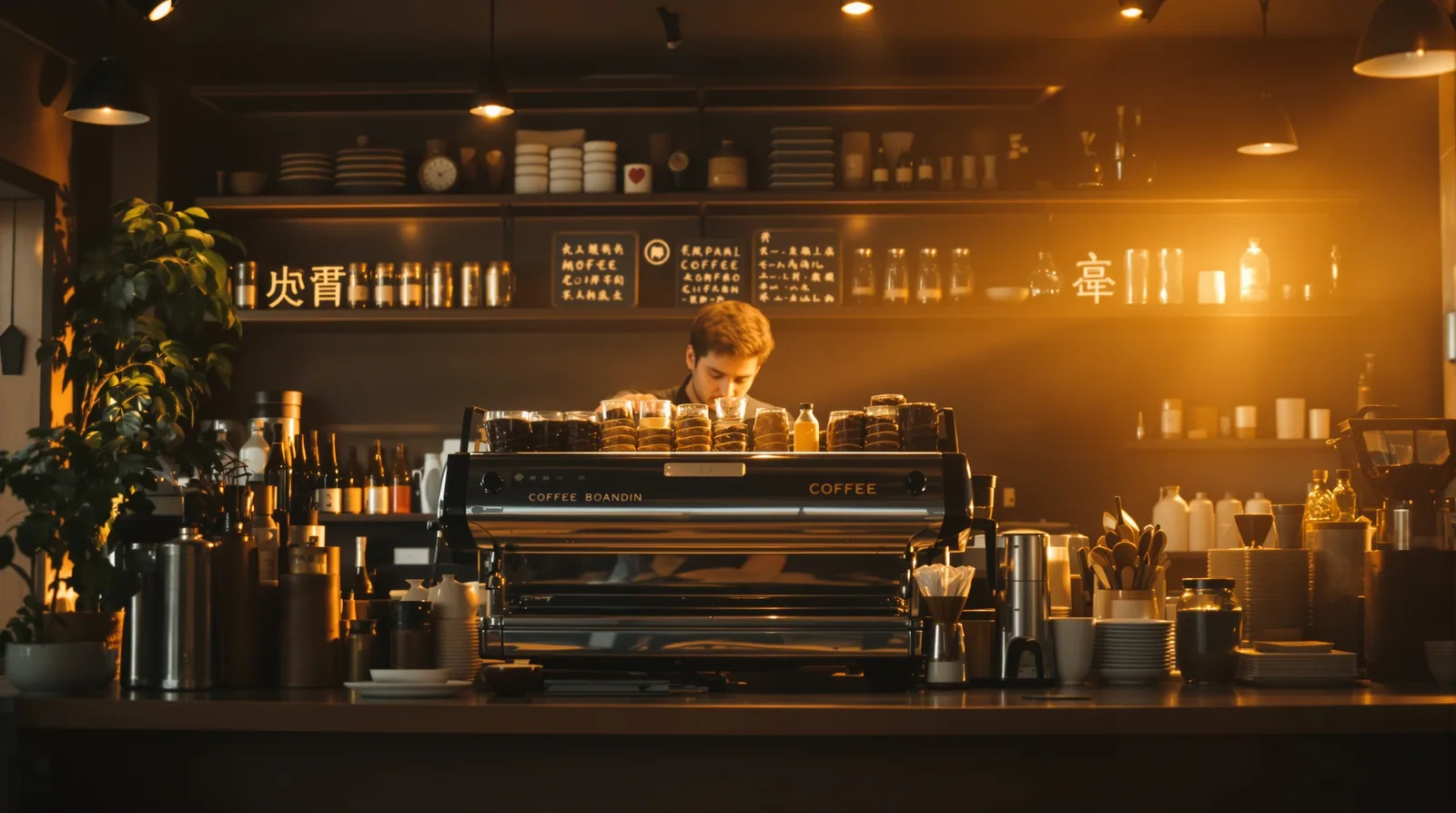
enter unlimited coffee bar in the bustling skytree, tokyo, where the aroma of freshly ground single-origin beans wafts through the air. daichi matsubara and rena hirai’s expertise is palpable in every cup, setting a high bar for japan's specialty coffee scene. upstairs, the barista training lab hums with quiet focus, echoing the commitment to excellence found throughout the space. tokyo’s coffee culture isn’t about shouting from the rooftops, but rather, quietly mastering a craft that speaks volumes in every sip. ready to dive deeper into this understated yet outstanding world?
understanding japan's specialty coffee scene
japan has been doing this longer than most places want to admit. while cities like melbourne and london spent the 2000s figuring out what a flat white actually was, tokyo's kissaten culture had already spent half a century obsessing over grind consistency, water temperature, and the exact arc of a nel drip pour. the foundation was there. what happened next was just evolution.
what makes the current scene unusual is how little of it is performative. walk into glitch coffee in nishiazabu and the baristas are not theatrically narrating your pour-over or asking you to rate your palate. they hand you something extraordinary and let you get on with it. the equipment is serious (linea pbs, mythos grinders humming in the corner), the sourcing is obsessive, and the service is warm without being precious about it.
precision is the word you hear most. but it is not cold precision. it is the same attention you find in a ramen shop that has been perfecting its broth for thirty years, or a sushi counter where nothing is wasted. coffee here is connected to a broader cultural ethic of doing one thing, properly, without shortcutting. japanese roasters and baristas are increasingly respected on the global competition circuit precisely because that ethic produces results.
single-origin sourcing, lighter roast profiles, and an openness to unusual processing methods have all accelerated here in the last decade. the scene is not monolithic, though. you have the old guard of dark-roasted kissaten coffee sitting comfortably alongside anaerobic naturals from ethiopia. both have their place. both are taken seriously.
---
unlimited coffee bar: tokyo's hidden gem
the skytree location sounds like a tourist trap. it is not. unlimited coffee bar was founded in 2015 by daichi matsubara, a certified judge for barista championships, and rena hirai, who brings years of roasting experience to the operation. together they built something that feels less like a cafe and more like a working laboratory with good acoustics.
the upstairs barista training lab is the detail that tells you everything about their priorities. most places with a training space tuck it away behind a door with a staff-only sign. here it is visible, active, part of the atmosphere. you can hear the clatter of portafilters being locked in and pulled, the faint squeak of a tamper on a bench, someone's shot running a second or two long while they adjust.
the coffee programme runs on single-origin beans exclusively, for both espresso and pour-over. at the time of one visit documented by the way to coffee, they were pulling a rwanda ruli kare roasted in-house, showing orange, white wine, and a crisp acidity that makes you put the cup down and think for a second. every milk drink is poured at your table. not because it is a gimmick, but because the temperature matters and they know it.
cross the sumida river afterward and you are at sensoji in minutes. the neighbourhood earns a full afternoon.
---
leaves coffee roasters: from boxing to beans
yasuo's story is the kind that gets repeated at industry events because it is genuinely hard to forget. a former boxing champion who retired after a serious injury, he redirected that same discipline and tolerance for obsessive repetition into coffee roasting. within a few years he had built leaves coffee roasters into one of the most talked-about operations in japan, with a roasting championship title firmly in his sights.
at world of coffee in greece, the barista magazine team met him over a light-roast colombian that they described as delicious. his own words on the matter:
> "we've come this far without even having a championship title because i believe it's the result of our pursuit of quality. next, the future awaits us in pursuing not just quality, but also a title."
the cafe sits in taito city, close to the roastery. you can find it on /cafe/leaves-coffee-roasters-tokyo. the vibe is unhurried. light roasts dominate but nothing is dogmatic about it. what you notice, if you sit long enough, is how consistent every cup is. not in a factory way. in the way of someone who has done ten thousand repetitions and genuinely enjoys each one.
---
sipping on single-origin: a sensory journey
single-origin coffee is not a novelty in japan. it is the default mode for a significant chunk of the specialty scene, and the approach to it is more rigorous than almost anywhere else.
at lilo coffee roasters in osaka, a spot so small it fits only a handful of people and operates on a "small is better" philosophy, the blackboard runs through east timor, kenya, ethiopia, nicaragua, and the dominican republic. you can choose the roast level and the brewing method separately. the room smells like fresh grounds constantly, warm and slightly fruity, and the equipment-to-floor-space ratio is, as one writer put it, japanese efficiency at its best.
why does single-origin work so well in this context? a few reasons worth considering:
- japanese consumers tend to be genuinely curious about provenance, not just receptive to it as marketing.
- the culture of ichi-go ichi-e (roughly: this moment, only once) maps naturally onto the idea of a coffee that tastes like a specific place at a specific harvest.
- light roasting, which preserves origin character, has deep roots here, even if the kissaten tradition leaned darker.
- baristas are trained to guide you through the cup, not just hand it over and walk away.
woodberry coffee roasters, with locations across shibuya, meguro, and daikanyama (their perch outpost in daikanyama is worth a separate trip), built a name on single-origin espresso. their ethiopian alaka, served as an espresso tonic at perch, is the sort of thing that makes you reconsider what espresso is allowed to taste like.
---
unique blends by coffee county
coffee county does not shout. at the sca japan expo, where every other roaster was leading with geisha or anaerobic processing, they set up a simple cupping selection and let the cleanliness of their coffee do the talking. according to one long-form reddit review from a tokyo resident that has become something of a reference document in pour-over circles, the contrast was striking: after a parade of high-concept, high-impact profiles, coffee county's selection stood out precisely because it was clean, balanced, and honest.
that is not a knock on complexity. it is a specific skill. getting coffee to taste clean, with nothing muddying the mid-palate, requires roasting discipline that many bigger operations quietly lack.
here is how coffee county sits against some of the other major tokyo roasters, based on the resident reviewer's scoring:
| roaster | bean variety | roast quality | espresso quality | value for money |
|---|---|---|---|---|
| coffee county | 5/5 | 5/5 | 5/5 | 5/5 |
| woodberry | 4/5 | 3/5 | 5/5 | 5/5 |
| leaves coffee | not scored | not scored | noted as exceptional | noted as high |
woodberry's customer service, according to the same reviewer, was memorable even where the roasting showed minor inconsistencies. coffee county had no such caveat. both are worth your time. but if you are after something that rewards attention without demanding it, coffee county is the one to seek out.
---
the role of traditional kissaten in modern coffee culture
you cannot understand what is happening in tokyo's specialty scene without spending an hour in a kissaten. the two things are not in opposition. they are in conversation.
kissaten, the traditional japanese coffee houses that peaked in the showa era, built a culture of patience around coffee. dim lighting, wooden interiors, siphon brewers, and hand-sorted roasted beans were standard. chatei hatou in shibuya is the example everyone cites, and rightly so: the staff sort their roasted beans by hand, individually, before brewing. you watch it happen at the counter. it takes as long as it takes.
that ethic, the idea that slowness is not inefficiency but respect, runs directly into what the best modern specialty cafes are doing. koffee mameya in omotesando treats every customer with the same time and attention regardless of queue length. you feel it immediately. the beans change regularly (they source from roasters across the globe, light to dark), and the barista who helps you is not reading from a script.
here is a practical sequence if you want to trace this thread yourself on a tokyo trip:
- start with a morning at chatei hatou in shibuya. order whatever they recommend. watch the counter.
- walk or take the subway to koffee mameya in omotesando. ask about the current pour-over selection.
- cross to daikanyama and find perch by woodberry coffee roasters. single-origin espresso in a neighbourhood that rewards wandering.
- end at unlimited coffee bar near skytree if you want to see training-room seriousness translated into a customer-facing space.
- if you have a second day, get on a train to osaka and find lilo coffee roasters. the smallness of it is the point.
the kissaten gave japan a population of adults who expect coffee to be worth sitting with. the specialty cafes inherited that expectation and ran with it. that continuity is rare. most coffee cultures had to build their audiences from scratch.
---
faq
where should i start with specialty coffee in tokyo if i only have one day?
honestly, koffee mameya in omotesando is the most practical single stop because they stock beans from multiple roasters and will guide you through the selection without making you feel rushed. if you want a second stop, perch by woodberry in daikanyama handles single-origin espresso as well as anywhere in the city. both are accessible, both reward a bit of time at the counter rather than a quick takeaway.
is it true that japanese cafes mostly do dark roasts?
not anymore, and arguably the reputation was always more complicated than it looked. the kissaten tradition leaned darker, yes. but the contemporary specialty scene has moved toward lighter profiles that preserve origin character, and many roasters now offer the full range. lilo in osaka lets you choose roast level per bean. leaves coffee in tokyo leans light. if you specifically want a deep, dark, kissaten-style cup, chatei hatou in shibuya is the place. both traditions are alive.
what is the best way to find good specialty coffee outside tokyo?
osaka has a genuine scene, with lilo coffee roasters and the lilo coffee kissa in the shinsaibashi area worth finding. kyoto has its own quieter version of this. the way to coffee's japan guide covers tokyo, kyoto, and osaka with enough specificity to be useful on the ground. outside the main cities, google reviews in english are patchy, so looking at local japanese coffee communities or asking a barista in tokyo for recommendations further afield tends to work better.
do i need to speak japanese to have a good experience at these cafes?
generally no. most specialty cafes in tokyo and osaka have staff who speak enough english to talk you through the menu, and the menus themselves often include english tasting notes alongside japanese. the experience at places like koffee mameya is designed around attention to the customer regardless of language. point, gesture, and show genuine interest in what they are making. that gets you most of the way there.
are japanese specialty coffees available to buy online outside japan?
some roasters ship internationally. leaves coffee roasters has attracted enough international attention (partly through competition appearances like world of coffee) that their beans do travel. coffee county is harder to source outside japan. your best bet is checking individual roaster websites directly, as availability changes with harvests and shipping costs from japan are not trivial. a few specialty importers in the uk, us, and australia occasionally carry japanese-roasted single-origins, but it is not a reliable pipeline yet.
as you sip on a meticulously brewed cup at leaves coffee roasters, where former boxing champions turn into coffee connoisseurs, it's clear: japan's quiet dedication to the craft has created a coffee scene that rivals the best worldwide. perhaps it's this blend of humility and precision that makes japanese specialty coffee so remarkable. next time you find yourself in japan, listen closely. there's a rich tapestry being woven in every pour.