rwanda's unrecognized coffee mastery
rwanda produces some of africa's best coffee, yet it's often overlooked. discover why this nation deserves more recognition for its world-class brews.
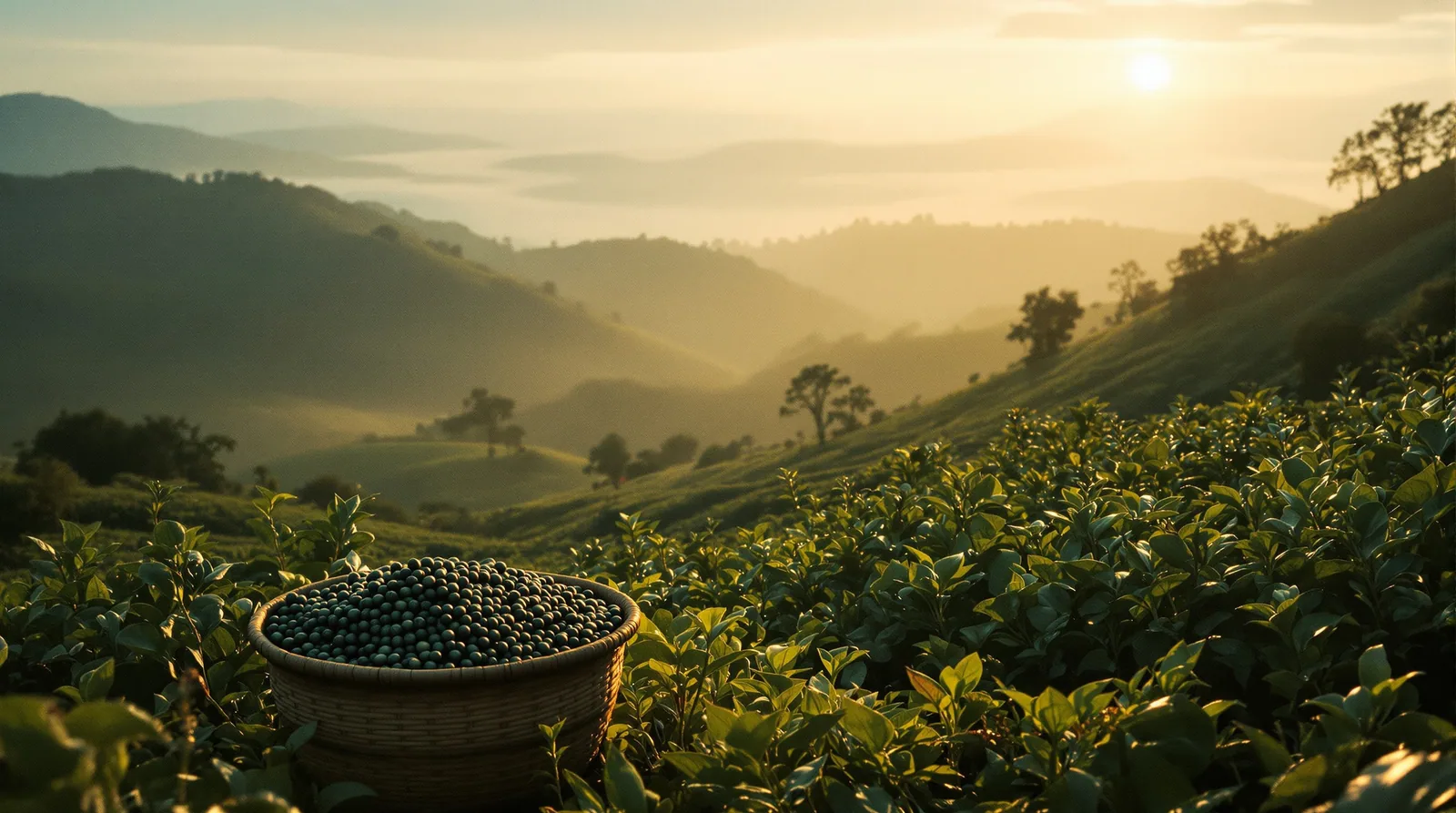
in this guide
- rwanda's coffee history
- quality over quantity
- economic impact on local farmers
- the unique flavour profile
- obstacles to global recognition
- rwanda's efforts to boost local consumption
- faq
- where can i buy rwandan specialty coffee?
- what is the best brewing method for rwandan coffee?
- what is the potato taste defect and should i worry about it?
- how does rwandan coffee compare to ethiopian coffee?
- is rwandan coffee ethically sourced?
the hiss of milk frothing fills the air at a small roadside cafe in kigali. a young barista, adept beyond her years, deftly pours a silky latte so smooth it mirrors the world-class beans it hails from. rwanda, often overshadowed by its african coffee-producing neighbors, hides a treasure trove of specialty coffee that rivals the best in the world. yet, despite its quality, rwandan coffee remains unsung in many corners of the globe. perhaps it's time to sip and take note of what the heart of africa has to offer.
rwanda's coffee history
german missionaries brought the first coffee trees to rwanda in 1904. production scaled up through the 1930s, but it was state-controlled, low-grade commodity work for most of the twentieth century. farmers had little incentive to push for quality when the government set the price and took the product.
then came 1994. the genocide against the tutsi killed roughly 800,000 people in 100 days, and it nearly erased the coffee industry entirely. generations of farming knowledge were lost. cooperative networks dissolved. whatever institutional memory had built up around coffee growing was stripped away almost overnight, according to root capital's account of rebuilding the sector.
what happened next is genuinely remarkable. privatisation followed the genocide, handing control back to individual farmers. in the early 2000s, the u.s. and rwandan governments brought in specialists to rebuild the specialty value chain from scratch. the first central washing station opened in 2001. by the time rwanda held its first cup of excellence competition in 2008, there were already hundreds of washing stations operating across the country, and the world was beginning to take notice. the 2003/2004 harvest peaked at nearly 450,000 exported bags. a country that had been through absolute catastrophe had rebuilt one of the most promising specialty coffee sectors on the continent in under a decade.
that is not a small thing.
quality over quantity
rwanda produces between 25,000 and 27,000 tonnes of coffee annually, according to the rwanda development board via efico. that is a modest figure by global standards. but the point has never been volume.
nearly all rwandan coffee is arabica, and around 95% of that belongs to bourbon varieties. bourbon arabica at high altitude, on volcanic soil, wet-processed through a washing station with rigorous sorting. that is a recipe for a very good cup. the government carefully controls variety introduction to protect that consistency, which is either paternalistic or smart depending on your view, but the results speak for themselves.
here is the thing about washing stations specifically: before they existed, farmers processed their own cherries at home. the result was semi-washed, inconsistent, low-grade coffee that could only really be blended into commodity lots or instant. the central washing station model changed the economics and the quality floor simultaneously. farmers who moved to working with washing stations saw their incomes at least double. and the cup quality jumped several tiers.
intensive sorting, repeated cuppings, and obsessive defect removal are now standard practice at the better stations. nordic approach, one of the more respected green coffee importers working in the region, notes that 72% of the coffee beans processed by their rwandan partners comes from outgrowers, not estate production, because relying solely on estate lots simply is not profitable at the scale rwanda operates. the whole model is built on aggregating smallholder quality. when it works, it really works.
economic impact on local farmers
there are roughly 400,000 to 500,000 smallholder farming families in rwanda's coffee sector. most of them tend plots of a few hundred plants, live in small brick houses, and run their farms as household businesses rather than commercial operations. no giant corporate estates. lots of small, hands-on operations, which is one reason the quality conversation gets complicated so fast.
jay cunningham, a green coffee buyer for intelligentsia, put it plainly during a visit documented by the wednesday journal: "in the last 15 years, rwanda has gone from selling their coffee very cheaply for use in instant coffee to now being recognised as one of the premier origins in the world." that shift happened because farmers organised into cooperatives, cooperatives invested in washing stations, and washing stations invested in quality. the chain is fragile but it holds.
the cooperatives reinvest in their communities too. infrastructure improvements, road access, electricity connections. angelique, a leader at the rwashoscco cooperative, frames it simply: "coffee is a good image of our country and shows our reputation." that is not marketing language. it is a farmer describing what the crop means to the place where she lives.
one practical snapshot of how the income question works:
- a farmer harvests ripe cherries and delivers them to the local washing station.
- the washing station processes, sorts, and dries the coffee as parchment.
- an exporter buys the parchment lots, often with cupping scores attached.
- the coffee ships to europe or the united states for roasting.
- it comes back into rwanda as a finished product, at a price most rwandans cannot afford.
that last step is the painful irony at the heart of the whole system. rwanda exports 99% of what it grows, and the people who grew it often cannot buy it back.
the unique flavour profile
put a well-processed rwandan washed bourbon in front of someone who does not know the origin and they will probably guess ethiopia or kenya. that is both a compliment and part of the recognition problem.
at their best, rwandan coffees are sweet and balanced, vivacious without hammering your palate. think lightly syrupy mouthfeel, caramel in the aroma, citrus in the cup (lemon especially, sometimes orange), and a resonant complexity that lingers. coffee review describes the best examples as sharing that bracing juxtaposition of lush sweetness and pungent, savory tartness you find in great kenyan sl28s, but with less intensity. a little more restrained. gentler.
coffees from the lake kivu region specifically tend toward deeper fruit. something about the altitude and the proximity to the lake, possibly the microclimate, possibly the varieties grown closest to the water. nobody has fully explained it. but if you can find a kabirizi washing station lot, try it.
here is a quick comparison to the origins rwanda most often gets lumped with or overlooked for:
| origin | acidity | body | common notes | global recognition |
|---|---|---|---|---|
| rwanda | bright, balanced | light to medium | caramel, citrus, red fruit | underrated |
| kenya | high, juicy | medium | blackcurrant, tomato, bergamot | highly recognised |
| ethiopia | varies widely | light to medium | floral, jasmine, blueberry | iconic |
| burundi | similar to rwanda | light to medium | stone fruit, tea-like | also underrated |
the natural- and honey-processed lots coming out of rwanda now add another dimension. more prominent fruit, sometimes almost jammy. as coffee review noted in their great lakes region roundup, a surprisingly high percentage of natural-processed rwandan lots scored 90 or above, which is not what you would expect from a region still experimenting with the method.
one caveat worth knowing about: the potato taste defect, or ptd. it is a real issue in the great lakes region, caused by the antestia bug. when a defective bean makes it through to the cup, it tastes exactly like raw potato. not subtle. good washing stations catch most of it through intensive sorting, but it is something to be aware of, and it has absolutely damaged rwanda's reputation at certain points.
obstacles to global recognition
rwanda is landlocked. that matters more than people realise. getting green coffee from kigali to a container port in mombasa or dar es salaam adds cost, time, and risk to every single shipment. delays in transit have historically contributed to flat, woody cup notes in coffees that were otherwise perfectly processed. the product arrives having been in transit for weeks longer than it should have been.
there is also the roasting gap. rwanda does not have enough domestic roasting infrastructure. so the raw coffee leaves, gets roasted somewhere in europe or the united states, and often comes back as a finished product at a price point that reflects every one of those extra supply chain steps. the beans are grown there, but the value is added somewhere else.
then there is the naming problem. rwandan coffee does not have a flagship variety the way ethiopia has yirgacheffe or kenya has the sl28. bourbon is the dominant variety, but it is grown across latin america and across africa. there is no single, immediately recognisable proper noun for marketing teams to latch onto. kenya built a global brand around a grading system (aa) and two variety names. rwanda has not managed that kind of export narrative yet, not for lack of quality but for lack of storytelling infrastructure.
finally, and this is blunt, the shadow of 1994 is a complicated marketing context. some buyers have been wary, some importers have been slow to engage, and for years the association in western markets was not specialty coffee but humanitarian concern. that perception has shifted significantly, but not entirely.
rwanda's efforts to boost local consumption
walk around kigali today and the cafe scene is real. specialty shops, trained baristas, filter options on the menu. but go 30 kilometres outside the capital and coffee is still largely a crop you grow to sell, not something you drink.
the government has been running campaigns to change that, including "coffee days" events that introduced farmers to the drink for the first time. emmanuel baziruwile, a farmer who had pruned coffee trees for decades, told npr he had never tasted coffee until a government campaign gave him a cup. his response was that if he could afford to buy it, he would. but he could not. because rwanda exports the raw coffee, and what comes back is priced for kigali's expat community and growing middle class, not for farmers earning agricultural wages.
that circular problem is the one rwashoscco's angelique is trying to unpick. "we want to reduce the difference between import and export to create a local economy and pride around it." building domestic roasting capacity would help, but it requires investment that is hard to attract when 99% of the market is currently oriented outward.
there are green shoots. coffee shops in secondary cities. a handful of local roasters starting to operate. a younger generation of rwandans who associate specialty coffee with national pride rather than colonial export economics. whether that cultural shift happens fast enough to build a self-sustaining domestic market is an open question. but the conversation is at least happening now in a way it was not ten years ago.
---
faq
where can i buy rwandan specialty coffee?
most good independent roasters will carry at least one rwandan lot per season, often from the western province or lake kivu region. look for roasters who name the washing station on the bag, not just the country. that level of traceability usually signals the importer took quality seriously. online, importers like nordic approach publish their sourcing transparently and work with roasters who buy direct.
what is the best brewing method for rwandan coffee?
a v60 or similar pour-over will show you the most. the acidity is bright but not aggressive, and the light-to-medium body means filter brewing lets the citrus and caramel notes come through without getting muddy. if you want to try it as espresso, keep your ratio on the longer side and watch the extraction carefully. it can turn sharp quickly. washed lots tend to reward patience in the bloom phase of a pour-over, that 30-45 seconds before you start your first pour, so do not rush it.
what is the potato taste defect and should i worry about it?
ptd is caused by the antestia bug, which bores into the coffee cherry and leaves a compound that produces a raw potato smell and taste in the cup. it is more common in the great lakes region than anywhere else. one affected bean in a grinder can ruin a whole dose. reputable washing stations sort heavily to remove damaged cherries, and most specialty lots from quality importers will be clean. it is worth knowing about if you are cupping rwandan coffee professionally, but for day-to-day brewing from a trusted roaster, it is unlikely to be a problem.
how does rwandan coffee compare to ethiopian coffee?
they are quite different in character. ethiopian coffees, especially naturals from yirgacheffe or sidama, lean floral and fruit-forward, sometimes almost perfumed. rwandan washed bourbons are more restrained: caramel, citrus, a gentle red fruit quality, good balance. if you find ethiopian coffees too intense or too floral, rwanda is often the next step. if you love the brightness of kenyan coffees but want something less aggressive, rwanda sits nicely in that space too.
is rwandan coffee ethically sourced?
more transparently than most origins, in the specialty tier at least. the cooperative and washing station model means traceability goes down to the mill level, and often to the individual farmer. organisations like root capital have invested in the sector specifically to build that supply chain transparency and improve farmer incomes. that said, "ethically sourced" on a bag means very little without specifics. ask your roaster which washing station the coffee came from and whether they paid above the c-market price. a good roaster will be able to answer both questions without hesitation.
as you sip your next cup of coffee, consider this: it's not just the beans that make a great brew, but the hands that cultivate and craft it. rwanda's coffee story is more than just about taste; it's a testament to resilience and dedication. it's time to give credit where it's due.