why water filters matter for your espresso
water makes up 98% of your espresso. filtering it correctly ensures great taste and machine longevity. learn what to filter and why it matters.
in this guide
- understanding the basics of water composition
- why water quality impacts espresso flavor
- comparing home and commercial water filters
- step-by-step guide to testing water hardness
- common water-related issues in espresso making
- faq
- what ppm should my water be for espresso?
- can i use bottled water instead of filtering tap water?
- does water temperature matter as much as mineral content?
- how often should i replace my water filter?
- is a two-stage filter worth it for home use?
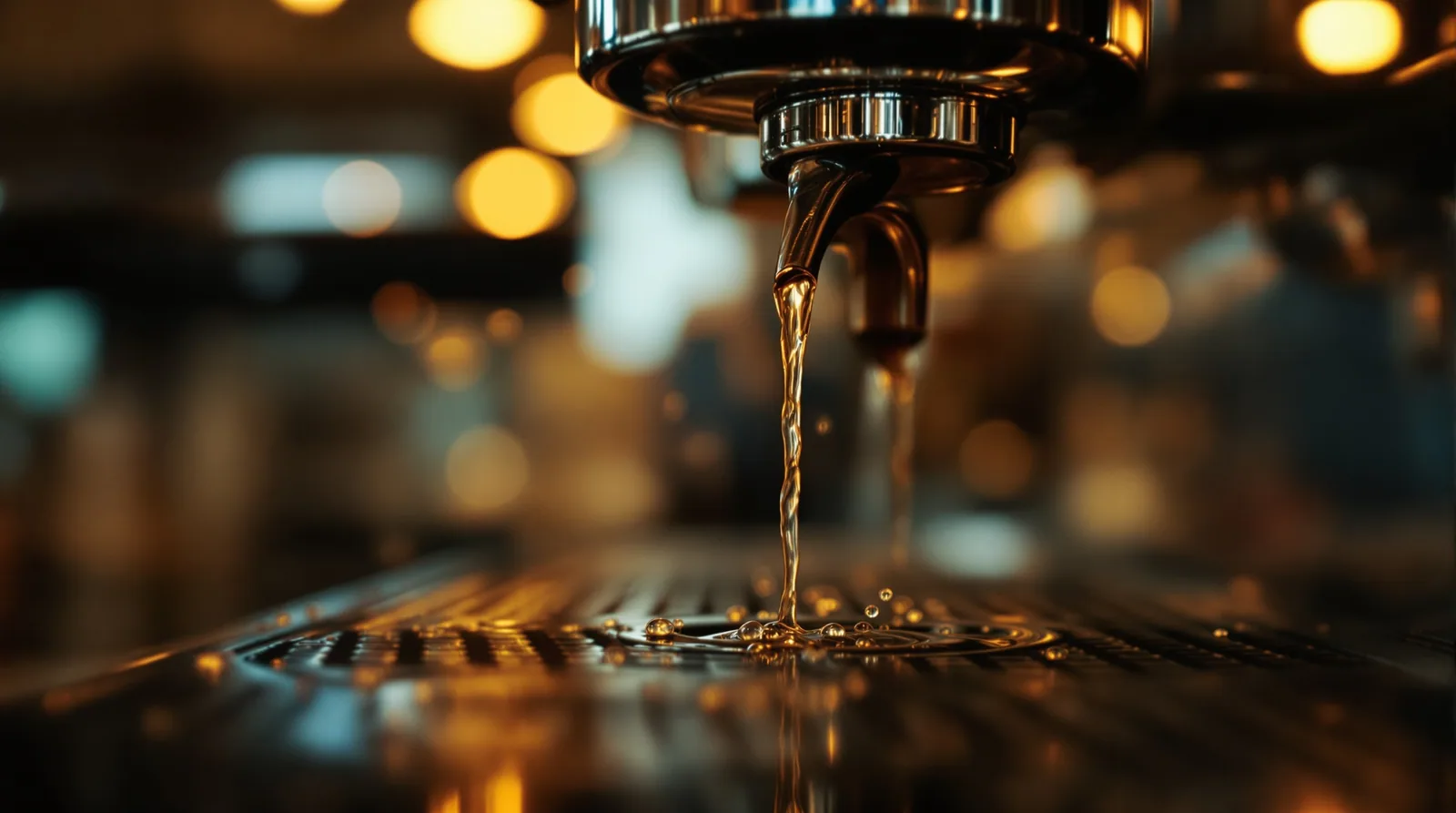
the hiss of steam, the aroma of freshly ground beans, the thud of a tamp, and the drip of espresso into your cup. at the third draught in shoreditch, every element of espresso-making is an art. but what if i told you that all starts with a simple, often overlooked component: water? at 98% of your espresso, water isn't just filler. it's the silent partner to your arabica or robusta. mastering water quality could be your next coffee breakthrough.
understanding the basics of water composition
tap water is not just h2o. that is the chemistry shorthand, but what comes out of your kitchen tap carries a whole passenger list of dissolved minerals, chlorine compounds, sediment, and sometimes things you would rather not think about. the ones that matter most for espresso are calcium, magnesium, bicarbonate, and chloride.
calcium and magnesium are the minerals responsible for what we call "hardness." they are actually useful in small quantities because they bond with the aromatic compounds in coffee during extraction. erin molnar of rising star coffee puts it plainly: there are approximately 1,500 aromatic and flavour compounds in coffee, and minerals are what allow water to carry them to your cup. bicarbonate acts as a buffer, flattening acidity. chlorine is a disinfectant that municipal water suppliers add, and it has no business being anywhere near a good espresso.
so you want some minerals. not too many, not too few. the sweet spot, according to most machine manufacturers and a fair amount of real-world testing, is water hardness between 35 and 85 parts per million. below 35 ppm and the water is so stripped it cannot extract properly. above 85 ppm and you are feeding your machine a slow-acting calcium deposit that will eventually clog your heating element.
---
why water quality impacts espresso flavor
pull a shot with london tap water and then pull the same dose, same grind, same beans with properly filtered water at 65 ppm. the difference is not subtle. one tastes flat and slightly metallic. the other has clarity, brightness, and whatever the roaster actually intended you to taste.
here is the thing about extraction: water does not just transport flavour, it selects flavour. highly mineralised water binds aggressively to certain compounds and leaves others behind. bicarbonate in particular suppresses acidity, which is why a naturally bright ethiopian yirgacheffe can taste dull and one-dimensional when brewed with hard london water. you are not getting a bad extraction, you are getting a chemically distorted one.
chlorine is the more obvious villain. you can smell it in the cup if levels are high enough, and even when you cannot quite smell it, it interferes with the volatile aromatics that make specialty coffee worth paying attention to. a basic carbon filter removes most of it. that alone can noticeably improve a cup.
soft water brings its own problems. strip the water down to near-zero dissolved solids (through reverse osmosis, for example) and you lose the mineral carriers that help pull compounds from the coffee grounds. the result is thin, over-acidic, and sometimes sour. reverse osmosis water is not recommended for most home espresso setups unless you are remineralising it afterward, which adds a whole other layer of complexity most people do not want.
the flavour impact is real, measurable, and honestly more significant than most grinder upgrades at the entry level. sort your water first.
---
comparing home and commercial water filters
not all filters do the same job, and buying the wrong one is a waste of money. the market broadly breaks into four categories.
| filter type | what it removes | what it keeps | best for |
|---|---|---|---|
| carbon block | chlorine, sediment, odour | minerals (calcium, magnesium) | soft to medium hard water |
| carbon + polyphosphate | chlorine, sediment; inhibits scale | minerals, slightly reduced hardness | slightly hard water |
| ion exchange softener | calcium and magnesium (scale) | may increase sodium | hard water, machine protection |
| two-stage softening system | chlorine, sediment, and hardness | balanced mineral content | very hard water, commercial use |
for most home baristas on soft to slightly hard water, a standard carbon filter with polyphosphate is the right call. the polyphosphate locks up calcium so it cannot bond to your boiler walls, without actually removing it from the water. your mineral profile stays relatively intact. your machine stays clean.
if your water is genuinely hard (above 200 ppm total dissolved solids, which is common in parts of southern england and many american cities), you need something more. clive coffee's two-stage water softening and filtration system is a good example of what proper hard-water treatment looks like at the home level: it connects directly off your cold water line and brings hardness down to machine-safe levels before the water ever reaches your boiler.
commercial setups at a café volume need a dedicated commercial filtration system, full stop. the throughput volume on a commercial la marzocco or a synesso means that even moderately hard water will deposit enough scale inside a year to cause real damage. the cost of a proper filtration setup is trivial compared to a service call on a commercial machine.
a quick note on inline filters that clip to your machine's water line: they are fine for light filtration but they have a limited capacity and need replacing more often than people remember. check the manufacturer's recommended lifespan and set a calendar reminder. most get ignored and run empty for months.
---
step-by-step guide to testing water hardness
you do not need a lab. a basic water hardness test at home takes about three minutes and costs almost nothing if you use test strips, which are widely available online and at most aquarium shops.
- buy a pack of water hardness test strips (look for ones that measure in ppm or mg/l, not just "soft/medium/hard").
- run your cold tap for 20 to 30 seconds before collecting the sample. this clears stagnant water from the pipes.
- dip the strip for the time specified on the packet, usually around 2 seconds.
- hold it flat and wait the full reaction time before reading, typically 60 seconds.
- match the colour on the strip to the chart on the packaging.
- note the result in ppm. anything between 35 and 85 ppm is where you want to be for espresso. between 86 and 200 ppm means you need at least a polyphosphate inhibitor. above 200 ppm means you need a softening stage.
if you want more precise results, a handheld tds (total dissolved solids) meter gives a digital reading in seconds and costs around £15 to £25. bear in mind that tds measures everything dissolved in the water, not just calcium and magnesium, so it is a useful indicator but not a perfect hardness test on its own. for a more complete picture, use both.
test again after you install any filter. and then every few months, because municipal water supplies shift seasonally, particularly in summer when demand on treatment systems increases.
a roaster friend in glasgow mentioned once that her home machine started pulling noticeably faster shots in august, which she traced back to a seasonal spike in local water hardness. she had not changed a single variable except the water coming out of the wall. that sort of invisible inconsistency is exactly what regular testing catches.
---
common water-related issues in espresso making
scale buildup is the most talked-about problem, and for good reason. calcium carbonate deposits on heating elements act like thermal insulation, meaning your boiler works harder to reach temperature and then struggles to hold it. that translates directly to inconsistent extraction temperatures, and inconsistent temperature means inconsistent flavour. in the worst cases, scale clogs water lines entirely and causes leaks or component failure.
the early warning signs are:
- longer-than-usual heat-up times on a machine you know well
- pressure fluctuations during extraction that were not there before
- white or chalky residue around the group head or steam wand
- a faintly metallic or mineral taste even after descaling
taste inconsistency is trickier to diagnose because it can look like a grind problem, a dose problem, or a stale-bean problem. if you have ruled those out and your shots are still swinging wildly between sour and flat, run a water hardness test. seasonal shifts in your local water supply can move the needle enough to visibly affect extraction even without any machine buildup at all.
under-extraction from over-soft water trips up people who have heard that soft water is better and gone too far, using distilled or near-zero tds water thinking it will be cleaner. the opposite happens. without minerals to act as carriers, extraction is shallow and the cup tastes thin and acidic. if you are using a home reverse osmosis system, you need to remineralise. there are commercially available remineralisation sachets designed specifically for espresso water preparation.
descaling on a regular schedule is still necessary even with good filtration. filters slow scale formation, they do not eliminate it entirely. most manufacturers recommend descaling every three to six months for home machines depending on water hardness and usage volume.
---
faq
what ppm should my water be for espresso?
the target range is 35 to 85 ppm. below that, you are losing the mineral carriers that help extraction and your machine's sensors may also behave unpredictably. above 85 ppm and scale buildup becomes a genuine concern over time. if you sit between 50 and 70 ppm, you are in a comfortable spot for both flavour and machine longevity.
can i use bottled water instead of filtering tap water?
you can, and some home baristas do, but it gets expensive fast and the environmental cost is hard to justify when a good inline filter does the same job. if you do go the bottled route, check the mineral analysis on the label (most european still waters print it on the back). aim for a low bicarbonate content and a calcium level that keeps total hardness in that 35 to 85 ppm range. volvic is a common recommendation in the uk for sitting naturally within a useful range, though it varies by batch.
does water temperature matter as much as mineral content?
both matter, but they affect different things. mineral content shapes which flavour compounds get extracted and at what rate. temperature determines extraction speed and can tip a shot toward sour (too cool) or bitter (too hot). the standard target for espresso extraction is 90 to 96 degrees celsius at the group head. poor water quality can mask temperature problems, and vice versa, which is why chasing one variable at a time makes diagnosis much easier.
how often should i replace my water filter?
it depends on the filter type and your water volume. most home inline carbon filters have a capacity rated in litres, often somewhere between 1,000 and 3,000 litres before the active media is exhausted. for a home machine pulling two or three shots a day, that might mean replacing every six to twelve months. the safer approach is to retest your water hardness every few months. if you notice the reading climbing back toward where you started, the filter is losing effectiveness.
is a two-stage filter worth it for home use?
if your water is genuinely hard (above 150 to 200 ppm), yes. the extra stage adds ion exchange softening alongside carbon filtration, which brings hardness down to machine-safe levels rather than just inhibiting scale with polyphosphate. for moderately hard water, a single-stage carbon plus polyphosphate filter is usually sufficient and cheaper to maintain. the two-stage setup makes most sense for anyone running a home setup seriously or in an area known for very hard water, parts of the south of england, large sections of the american midwest, much of australia's eastern seaboard.
so next time you're at the third draught, or tinkering with your home setup, give a thought to the clear stuff coming through your portafilter. the unsung hero of your espresso might just be the water. a simple filter or tweak in treatment could elevate your cup from ordinary to extraordinary.