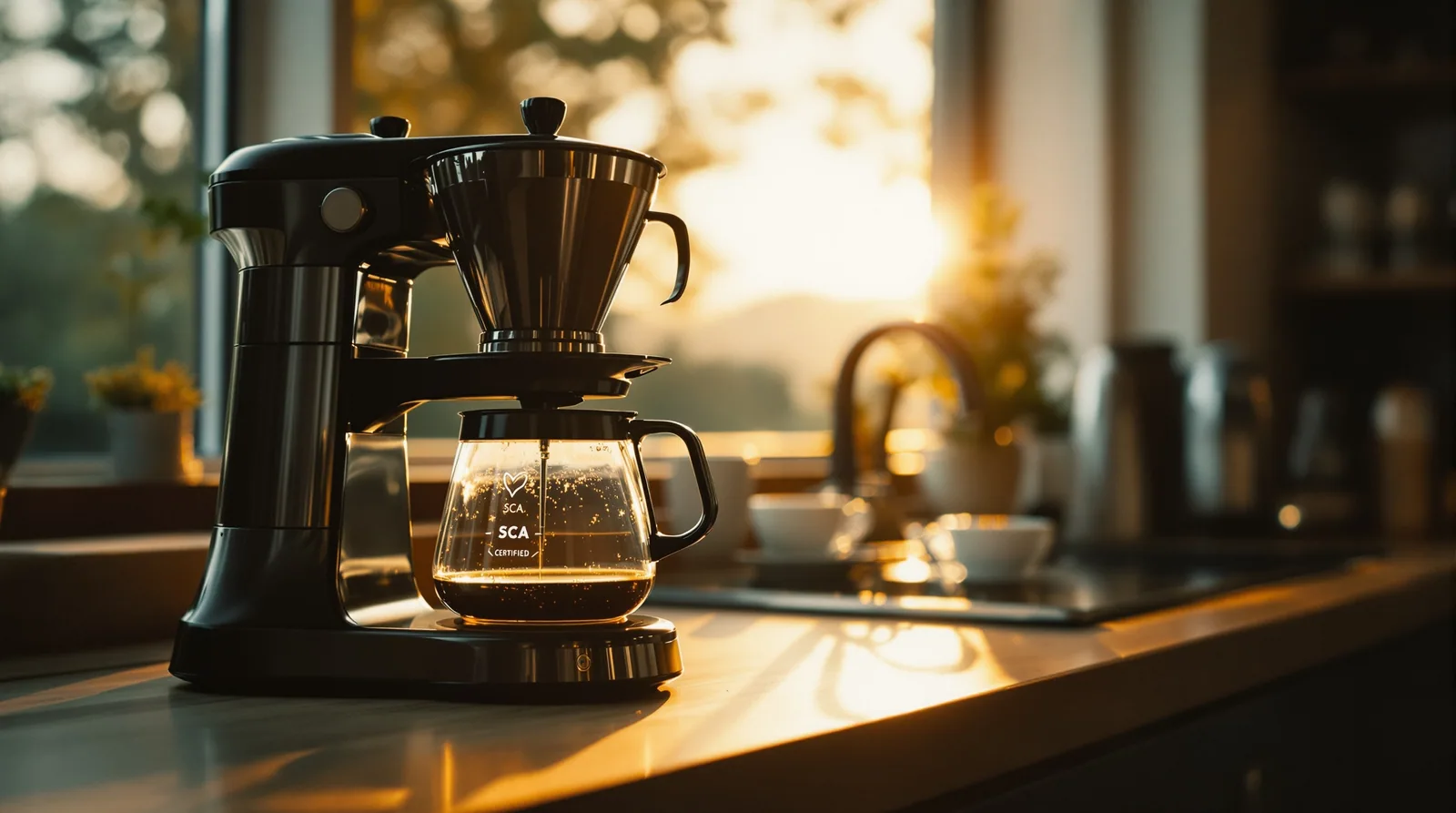
what sca certification means for your coffee maker
sca certification for coffee makers isn't just a label; it's a rigorous standard. discover why this matters for your brew quality and home coffee experience.
in this guide
- understanding sca certification
- the seven tests every certified brewer must clear
- the history of the sca
- why sca certification matters to coffee lovers
- comparing certified vs. non-certified coffee makers
- personal experiences with sca-certified machines
- how to choose an sca-certified coffee maker
- faq
- does sca certification apply to espresso machines?
- how often do certified machines need to be re-tested?
- can a french press or pour-over ever be sca certified?
- is a more expensive certified machine always better?
- where can i find the full current list of certified home brewers?
you've probably stood somewhere waiting for a filter and found yourself actually watching the bar. not in a weird way. just, you notice things. i was at ozone in shoreditch last tuesday nursing a batch brew and watching one of the team adjust their grind between jugs, and the thing i kept coming back to was how much the equipment itself was doing the quiet work. the machine on their batch station wasn't random. it was sca certified. and that's not a logo they put there for vibes. it's a pass/fail standard built in an actual lab, tested against brewing science that goes back decades. the specialty coffee association built it, and it holds up.
understanding sca certification
the sca certified home brewer program is run by the specialty coffee association, a nonprofit trade body whose testing draws on research going back to the coffee brewing center. testing happens at the sca's lab at uc davis. and that detail matters more than people realise, because it means a manufacturer doesn't get to mark their own homework. a machine either passes or it doesn't. full stop.
so what does passing actually require?
the seven tests every certified brewer must clear
the sca evaluates automatic drip brewers against a checklist covering the full brewing process, from water contact to what lands in your cup. according to moccamaster's breakdown of the standard, the programme tests these seven attributes:
- brewing temperature. water entering the coffee bed must sit between 92°c and 96°c (197°f to 205°f). too cool and you under-extract. too hot and you're scorching the grounds and wondering why your ethiopian natural tastes like wet cardboard.
- brewing time. a full carafe should brew in four to eight minutes. any slower and the coffee goes flat. any faster and you haven't pulled enough out of the bed.
- uniformity of extraction. scored out of 100. anything below 60 fails. measures how evenly solubles are drawn from the outside, middle, and inside of the bed (the part most home brewers genuinely never think about).
- total dissolved solids (tds). the brewed cup must hit 18% to 22% tds. that's the golden cup extraction window. neither thin nor harsh.
- beverage preparation. the brewer must hit the right coffee-to-water ratio. honestly, 1:18 is the lazy default most brands reach for, but the test at least confirms the machine can get somewhere close.
- beverage clarity. the sca filters the finished brew and literally weighs the sediment. a gritty cup fails.
- paper filter compatibility. standard filters must fit and stay put. not collapse halfway through a brew cycle.
certification doesn't rank machines against each other. pass/fail. if a brewer clears all seven it earns the mark. what you do after that is still on you.
---
the history of the sca
the organisation's roots go back to 1982, when a group of specialty coffee importers and roasters in the united states formed the specialty coffee association of america. the scaa spent the following decades building cupping protocols, green coffee grading standards, and the golden cup brewing guidelines that still anchor the certification today. decades of actual work. real committees, real arguments about extraction yield.
across the atlantic, the specialty coffee association of europe was doing parallel work. two organisations, similar missions, a lot of duplicated effort for international brands trying to satisfy both sets of criteria. the merger happened in 2017, combining the scaa and scae into the single global sca we have now. whole latte love puts it plainly: the sca is a global organisation of coffee professionals committed to improving the industry through sustainability, education, and carefully developed standards.
the commercial espresso machine certification came slightly later, growing out of volunteer work by the world barista championship committee around 2004. by 2026, the sca's certified commercial equipment programme covers espresso machines tested against world coffee championships rules. worth knowing: the 2018 world barista champion, agnieszka rojewska, competed on machines that had been through this same process. home brewer certification and commercial certification are separate programmes with separate criteria. a cafe's group head has no bearing on whether a domestic drip machine earns the mark.
---
why sca certification matters to coffee lovers
here is the thing most people miss. an sca-certified machine doesn't guarantee a great cup. it guarantees the machine can produce one. the beans, the grind size, the water quality, the ratio you choose, all of that still matters. what certification removes is the variable of equipment failure. that's it. that's the job. nothing more dramatic than that.
without the mark, you're trusting marketing copy. with it, you have independent lab data. and for someone spending upwards of £200 on a drip brewer, that distinction is real money.
there's also a durability argument. certified brewers tend to be built to tolerances that hold. the technivorm moccamaster, probably the most recognisable certified machine going, is repairable at component level and has been in continuous production since the 1960s. ask the average owner of a cheaper supermarket brewer how the heating element is holding up after three years. go on.
right, a filter coffee obsessive i know keeps a moccamaster on the counter of her terraced house in leith (she also buys greens and home-roasts on weekends, because of course she does) and she put it this way: "i stopped fussing over my drip coffee once i got a certified machine. the water temperature is just right every time. now i only fuss over the beans." that's the quiet value of certification. it removes a source of inconsistency that most people don't even know they have.
---
comparing certified vs. non-certified coffee makers
the differences aren't always visible. both types can look identical on a shelf. the gap shows up in the cup. sometimes on your electricity bill too.
| feature | sca-certified brewer | non-certified brewer |
|---|---|---|
| brewing temperature | 92-96°c, lab verified | manufacturer claim only |
| brew time | 4-8 minutes, tested | unverified |
| extraction uniformity | scored and minimum-thresholded | not assessed |
| tds (extraction %) | 18-22%, golden cup window | no standard applied |
| sediment testing | filtered and weighed | not assessed |
| price range | typically £150-£400+ | £20-£400+ |
| repairability | often high (moccamaster, oxo) | varies widely |
non-certified machines aren't automatically bad. some budget brewers produce decent coffee by accident, hitting temperature ranges that happen to be acceptable. but you have no way of knowing that without the lab data. and honestly, at the higher end of the price bracket there is simply no excuse for a £300 brewer not to carry the mark. none.
the coffee chronicler's round-up of certified drip machines makes a good point here: the certified list is short. dozens of machines flood the market every year. very few submit for testing. fewer still pass. that scarcity is itself telling.
have you ever actually counted how many machines claim premium quality versus how many have bothered to submit for independent testing? it's a short list. embarrassingly short.
---
personal experiences with sca-certified machines
talk to enough home brewers and you hear a pattern. the first certified machine tends to arrive after a period of frustration. a run of expensive non-certified brewers that tasted fine some mornings and oddly flat on others, with no obvious reason why.
a roaster based in glasgow who supplies a handful of independent cafes in the southside told me he spent two years recommending his retail bags alongside whatever cheap brewer customers already owned. "i'd taste their home coffee and it was terrible," he said, refilling his oxo 12 cup mid-sentence (we were standing in his roastery off pollokshaws road, about 10am). "then i realised i was blaming myself for the roast when it was their machine running at 78°c." he now keeps a short list of certified machines to recommend alongside every retail bag he sells. and honestly, that's just good retail.
so the machine matters more than most consumers realise. most of the time it's the weakest link in an otherwise careful home setup. the grinder gets all the attention, which is fair, grinders do matter enormously, but a £400 ek43 dialled to 7.5 on a natural ethiopian feeding into a brewer running at 78°c is still going to disappoint you. guaranteed. i've seen it. more than once.
honestly, most people obsess over origin and roast profile and then brew on a machine that's quietly sabotaging all of it. that's the part that still gets me.
---
how to choose an sca-certified coffee maker
the first step is simple: check the sca's live list of certified home brewers. updated annually. the 2025 lineup includes machines from breville, oxo, technivorm, ge profile, and others. if a machine you're considering isn't on that list, it hasn't passed. or hasn't submitted, which is its own statement.
beyond the certification itself, here are the practical questions worth asking before you buy:
- carafe size. glass carafes keep coffee visible but lose heat fast. thermal carafes hold temperature for an hour or more without a hotplate, which matters if you're not drinking immediately. and hotplates cook your coffee. slowly. badly.
- built-in grinder. some certified machines, including the ge profile smart grind and brew, include a grinder. convenient, but if the grinder breaks you lose the whole unit. single point of failure.
- programmability. not everyone wants to think about coffee at 6am. timer functions and app connectivity on newer models are worth considering if your mornings are chaotic.
- repairability. the technivorm moccamaster is the benchmark here. replacement parts available directly, at sane prices (a thermoblock is around £35 if you source it right). a machine you can fix for £20 is worth more long-term than one you replace every three years.
- filter type. confirm the basket accepts standard paper filters or that the included reusable filter suits your grind size. a mismatch here collapses the whole system before the water's even hot.
one thing worth resisting: the urge to buy the most feature-rich certified machine if you'll mostly ignore the features. a simpler certified brewer used correctly will always outperform a complex one used carelessly. always.
---
faq
does sca certification apply to espresso machines?
yes, but through a separate programme. the sca certified commercial equipment programme covers professional espresso machines tested against world coffee championships standards, looking at temperature, pressure, filter basket consistency, and repeatability. this is aimed at cafes and competition use, not home espresso. the home brewer certification covers automatic drip machines only.
how often do certified machines need to be re-tested?
manufacturers must renew certification agreements with the sca periodically. the sca also updates its standards over time. if a machine's design changes significantly, it may need to go back through testing. check the current list on the sca website to confirm any specific model still carries active certification. third-party sites lag behind.
can a french press or pour-over ever be sca certified?
no. the certification is specifically for automatic brewers. manual methods like french press, v60, or aeropress involve too many user variables (pouring technique, kettle temperature, timing) to be assessed as a device independently. the sca publishes brewing standards and guidelines for manual methods, but those are standards for practice, not certifications for equipment.
is a more expensive certified machine always better?
not necessarily. all certified machines have cleared the same technical threshold. a £160 bonavita and a £400 breville luxe both carry the mark, meaning both can brew within the golden cup window. the price difference reflects build quality, features, and materials, not a higher tier of certification. for most home brewers, a mid-range certified machine is more than enough. buy the cheaper one and spend the difference on better beans.
where can i find the full current list of certified home brewers?
the sca maintains a live list at sca.coffee/certified-home-brewer. it's the only reliable source. third-party review sites sometimes list machines that have since lost certification or haven't submitted for the latest cycle, so go to the primary source before you commit.
look, next time you're in a cafe, maybe the workshop on clerkenwell road or wherever your local good place actually is, check what's on the batch brew station. chances are it's certified. there's a reason the people who care most about what ends up in the cup don't leave equipment quality to a manufacturer's word. the science is there. most people just need to know it exists.