what does 'specialty coffee' actually mean?
specialty coffee isn't just another buzzword. it's the pinnacle of coffee quality, where every link in the supply chain is valued and respected. discover what sets it apart.
in this guide
- the origin of specialty coffee
- the supply chain: from bean to cup
- grading and standards
- what a cupping actually looks like
- single-origin vs. blends
- consumer impact and perception
- the cost of quality
- faq
- what is the official definition of specialty coffee?
- how is specialty coffee different from regular coffee?
- can a blend ever be specialty coffee?
- do i need expensive equipment to brew specialty coffee well?
- does specialty coffee always taste light and acidic?
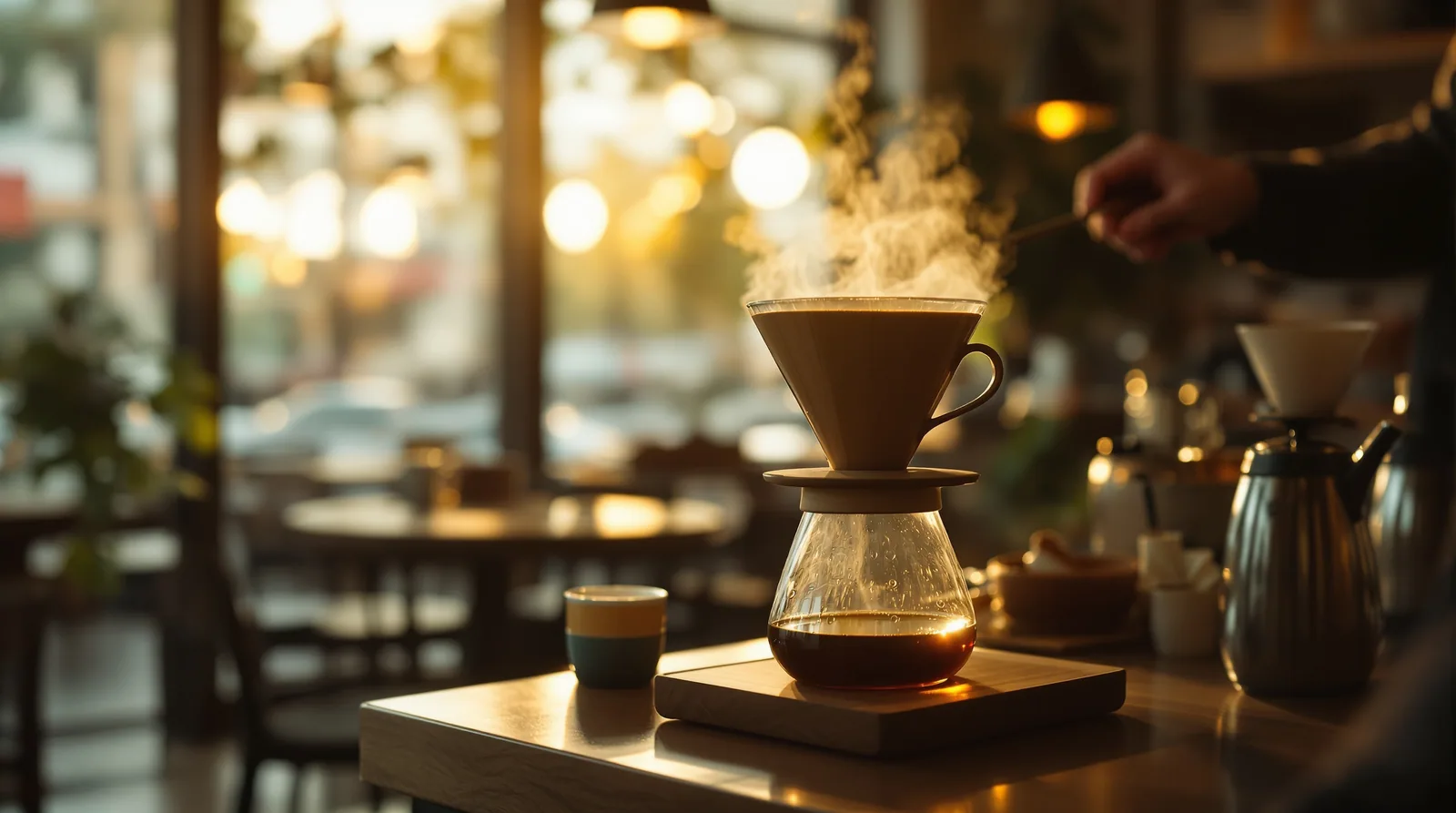
in the corner of java joe's, a barista carefully weighs out 18 grams of single-origin yirgacheffe. the burr grinder hums softly, releasing a cascade of floral, citrusy notes into the air. this isn’t just coffee, it’s an experience. specialty coffee, they call it. but what does that really mean? the term has been around since erna knutsen coined it in 1974. it's more than just a quality label; it's a commitment to exceptional flavour and respect for everyone along the journey from bean to cup.
the origin of specialty coffee
erna knutsen didn't set out to start a movement. in 1974, writing in tea & coffee trade journal, she used the phrase "specialty coffee" to describe beans grown in specific microclimates that produced exceptional flavour. that's it. a practical descriptor for a practical observation. the idea that place shapes taste, that a particular hillside in oaxaca or a high-altitude farm in sidama can produce something categorically different from bulk commodity coffee.
for most of the following two decades, the term stayed fairly niche. it lived in the vocabulary of importers and roasters who cared about provenance, not in the mouths of everyday coffee drinkers. then the 1990s happened. small roasters started opening shops. people started paying attention to where beans came from. the specialty coffee association began formalising what "specialty" actually required in measurable terms. suddenly, the word had teeth.
what knutsen planted as a seed grew into something with real infrastructure behind it: standardised scoring, licensed graders, traceability requirements, and eventually a global conversation about what coffee can and should taste like. the original definition was always about flavour rooted in place. that part hasn't changed.
the supply chain: from bean to cup
here is the thing most people miss. specialty coffee is not just about what ends up in your cup. it's a designation that, in theory, applies to every single hand the coffee passes through on its way to you.
start at the farm. specialty-grade green beans must meet strict defect limits before anything else happens. the sca's standards set allowances for physical defects in a 300g sample, things like broken beans, stones, insect damage. exceed those limits and the coffee cannot be classified as specialty regardless of how it later tastes. farming practices matter too: altitude, processing method, cherry selection. most specialty lots are hand-picked, choosing only ripe cherries rather than strip-picking everything at once.
then comes processing, the step where green coffee is separated from the fruit. washed, natural, honey: each method leaves a different fingerprint on the final cup. after that, export and import, where documentation and traceability become critical. a specialty importer should know the farm name, the harvest date, the lot number. not just "ethiopia" but "hunkute washing station, gedeo zone, natural process, 2023 harvest."
roasting is where a lot of quality is either preserved or destroyed. lighter roasts tend to retain more of the origin character, which is why you'll see so many specialty roasters pulling their roasts early by commodity standards. and then there's you, the person brewing it. grind size, water temperature, brew ratio: all of it matters. as sprudge puts it, specialty coffee means better-tasting coffee where everyone on the supply chain is treated with respect and value. that last part is as important as the score.
grading and standards
so how does a coffee actually earn the specialty label? with a number.
the widely accepted threshold is 80 points or above on the sca's 100-point cupping scale. that score is awarded by a certified q grader, a licensed professional who has passed a notoriously demanding series of exams covering sensory analysis, green grading, and cupping protocols. think of them as the coffee equivalent of a master of wine, except the exam pass rate is arguably harder.
during a cupping, the q grader evaluates the coffee across multiple attributes:
- aroma (both dry grounds and the wet crust after the pour)
- flavour and aftertaste
- acidity (its brightness and quality, not just presence)
- body (the weight and texture in the mouth)
- balance
- sweetness
- uniformity across multiple cups
- cleanliness of cup (absence of off-flavours)
- overall impression
according to the grading breakdown, scores above 90 are rated outstanding, 85-89.99 is excellent, and 80-84.99 qualifies as very good. anything below 80 is not specialty. full stop.
the sca updated its framework more recently with the coffee value assessment, which broadens the evaluation to account for consistency, sustainability, and the people behind the coffee. a score is still central, but the organisation is acknowledging what many in the industry have argued for years: that numbers alone cannot capture the full picture of quality.
what a cupping actually looks like
walk into a cupping room at a serious roaster and it hits you immediately, the concentrated smell of freshly ground coffee multiplied across six or eight cups lined up on a table. the q grader moves methodically, breaking the crust on each cup, nose hovering close, then slurping coffee from a spoon with a sound that would get you thrown out of any restaurant. it's forensic. intentional. a long way from how most of us drink coffee in the morning.
single-origin vs. blends
specialty coffee and single-origin coffee are not the same thing, though the terms get tangled up constantly. single-origin just means the coffee comes from one defined place, a country, a region, a specific farm or washing station. a blend, obviously, combines beans from multiple origins.
both can be specialty-grade. both can be terrible. the distinction matters for different reasons.
| | single-origin | blend |
|---|---|---|
| traceability | high, often to farm level | lower, depends on roaster transparency |
| flavour profile | expressive, terroir-driven | consistent, balanced across batches |
| seasonal variation | yes, changes harvest to harvest | roaster can adjust to maintain profile |
| best brewing method | filter, v60, aeropress | espresso, milk-based drinks |
| price | generally higher | generally lower |
the case for single-origin is about transparency and character. when you drink a washed kenyan from kiambu county, you're tasting a specific place at a specific time. the case for blends is consistency: a good espresso blend is engineered to perform well under the pressure and heat of extraction, to hold up in milk, to taste the same in january as it does in july. roasters like to have one of each for exactly this reason.
honestly, the single-origin versus blend debate gets more tribal than it needs to. what actually matters is whether the coffee is good and whether the roaster can tell you where it came from.
consumer impact and perception
the way people drink coffee has shifted noticeably in the past twenty years, and specialty coffee is both cause and effect of that shift. consumers started asking questions. where is this from? how was it processed? why does this taste different from the last bag? those questions created demand, and demand created supply.
but the relationship runs both ways. as perfect daily grind found when looking at specialty coffee around the world, cultural context shapes what "specialty" means in practice. in japan, kissaten culture means filter coffee has always been taken seriously, but darker roast profiles remain popular even in specialty settings. in the us, plenty of people buying from specialty roasters still add milk and sweetener. in the uk, flat whites dominate even in cafes sourcing outstanding single-origin lots.
this matters because perception of quality is not universal. a coffee scored 87 points that tastes searingly bright and delicate might be the highlight of your week or completely impenetrable depending on what you grew up drinking. specialty coffee as a movement has sometimes been guilty of treating a particular flavour preference (light, floral, acidic, filter) as objectively correct. it isn't. the score is technical. what you enjoy is personal.
that said, the broader effect of the specialty movement on what's available to ordinary coffee drinkers has been genuinely good. more traceability, better sourcing conversations, higher farmer prices, more interesting flavours on cafe menus. even if you never set foot in a place like workshop coffee on wigmore street or care about the difference between washed and natural process, the tide has lifted.
the cost of quality
you've probably noticed that specialty coffee costs more. sometimes significantly more. a bag of supermarket ground coffee might run you £4. a 250g bag of a well-sourced ethiopian natural from a good roaster could easily be £14 or £16. why?
here's how the economics break down:
- farm-level costs are higher. hand-picking, careful processing, and better agricultural practices cost more than mechanised commodity farming. specialty farmers are paid a premium above commodity market prices, which is the whole point.
- green coffee is priced accordingly. specialty-grade green beans trade at prices that reflect their quality and the work behind them. a standout lot from a celebrated producer can command prices multiple times the commodity rate.
- importers take on more complexity. sourcing small lots, maintaining relationships with individual farms, handling the documentation that traceability requires: this is not cheap.
- roasters roast smaller batches. specialty roasters are typically not running continuous drum roasters at industrial scale. smaller batches mean more attention per kilo and lower throughput to spread fixed costs across.
- quality control adds cost at every stage. cupping, grading, sample roasting: all of this happens before a single bag reaches a consumer.
as stone creek coffee puts it, specialty coffee lives in the details, in farming practices, grading standards, roasting decisions, and the way it tastes when you slow down enough to notice. those details have a cost attached.
a specialty coffee usually starts at around £20 per kilo and goes up from there with no real ceiling for exceptional lots. compare that to commodity arabica trading at roughly £2-4 per kilo and you start to understand the gap. the question of whether that premium is always justified is worth asking. not every coffee charging specialty prices actually earns the designation. but when it does, you're paying for an entire chain of decisions made correctly, from the first pick to the last pour.
---
faq
what is the official definition of specialty coffee?
the specialty coffee association defines specialty coffee as a coffee or coffee experience recognised for its distinctive attributes, resulting in significantly higher value in the marketplace. in practical terms, this translates to a score of 80 or above on the sca's 100-point cupping scale, evaluated by a certified q grader under standardised conditions. the sca has also updated its framework to account for sustainability, consistency, and the wellbeing of producers, not just raw cup score.
how is specialty coffee different from regular coffee?
commodity or commercial coffee is produced and traded at scale, typically prioritising consistency and yield over flavour. it is often mechanically harvested, blended from multiple undisclosed origins, and roasted for uniformity. specialty coffee, by contrast, is traceable to a specific farm or region, graded against strict quality standards, and sourced through supply chains where farmers are paid above commodity prices. the flavour difference is real and not subtle once you've had both side by side.
can a blend ever be specialty coffee?
yes. a blend is specialty if all the component coffees score 80 or above individually and the final product maintains that quality. many excellent espresso blends are built entirely from specialty-grade lots. the blend itself won't carry a single cupping score the way a single-origin lot does, but the raw ingredients can absolutely be specialty-grade and sourced accordingly.
do i need expensive equipment to brew specialty coffee well?
not really. a decent burr grinder is the single most impactful piece of kit you can own, because grind consistency affects extraction more than almost anything else. beyond that, a v60 and a kettle with some temperature control will get you most of the way there for under £60 total. the coffee itself matters more than the brewing device.
does specialty coffee always taste light and acidic?
no, though you'd be forgiven for thinking so given how many specialty cafes lean that direction. roast profile is a choice. a naturally processed coffee from brazil can be roasted to a medium profile and taste chocolatey, nutty, and low-acid while still being specialty-grade. the 80-point threshold is about quality, not about a particular flavour style. what you find in a lot of specialty shops reflects the preferences of the people running those shops, not a requirement of the designation itself.
next time you sip that exquisite pour-over or perfectly balanced espresso shot, remember the meticulous hands and passionate minds behind each bean. specialty coffee isn't just a drink; it's a story of care and craft. so, savour each sip. it's more than just coffee, it’s a celebration of what happens when quality meets respect.