why coffee cooperatives matter
coffee cooperatives are crucial for small farmers, offering better prices and market access. your coffee choices can support these communities. discover how.
in this guide
- how coffee cooperatives work
- the benefits for farmers
- challenges faced by cooperatives
- real stories from cooperative members
- comparison: direct trade vs cooperatives
- faq
- what is a coffee cooperative, exactly?
- does buying cooperative coffee mean i am paying farmers fairly?
- is cooperative coffee the same as fair trade coffee?
- are cooperative coffees lower quality than single-origin lots?
- how do i know if a cooperative is actually well-run?
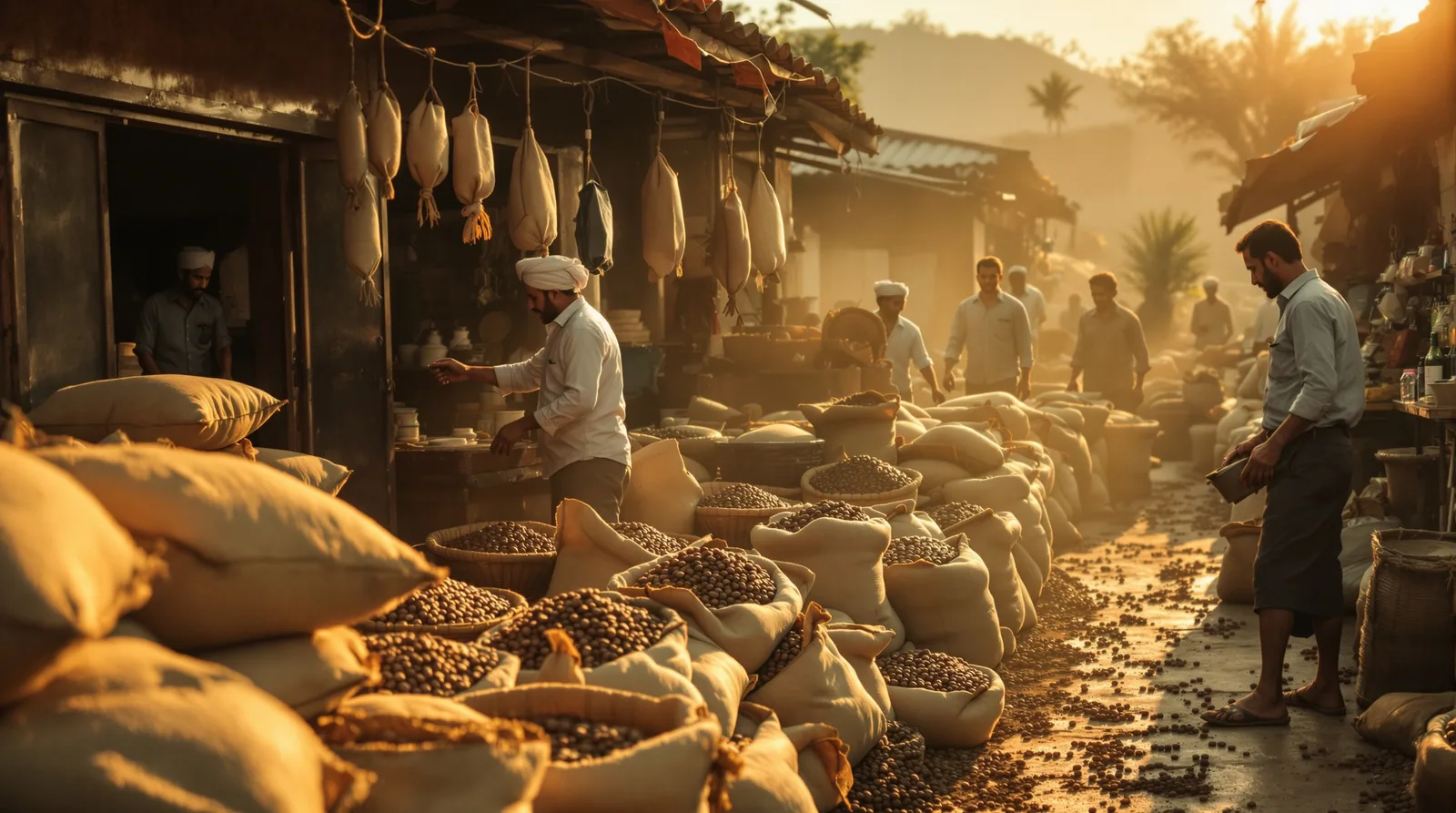
in the heart of antigua, guatemala, the air is heavy with the scent of freshly roasted beans. here, in a small, bustling market, farmers congregate, their weathered hands exchanging sacks of coffee. not just any coffee, beans that have traveled from the fields of cooperative members who have pooled their resources to secure better prices and reach buyers around the world. the chatter is lively, the anticipation palpable, each farmer knowing their collective strength levels the playing field against global giants. this is the essence of a coffee cooperative: empowerment through unity.
how coffee cooperatives work
at their simplest, cooperatives are groups of smallholder farmers who choose to sell collectively rather than go it alone. but that one-line definition hides a lot of variation. a cooperative can be a few dozen farmers sharing a wet mill, or it can be a multi-thousand-member organisation with its own quality labs, export licence, and full-time staff running administration, finance, and outreach.
the basic mechanics work like this. farmers join by paying a membership fee or committing to supply a set volume of coffee each harvest. those contributions fund shared infrastructure: processing stations, storage, transport, sometimes a cupping lab. the cooperative aggregates the cherry or parchment from its members, processes it to exportable green coffee, and negotiates with buyers on behalf of everyone. revenue flows back to members, usually in proportion to how much they contributed, though some cooperatives split profits differently.
here is the thing about collective bargaining: a single farmer with half a hectare of land outside huila, colombia has almost zero negotiating leverage with an international buyer. a cooperative representing 400 farmers from the same region has a lot. cooperatives give farmers a collective voice in an industry historically dominated by large exporters, traders, and multinationals. that voice translates into better prices, access to premium markets, and the ability to pursue certifications like fair trade or rainforest alliance, which individual farmers rarely have the resources to obtain on their own.
membership fees, governance rules, quality standards, and size all differ from cooperative to cooperative. some require members to sell exclusively through the co-op. others allow farmers to sell a portion of their crop to private buyers (those intermediary buyers sometimes called coyotes in parts of mexico and central america, who pay cash at the gate but almost always pay less). the governance structure matters too: well-run cooperatives hold regular member meetings, publish financial accounts, and let farmers vote on leadership. poorly run ones do not, and that is where things get complicated.
---
the benefits for farmers
the economic case for cooperative membership is real. pachamama coffee, a farmer-owned brand operating on a pure cooperative model, reported that its farmer-owners earned on average eleven times more than they would have selling through conventional intermediary channels. that is not a universal number, but it points to something genuine.
the specific advantages tend to cluster around a few areas:
- better farmgate prices. collective volume means more negotiating power with roasters and importers. cooperatives also tend to pay members more than local middlemen because their operating model is not built around margin extraction.
- access to credit. individual farmers with no collateral struggle to get loans. a cooperative can pool assets and share borrowing risk, making it far easier for members to access the financing they need to invest in their farms.
- shared processing infrastructure. a wet mill or dry mill costs serious money. shared between hundreds of members, that cost becomes manageable. the result is better-processed coffee, which commands higher prices.
- certifications. fair trade, organic, rainforest alliance. each of these opens doors to buyers willing to pay a premium. getting certified as an individual farmer is expensive and logistically complicated. through a cooperative, the costs and paperwork get distributed.
- technical training. many cooperatives run agricultural extension programmes, teaching members about soil health, pruning, fermentation, and post-harvest processing. better farming, better coffee, better prices.
- community investment. surplus revenue often funds schools, health clinics, and infrastructure in farming communities. not always. but often.
one farmer from a cooperative in chiapas described it this way in a field report: she had been selling to a local intermediary for six years before joining. the price was consistent, she said, but it never changed. the first time she saw the per-kilo figure her cooperative negotiated with a us roaster, she thought someone had made a mistake.
---
challenges faced by cooperatives
cooperatives are not a magic fix. the model has genuine structural weaknesses, and pretending otherwise does not help anyone.
governance problems are the most common failure point. when decision-making is opaque, when a small group of leaders control finances without accountability, member trust erodes fast. some cooperatives are brilliantly run. others are not. the difference usually comes down to whether the governance structure is actually democratic and whether financial records are genuinely accessible to members.
market volatility hits cooperatives hard. coffee is traded on the c market, and price swings can be brutal. a cooperative locked into forward contracts at a price that seemed good in january can find itself in trouble by september if market conditions shift. individual farmers can pivot faster. cooperatives, with their larger volumes and longer planning horizons, sometimes cannot.
delayed payments are a real frustration. unlike a coyote who pays cash on the spot, a cooperative typically pays an initial advance when it receives the coffee, then a second payment once the export has been completed and revenue reconciled. that delay can stretch months. for a farmer who needs cash to pay for school fees or farm inputs, that wait is not trivial.
free-rider dynamics also come up. in competitive markets, farmers may sell their best lots privately to get the highest immediate price, then bring lower-quality coffee to the cooperative. this undermines the collective's ability to command premium prices from buyers who expect consistency. research from agricultural economists confirms this tension: the bilateral dependency between cooperatives and their member farmers is genuinely asymmetric, and managing it requires trust and incentives that not every cooperative gets right.
none of this means cooperatives are bad. it means they are institutions, and institutions are complicated.
---
real stories from cooperative members
numbers help. stories make it land differently.
pedro romero, founder of the capucas coffee cooperative in honduras, built the cooperative from the ground up after watching neighbouring farmers sell their harvest at prices that barely covered production costs. capucas is now one of the more well-documented examples of what sustained cooperative investment in quality and governance can produce: a recognised export brand, direct relationships with roasters in europe and north america, and a community school funded by cooperative profits. romero's point, in various interviews, is consistent: the cooperative did not just change prices. it changed who farmers thought they were. they stopped thinking of themselves as suppliers at the bottom of a chain and started thinking of themselves as business owners.
that psychological shift comes up more than you might expect. a member of a small cooperative in yirgacheffe, ethiopia, told a visiting importer that the thing she valued most was not the money (though the money was better). it was being able to look a roaster in the eye at a cupping table and say "this is my coffee." that is not sentimental fluff. it is about dignity and agency in a supply chain that has historically offered very little of either to the people who actually grow the product.
not every story is triumphant. a cooperative in a region i will not name here collapsed a few years back when the board was found to have misappropriated funds. members lost an entire season's income. rebuilding took years. the farmers who had already been sceptical of the model were hardest to win back. that story matters too.
---
comparison: direct trade vs cooperatives
you will see both "direct trade" and "cooperative" on specialty coffee bags, sometimes together. they are not the same thing, but they are not opposites either.
direct trade, broadly, means a roaster has negotiated directly with a producer or group of producers, bypassing the conventional commodity chain. there is no single certification for it. it is a relationship model, not a regulated standard. cooperatives, meanwhile, are a producer-side organisational model. a cooperative can absolutely sell direct trade. many do. cooperative coffees are still considered direct trade in most of the specialty world, particularly when the cooperative provides full transparency about which members' lots are in a given bag.
here is a quick comparison of how the two approaches sit relative to a few common buying considerations:
| factor | direct trade (individual farm) | cooperative |
|---|---|---|
| traceability | very high, often single-farm or single-lot | variable, from single-member lots to blends |
| accessibility for small farms | limited, requires export-scale volume | high, co-op provides the export infrastructure |
| price to farmer | often highest when relationship is genuine | higher than commodity, lower ceiling than top direct trade |
| certification (fair trade etc.) | rare, usually not worth cost for one farm | common, shared certification cost across members |
| risk to roaster | higher (one harvest failure = no coffee) | lower (aggregated supply across many farms) |
| consumer transparency | highest | good, if cooperative is well-run and transparent |
the honest answer to "which is better" is: it depends entirely on execution. a roaster with a genuine, long-term relationship with a cooperative, who visits, publishes sourcing details, and pays above market is doing more good than a roaster who slaps "direct trade" on a bag bought through a broker with no producer relationship at all. the label is not the point. the relationship and the money reaching the farmer are the point.
---
faq
what is a coffee cooperative, exactly?
a coffee cooperative is a member-owned organisation of smallholder farmers who pool resources to process, market, and sell their coffee collectively. members pay fees or contribute coffee volume, share infrastructure like processing mills and storage, and benefit from collective bargaining power when negotiating with buyers. the cooperative sells the aggregated coffee and distributes revenue back to members, typically based on the volume or quality each farmer contributed.
does buying cooperative coffee mean i am paying farmers fairly?
not automatically. the cooperative model creates the conditions for fairer pay, but it does not guarantee it. a well-governed cooperative with strong buyer relationships and transparent finances will get significantly more money to its members than a poorly run one. when you buy from a roaster who publishes their sourcing relationships and pays above fair trade minimums, you have a reasonable chance of your money reaching farmers well. the columbia center on sustainable investment found that buying directly from farmers is the single most impactful consumer action for improving farmgate income, and cooperative coffees sold with full transparency get close to that.
is cooperative coffee the same as fair trade coffee?
no, though there is significant overlap. fair trade is a certification with specific price floors and standards. cooperatives are an organisational structure. many cooperatives pursue fair trade certification because it opens doors to buyers willing to pay the premium, and the certification cost is more manageable shared across members. but a cooperative does not have to be fair trade certified, and fair trade coffee does not have to come from a cooperative.
are cooperative coffees lower quality than single-origin lots?
this is a misconception worth pushing back on. cooperative coffees can be and often are exceptional. when a cooperative runs a serious quality programme, provides training, and incentivises members to deliver better cherry, the results speak for themselves. many cooperatives have built direct relationships with specialty roasters precisely because their lots are consistently good. the "cooperative = commodity blend" assumption is outdated. some of the most interesting microlots on the market come from cooperative members who would have no export route at all without the collective infrastructure behind them.
how do i know if a cooperative is actually well-run?
look for roasters who publish sourcing information, name the cooperative, describe the relationship, and ideally share what they paid. transparency about pricing is rare but it exists. you can also look at whether the cooperative has been around for more than a few years, whether it has third-party certifications (not as proof of quality, but as a signal of organisational capacity), and whether the roaster has visited. none of these are foolproof. but a roaster who can tell you the name of the cooperative's quality manager and roughly how long they have been working together is probably not buying blind.
so next time you sip your morning brew, consider where it came from. that rich aroma might be the result of a coffee cooperative’s shared vision and effort. remember, each cup has the power to uplift an entire community, turning a simple beverage into a lifeline for small-scale farmers. it's not just about the coffee; it's about the stories and livelihoods behind it.