q graders: the ultimate arbiters of specialty coffee
q graders, trained by cqi, set the standard for specialty coffee. through rigorous training, they ensure coffees meet sca's criteria to earn the 'specialty' label.
in this guide
- the origins and purpose of q grading
- the rigorous path to becoming a q grader
- why q graders matter: the impact on the coffee trade
- the science and art of coffee evaluation
- personal stories from q graders in the field
- faq
- what does a q grader actually do day to day?
- how long does q grader certification last?
- are there different q grader certifications?
- does a coffee need to be assessed by a q grader to be called specialty?
- how many q graders are there globally?
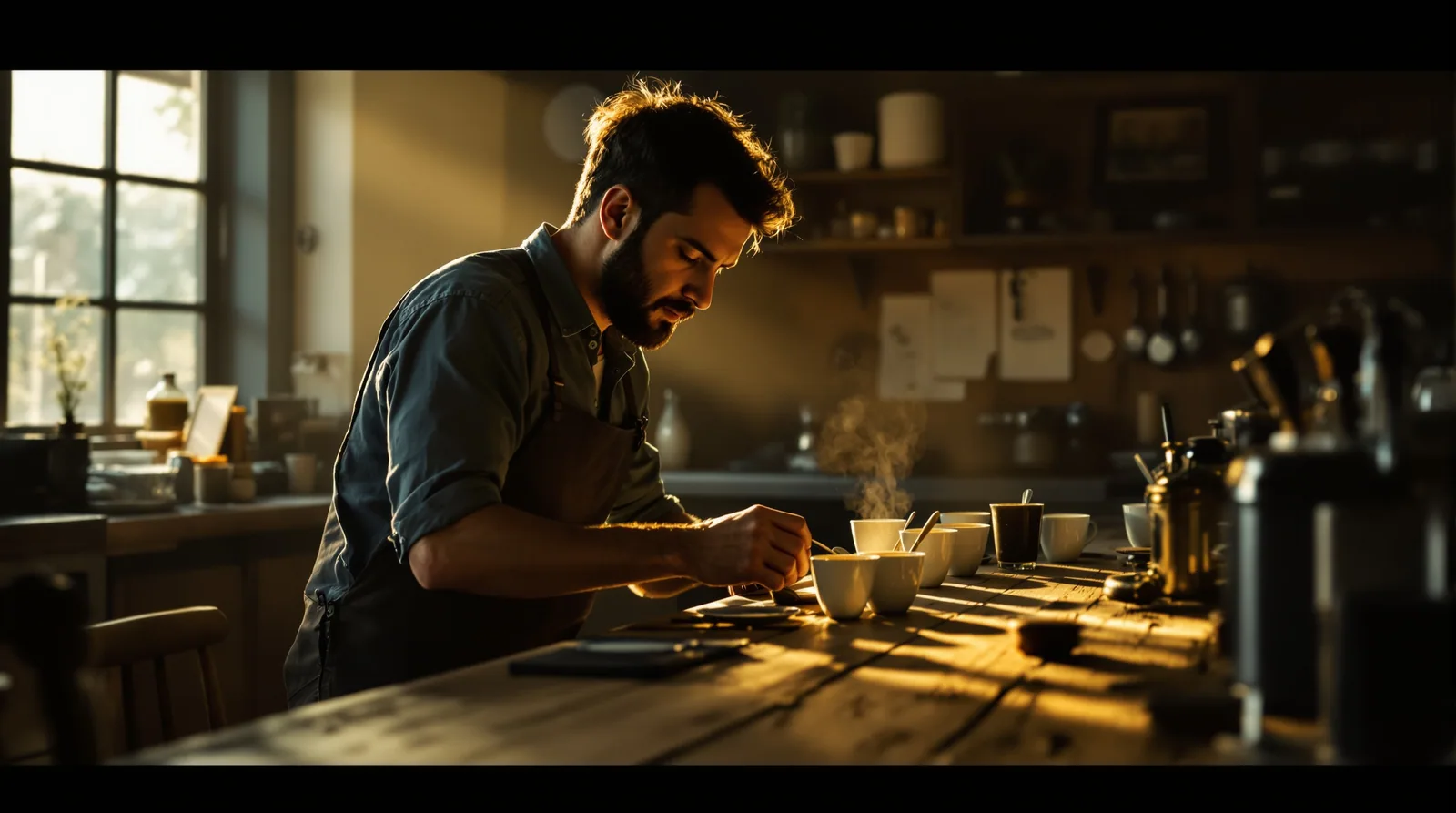
in a quiet corner of a bustling cupping lab, the air filled with the earthy aroma of freshly ground beans, sits marie, a seasoned q grader. with her trained nose and discerning palate, she's about to decide the fate of a new crop. her spoon glides through the cupped brew, her expression a study in concentration. this isn't just about taste; it’s about meeting the rigorous standards set by the coffee quality institute and the specialty coffee association. every slurp, every note detected, could determine whether a coffee earns the coveted specialty label.
the origins and purpose of q grading
the q grading system didn't appear overnight. the coffee quality institute (cqi) has been operating since 1996, originally as a nonprofit committed to improving coffee quality and the livelihoods of producers. but the actual q grader certification program, the q-test itself, launched in 2003. the goal was specific and practical: give buyers, roasters, importers, and farmers a shared vocabulary for quality so nobody is left guessing what "good coffee" means when a container crosses three borders.
before that, quality was largely subjective. a buyer in hamburg might describe a yirgacheffe as bright and floral. a trader in addis ababa might describe the same lot as clean and acidic. neither is wrong, exactly, but they're not speaking the same language. the q system created the grammar.
for most of its history, the cqi issued and administered the certification. but in april 2025, the specialty coffee association officially took over the q grader exam in what the organisations called a historic partnership. from october 1st 2025, the sca fully owns and operates the exams. the cqi steps back. the credential itself stays, but the infrastructure behind it shifts to the sca's broader education network, which already connects coffee professionals across more than 100 countries.
two certifications exist under the program: arabica q grader and robusta q grader (sometimes called r grader). the arabica certification is by far the more common of the two, since the vast majority of specialty coffee traded globally is arabica. the robusta path follows a separate grading rubric, historically assessed alongside the uganda coffee development authority.
the rigorous path to becoming a q grader
passing the q is, by most accounts, one of the harder things you can do in the coffee industry. less than half of first-time candidates pass. that figure alone tells you something about the bar.
the certification course runs across six days. candidates sit 22 separate exams covering sensory triangulation, green coffee grading, cupping calibration, organic acid identification, and olfactory recognition. there is a smell-based test where candidates identify aromas from unlabelled essential oil vials, no visual cues, no context. you either know what geraniol smells like in a cup, or you don't.
here is a rough sequence of what the certification process looks like:
- meet the prerequisites. most programmes recommend prior sca sensory training and meaningful cupping experience before sitting the q.
- enroll in a six-day q grader course through an authorised provider (coffee project new york, for instance, runs regular sessions and is worth looking at if you're us-based).
- pass all 22 assessments, including written, sensory, and practical components.
- receive the q grader license from the issuing body (now transitioning fully to the sca).
- recertify every three years to maintain the credential, which involves a calibration cupping to confirm your palate is still aligned with global standards.
aj willett, head of the educator department at ferris coffee, described the motivation plainly: "career advancement and professional development was one of them. passing your q is a big deal in our industry and opens up doors and opportunities. there aren't a lot of 'higher education' certifications in our industry, so going through the q affirms your sensory skills and abilities." that framing matters. the q isn't just a badge. for many professionals, it's the closest thing to a formal postgraduate credential that coffee has.
why q graders matter: the impact on the coffee trade
a coffee scoring 86 points can fetch two to four times the price of a coffee scoring 79. think about that for a moment. seven points on a 100-point scale. the difference between a lot that earns a farmer a commodity rate and one that makes it onto the menu at a specialty roaster in hackney or portland.
q graders sit right at that threshold. their assessments directly shape purchasing decisions, and by extension, the economics flowing back to origin. this is why a common, globally calibrated standard matters so much. if a coffee scores 87 in addis ababa, it should score 87 in seattle. that consistency is the whole point.
here is how the scoring breakdown works:
| score range | classification |
|---|---|
| below 80 | not specialty grade |
| 80 to 84.99 | very good |
| 85 to 89.99 | excellent |
| 90 to 100 | outstanding |
the 80-point line is not arbitrary. it's the agreed threshold across the sca grading system, and q graders are calibrated specifically to apply it consistently. a lot that misses by half a point doesn't get the specialty label. no exceptions, no appeals based on the seller's feelings about their harvest.
for buyers, this creates trust. for producers, it creates a target. farmers who understand the q system can work backwards from it, asking what processing changes, fermentation decisions, or varietals might push their cup score above 85. that feedback loop is, genuinely, one of the more powerful forces improving coffee quality at origin.
the science and art of coffee evaluation
q graders evaluate coffee through cupping, the standard industry tasting protocol. it's a specific ritual. coffee is ground to a set coarseness, measured at roughly 8.25 grams per 150ml of water, and prepared in multiple cups simultaneously to test for consistency across the sample. then the grader breaks the crust, smells the bloom, and begins working through a structured scoring form.
the attributes being scored include:
- fragrance and aroma
- flavour
- aftertaste
- acidity
- body
- balance
- uniformity across cups
- absence of defects (clean cup)
- sweetness
- overall impression
each attribute gets its own score, and the totals aggregate to the final number. defects get penalised. a single off note, a hint of ferment, a quaker bean that slipped through, can pull the score below 80.
the sensory acuity required is genuinely unusual. q graders train to identify specific organic acids (citric, malic, phosphoric) and to distinguish them in a cup at low concentrations. the olfactory exam, the one with unlabelled essential oil vials, tests whether a candidate can name aromas like jasmine, cedar, or black currant without any contextual help. it's the kind of skill that takes years to build and months of focused preparation to test reliably.
but it's not only science. experienced graders will tell you that the final "overall" score is where judgment comes in. two graders might agree on every individual attribute and still differ by a point on that last line. that tension between standardisation and human palate is something the sca's evolved q program is actively working to address through better calibration tools and shared reference samples.
personal stories from q graders in the field
cecilia sanada, a q grader and coffee consultant quoted by perfect daily grind, captures something that a lot of certified graders mention: the exam changes how you taste permanently. you stop drinking coffee casually. every cup becomes a diagnostic exercise. the hiss of steam, the smell off a freshly broken crust, the way acidity sits at the sides of your tongue, it all becomes data.
there's an anecdote that circulates at industry events, the kind of story that's probably happened a hundred times in slightly different forms. a grader cups a natural-process ethiopian lot at an importers' tasting room, gives it an 84, and the seller is incredulous. they've sold that same lot as specialty for three years. the grader pulls out the form, walks through each attribute, and the discrepancy becomes clear: the lot has excellent aroma and flavour but inconsistent cups across the sample, which tanks the uniformity score. nobody was lying. they just weren't speaking the same language before. now they are.
that's the less-celebrated part of what q graders do. it's not always about awarding the top score. often it's about giving a seller honest, structured feedback they can act on. a roaster in edinburgh who gets a q assessment back with notes on low clean-cup scores knows exactly where to direct their sourcing conversation with the exporter. the score is the start of a negotiation, not the end of one.
faq
what does a q grader actually do day to day?
it depends on who employs them. some q graders work for importers and spend significant time cupping samples from new lots before a purchase is committed. others are employed by roasters to manage quality control across incoming green coffee. some work independently as consultants, travelling to origin to assess and score coffee at the farm or washing station level. the certification is the credential; the job it unlocks varies a lot by context.
how long does q grader certification last?
the license needs to be renewed every three years. recertification involves a calibration cupping where the grader's scores are compared against established reference standards. if your palate has drifted, or if you've simply been away from regular cupping, the recertification can be a serious challenge. it's not a rubber stamp.
are there different q grader certifications?
yes. there are two main paths: arabica q grader and robusta q grader. the arabica certification is more widely held and more commonly required in the specialty coffee trade. the robusta certification follows a different protocol and is assessed against fine-grade robusta standards rather than the specialty arabica 80-point threshold.
does a coffee need to be assessed by a q grader to be called specialty?
technically, no. the term "specialty coffee" is not legally protected in most markets, so any roaster can put it on a bag. in practice, though, reputable importers and roasters rely on q grader assessments to verify that a lot genuinely scores 80 or above. when you see a specific cup score on a coffee bag or a roaster's website, that number almost always comes from a certified q grader's assessment.
how many q graders are there globally?
estimates put the current number at more than 7,000 certified q graders working across the coffee sector worldwide. the number has grown steadily since the program launched in 2003, reflecting both the expansion of specialty coffee markets and the increasing value producers place on being able to verify and communicate their coffee's quality to international buyers.
so next time you're enjoying a cup of what you've come to know as specialty coffee, remember marie and her fellow q graders. their expertise ensures that every sip you take meets a global standard, making your coffee experience rich and rewarding. it's a little like having a sommelier in every cup, an unseen but essential part of your daily brew.