the many names of red eye coffee
red eye coffee, a filter blend spiked with espresso, isn't just a caffeine powerhouse. it's a drink with as many names as flavours, from sludge cup to hammerhead.
in this guide
- the origins of red eye coffee
- regional variations you should know
- the science behind the jolt
- a barista's perspective
- a taste test: comparing names and flavours
- faq
- what exactly is a red eye coffee?
- how is a red eye different from an americano?
- why does the name change depending on where i am?
- can i make a red eye at home without an espresso machine?
- what is the difference between a red eye, black eye, and dead eye?
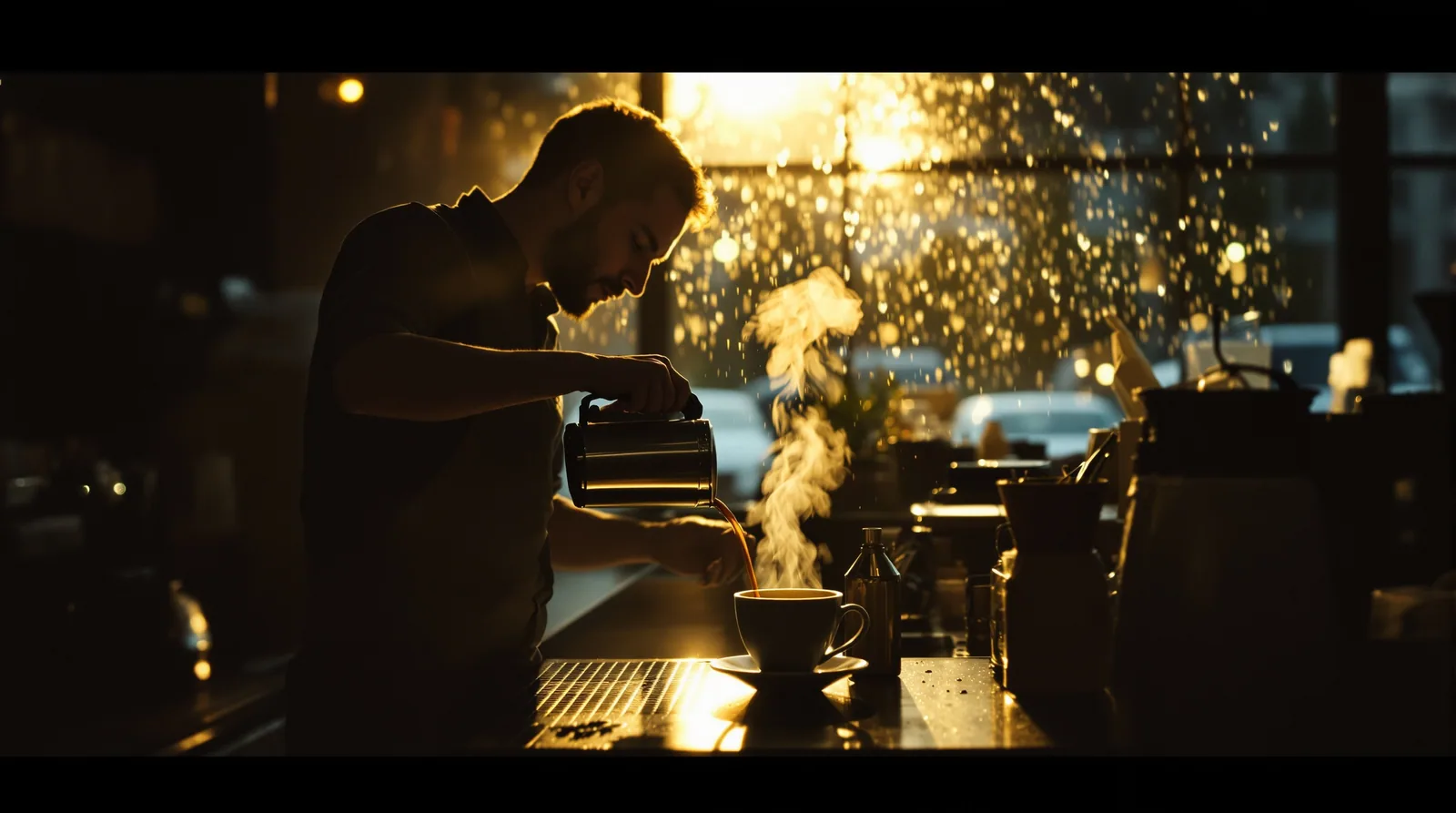
the hiss of the espresso machine blends into the soft hum of conversation at third draught in shoreditch. as you order a red eye, you might catch an eyebrow raise. here, it's often called a "shot in the dark." this potent concoction, a fortifying blend of drip coffee and a shot of espresso, isn't just about the caffeine jolt. it's a rite of passage for those who want to venture beyond the basic latte. but what you call it depends on where you are, and each name tells a story.
the origins of red eye coffee
the name most likely comes from the red-eye flight: that miserable overnight hop from one coast to the other, landing at 6am with gritty eyes and a to-do list that won't wait. you needed something stronger than airport drip, and someone, somewhere, tipped a shot of espresso into their filter cup and called it good. according to sprudge, the drink started circulating as "shot in the dark" or "coffee with a shot" through word of mouth at local shops before it ever appeared on a printed menu.
starbucks gets a lot of credit, or blame, for popularising the term. the red eye appeared on their secret menu long before it became a fixture at independents, and their reach meant the name spread fast across the us. but the concept, filter coffee plus espresso in the same cup, is simple enough that it was almost certainly invented dozens of times over, by dozens of people who just wanted more. honest coffee guide puts it plainly: given that espresso machines have existed since the early 1800s and drip coffee even longer, someone probably made this drink the week both technologies shared the same counter.
caribou coffee trademarked "depth charge" in 2003, having used it since 1998, which tells you something about how the drink had already embedded itself into american coffee culture by then. dunkin' calls theirs a "turbo hot." chains love a proprietary name. independent cafes, though, tend to inherit whatever the locals already call it, which is where things get genuinely interesting.
regional variations you should know
here is the thing: the drink does not change. a cup of drip with a shot of espresso is a cup of drip with a shot of espresso whether you're in anchorage or portland or a diner off the i-70. what changes is the word you use to order it. and if you use the wrong word in the wrong place, you might get a blank stare, or worse, an americano.
these regional names have been documented across the us and beyond:
- red eye: the most common name nationwide, especially on the east coast and in the midwest.
- shot in the dark: dominant in the pacific northwest and much of the west coast. also heard across the mountain southwest, including parts of colorado and new mexico.
- sludge cup: alaska. likely a wink at the state's oil industry, though it also accurately describes the aesthetic.
- hammerhead: used in california and scattered other regions, sometimes applied to the double-shot version.
- depth charge: associated with caribou coffee's branded version, but used colloquially in parts of the northeast too.
- oil spill: documented in ulysses, kansas, and a few other spots where the visual metaphor apparently resonated.
- stink eye: the horse brass pub in portland, oregon. one of the better pub-coffee names in existence.
- mondo: parts of the northeast coast.
- double drip: vancouver, canada.
- eye opener: heard in various places, especially in diner contexts where the menu hasn't changed since 1987.
- foglifter, devil's crowbar: less common, but documented.
- crow's eye: the rooster's crow in huntsville, alabama.
- bowbreaker: fourth coast cafe in kalamazoo, michigan.
individual cafes will keep making up new ones. that is part of the charm.
the science behind the jolt
a standard drip coffee, around 8 oz, contains roughly 95mg of caffeine. a single espresso shot adds another 63mg or so. put them together and you're looking at somewhere in the range of 150 to 200mg in a single cup, depending on the beans, the roast, the grind, and how hard your espresso machine is working.
that is a significant hit, delivered fast. the espresso fraction absorbs quickly because of its concentration; the drip coffee keeps the caffeine coming over a slightly longer curve. some people describe the combined effect as more sudden than either drink alone. one account from trade coffee describes it well: "palms became sticky and my heart started racing." not glamorous. but honest.
the named variations scale up from there:
- red eye: one espresso shot added to drip coffee. roughly 150-200mg caffeine total.
- black eye: two shots. you're now pushing 220mg or above, possibly more depending on cup size and shot volume.
- dead eye (also "green eye"): three shots. this is the one that makes your hands feel like they belong to someone else.
- lazy eye: uses decaf espresso. all the ritual, none of the adrenaline.
caribou's depth charge has been reported at 445mg of caffeine per serving, which is close to the daily upper limit most health bodies recommend for healthy adults. worth knowing before you order a second one.
a barista's perspective
ask a barista in new york what a red eye is, and they'll tell you without blinking. "we just call it a red eye here," a barista at a lower east side shop once told me, pulling a double shot directly over a batch brew cup without even measuring, the espresso blooming dark across the surface of the lighter filter coffee before slowly sinking. "people ask for it maybe twice a day, always before 9am, always someone who looks like they slept on a train."
the mechanics are simple. brew the drip, pull the shot, pour the shot into the cup. some baristas pull the shot first, some pour it over. the order matters less than the ratio, and honestly, most places do not have a fixed ratio at all. you get what fits.
what shifts by region is the expectation. in the pacific northwest, ordering a "shot in the dark" at a quality independent like stumptown carries a certain understood weight: you know what you're doing, you probably want single-origin filter coffee with a considered espresso on top, and you might have a preference about which bean goes where. in a diner in kansas, the same drink lands differently. the drip has been sitting on a burner since 5am, the espresso (if the machine exists) is more suggestion than craft, and nobody is going to ask you about your preferred process. both versions are legitimate. both will wake you up.
a taste test: comparing names and flavours
names shape expectation. that is just how the brain works. "sludge cup" primes you for something industrial and without pretension. "foglifter" sounds almost romantic, like a drink that belongs on a fishing boat in the san juan islands at dawn. "devil's crowbar" promises violence. "eye opener" is purely functional.
here is how the same basic drink compares when you frame it through its regional identity:
| name | region | implied vibe | typical context |
|---|---|---|---|
| red eye | national (us) | functional, no-nonsense | specialty cafe, chain |
| shot in the dark | pacific northwest | slightly knowing, indie | independent specialty shop |
| sludge cup | alaska | industrial, unpretentious | diner, work canteen |
| hammerhead | california | aggressive, energetic | surf town cafe, gym-adjacent |
| depth charge | caribou coffee (chain) | branded, military metaphor | drive-through, franchise |
| stink eye | portland, or | ironic, pub-inflected | the horse brass specifically |
| foglifter | various | romantic, functional | maritime towns, early mornings |
does the name change the flavour? not technically. but order a "sludge cup" and you'll probably drink it faster and think about it less. order a "shot in the dark" at a good independent and you might actually pause to notice how the ethiopia guji espresso reads against a washed kenyan filter. same drink. different frame.
the 787 coffee blog describes the red eye as "a strong and bold flavor, which is perfect for those who love their coffee with a little extra oomph," which is accurate if a little generous. honestly, the espresso flavour often gets swallowed by the volume of drip coffee. if you want the espresso to register, go with a double shot and use a smaller cup.
faq
what exactly is a red eye coffee?
a red eye is brewed drip or filter coffee with a single shot of espresso added to the cup. it's served black by default, though you can add milk or sugar. the drink is stronger than either a regular drip coffee or an espresso alone, and it's almost always ordered by people who need the caffeine more than they need the ritual.
how is a red eye different from an americano?
an americano is espresso diluted with hot water. a red eye uses brewed filter coffee instead of water. the difference in taste is real: filter coffee has its own flavour character and body, so the final cup is more complex (and usually more caffeinated) than an americano. the brewing methods are also completely separate processes, not just variations on the same one.
why does the name change depending on where i am?
because the drink spread through word of mouth rather than through a single branded origin. regional coffee cultures developed their own shorthand, and once a name sticks in a community it tends to stay. nobody in alaska sat down and decided to call it a sludge cup at a committee meeting. it just happened, and then it persisted.
can i make a red eye at home without an espresso machine?
you can get close. a moka pot produces a concentrated brew that approximates espresso well enough to mimic the effect. aeropress at a high-pressure, fine-grind setting also works. the result will not be identical to a machine-pulled shot, but poured over good filter coffee, the caffeine and flavour amplification will be there.
what is the difference between a red eye, black eye, and dead eye?
the number of espresso shots. red eye is one shot, black eye is two, dead eye (sometimes called green eye) is three. each step up adds roughly 60-65mg of caffeine and increases the intensity of the espresso flavour relative to the drip base. three shots over a standard cup of drip coffee puts you at the upper end of what most people should consume in a single sitting, so dead eye orders before noon are either a badge of honour or a cry for help, depending on your perspective.
so next time you're in a cafe, listen closely to what folks are ordering. you might overhear a request for a sludge cup in alaska or a devil’s crowbar somewhere else. these names aren't just quirks, they capture local essence and colour, making the world of coffee richer and more intriguing. a reminder that even a simple espresso can kick up stories as rich as its brew.