why green coffee is the talk of the roastery
green coffee beans, unroasted and brimming with potential, are where a roaster's journey begins. discover the magic and science behind this raw stage.
in this guide
- what exactly is green coffee?
- the journey from farm to roastery
- unpacking the health benefits
- why roasters love green coffee
- transforming green beans: the roasting process
- how to start roasting at home
- faq
- what is the difference between green coffee and regular coffee?
- does green coffee have more caffeine than roasted coffee?
- where can i buy green coffee beans for home roasting?
- how long does green coffee stay fresh?
- can you brew green coffee without roasting it?
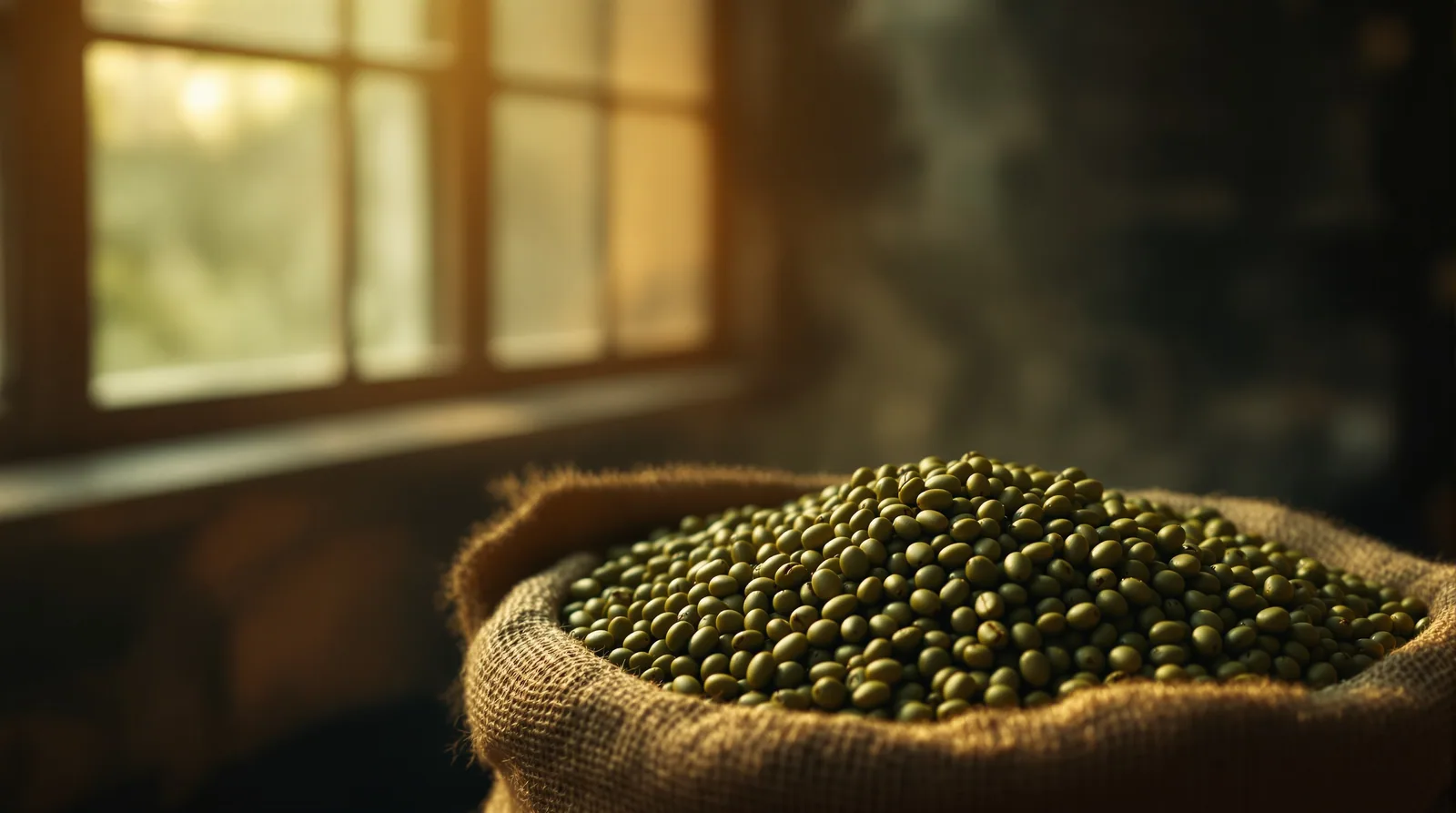
in the back corner of smallbatch coffee roasters in brighton, a heavy burlap sack rustles as it's heaved onto a wooden table. the smell here isn’t of the familiar roasted aroma we all know; it’s earthy, raw, almost vegetal. these are green coffee beans, the unsung heroes of any quality cuppa. they might look like tiny jade pebbles, but they hold the promise of something transformative. as the roaster warms up, the beans are poised for their metamorphosis, waiting to reveal their rich aromas and flavours.
what exactly is green coffee?
green coffee is simply coffee that hasn't been roasted yet. the seeds of the coffee cherry, cleaned and dried, stripped of their fruit and parchment layers, but not yet touched by heat. what you're left with is a dense, moisture-rich bean that looks somewhere between pale jade and straw yellow, depending on origin and processing method. it smells nothing like the roasted coffee you know. more like cut grass, hay, a faint nuttiness. earthy and a bit strange, honestly.
the main physical differences between green and roasted beans come down to three things: density, moisture content, and chemical composition. green beans are dense and tough, with a moisture content typically sitting between 10 and 12 percent. roasting drives most of that moisture out, which is part of why the beans expand, crack, and lose weight during the process. they're also seeds, in the truest botanical sense. everything the plant packed into them to protect and nourish a potential new tree sits locked inside that dense cellular structure, waiting.
what's worth knowing is that green coffee is not a niche or experimental product. it moves around the world in enormous quantities every single day. almost all of the coffee you've ever drunk started its international journey as green, bagged in grain-pro lined sacks, loaded into shipping containers, and sent from origin countries to roasteries across europe, the us, japan, australia, and beyond.
---
the journey from farm to roastery
coffee is a seasonal crop, which surprises a lot of people who buy it year-round off a shelf. the harvest window depends entirely on where the farm sits: ethiopia's main harvest runs roughly october to january, while colombia can deliver two harvests per year because of how the mountain ranges bisect its climate zones. central american lots from guatemala or honduras generally come off in the first quarter of the calendar year. the result is a rolling global calendar that good roasters track closely.
once the cherries are picked, the processing begins. this is where a lot of the flavour destiny gets decided. washed coffees have the fruit removed before drying, producing cleaner, more acidic cups. natural processed beans dry with the fruit still on, picking up fermented, jammy sweetness as they go. honey processed sits somewhere between the two. after drying, the beans are milled to remove the remaining parchment layer, graded, sorted, and bagged.
then they wait. weeks in dry mills, more weeks in origin warehouses, then the sea freight. a bag of green coffee from a small cooperative in sidama, ethiopia might take two to three months from leaving the washing station to landing at a uk importer's warehouse. according to perfect daily grind, roasters ideally want green arriving one to three months before they need it and try to hold enough stock to last them three to six months. green coffee stays fresh for roughly six to twelve months. after that, it starts to taste flat and papery, what the trade calls "past crop."
the sourcing side has changed significantly over the last decade. more roasters are going direct, building relationships with producers, visiting farms, and contracting lots before they're even harvested. as the specialty coffee association's green coffee sourcing guide notes, roasters who source this way often get first access to micro-lots, develop real supply chain literacy, and end up having much more honest conversations about pricing and fairness. it's not a romantic story. it's logistics, trust, and a lot of email.
---
unpacking the health benefits
here's the thing about green coffee and health claims: the research is real, but it gets inflated fast once supplement brands get hold of it.
green coffee beans contain significantly higher levels of chlorogenic acid than roasted beans. that matters because roasting degrades chlorogenic acid substantially, and chlorogenic acid is the compound that has attracted the most scientific interest. studies have linked it to potential benefits including blood pressure regulation and blood sugar metabolism, and it acts as an antioxidant in the body. whether you need to drink unroasted green coffee extract to get these benefits, rather than just drinking a couple of well-made filter coffees a day, is a more complicated question that the supplement industry tends to sidestep.
green coffee extract (usually sold in capsule form) has been marketed heavily as a weight-loss product. the evidence there is thin and largely funded by parties with commercial interests. what is well-established is that the chlorogenic acid content in green beans is substantially higher than in roasted ones, and that there is genuine scientific interest in what that compound does.
for most coffee drinkers, this doesn't mean you should start steeping raw green beans in hot water. it does mean that understanding the chemistry of what gets destroyed or transformed during roasting gives you a sharper picture of what you're actually drinking.
---
why roasters love green coffee
ask a roaster what they find most interesting about their job and most of them, if they're being honest, will tell you it starts long before the drum spins. the green is where the decisions live.
a roaster at a small operation in peckham once told me she spends more time cupping green samples from importers than she does profiling roasts. that sounds counterintuitive until you realise the truth of it: no roast profile, however technically dialled, can conjure flavour that wasn't already latent in the green. you can ruin a great lot by roasting it badly. you cannot rescue a mediocre lot by roasting it well.
the texture of quality green is something roasters notice immediately. dense, heavy beans that sit low in the palm. a clean, grassy smell with no mustiness. good green has a kind of potential about it that you can almost feel.
this is also why the best roasters are obsessed with provenance. scott rao, writing about thirty years of change in the industry, points to high-quality green becoming more accessible as one of the defining shifts of the modern era, noting that roasters who once resisted paying premiums for exceptional lots are now the same people who talk about fair prices as self-evident. the green coffee itself drove that shift. once you've tasted what an exceptional lot can do in the cup, going back to commodity-grade feels impossible.
what roasters specifically value breaks down like this:
- traceability. knowing the farm, cooperative, washing station, and processing method isn't just marketing copy. it tells a roaster how to approach the bean.
- consistent moisture content. green that's too dry or too wet behaves unpredictably in the drum and can produce uneven roasts.
- defect-free sorting. quakers (underdeveloped beans), blacks, and insect-damaged beans all roast differently and drag down cup quality.
- crop timing. knowing whether a lot is fresh crop or sitting on its second season affects how aggressively a roaster develops the profile.
---
transforming green beans: the roasting process
the transformation from green to roasted is one of the more dramatic things that can happen to a food. and it happens fast. a typical specialty roast runs between nine and fifteen minutes, depending on the roaster's approach and the style of drum.
in the first few minutes, the green beans lose surface moisture and start to turn yellow, then tan. the smell shifts from that grassy rawness to something like toast, then bread, then caramel. around 150 to 160 degrees celsius, the maillard reaction kicks in properly. this is the same browning chemistry responsible for a good sear on a steak, and it's producing hundreds of new flavour compounds that simply did not exist in the green bean.
then comes first crack. a sound like popcorn, sometimes subtle, sometimes almost violent, depending on the bean density and how fast the roaster has climbed to that temperature. first crack signals that the beans have reached a light-roast threshold and are physically fracturing as trapped gases and steam escape. the cell structure, which was almost impermeable in the green, becomes porous. this is why roasted coffee extracts so much more readily than raw green, the wall between the soluble compounds and the hot water has been opened up.
here is a rough comparison of what changes between green and roasted:
| property | green bean | roasted bean |
|---|---|---|
| moisture content | 10-12% | 1-3% |
| chlorogenic acid | high | significantly reduced |
| weight | heavier | 15-20% lighter |
| colour | pale jade to yellow | light tan to near-black |
| cell structure | dense, closed | porous, open |
| shelf life | 6-12 months | 2-4 weeks (peak) |
| aroma | grassy, vegetal | sweet, bitter, complex |
roasters who push into second crack are developing darker profiles: more body, less origin character, more of the roast itself in the cup. those who pull the beans shortly after first crack preserve more of the acidity, sweetness, and flavour notes the green carried from origin. neither is objectively correct. both are choices, made intentionally, that trace back to what was already present in those green beans.
---
how to start roasting at home
home roasting has a genuine learning curve, but it's not steep. the biggest barrier is usually equipment, and even that is lower than most people think.
you do not need a dedicated drum roaster to start. a popcorn hot-air popper (the kind with side vents, not bottom vents) works surprisingly well for small batches of 60 to 80 grams and costs almost nothing second-hand. a cast iron pan or a wok over a gas hob gets the job done too, if you can tolerate more variable results. dedicated home drum roasters like the behmor or the aillio bullet give you much more control, but they're an investment for after you know you're hooked.
here's a sensible order of operations for your first batch:
- source your green online. importers like sweet maria's (us) or falcon specialty (uk) sell green in small quantities to home roasters. start with a naturally processed ethiopian or a colombian supremo, both of which are forgiving and give loud, clear first cracks.
- weigh your green carefully. start with 80-100g. you'll lose roughly 15-20% weight in the roast, so this gives you a usable small batch.
- preheat your roasting vessel. whether it's a popper or a pan, let it get properly hot before the beans go in.
- agitate constantly if using a pan. the beans need even heat exposure. don't stop moving them.
- listen for first crack. this is your orientation point. a light roast means dropping the heat and cooling within a minute of first crack starting.
- cool fast. tip beans into a colander and move them in the open air. residual heat keeps developing the roast even off the heat source.
- wait 24 hours before brewing. freshly roasted coffee needs time to off-gas co2 before it brews well. it'll taste grassy and underdeveloped if you go at it immediately.
a note on the smell: roasting produces a fair amount of smoke, especially as you push toward medium-dark. do this near an open window, or outside if you can. your smoke alarm will not appreciate the enthusiasm.
home roasting connects you to the green in a way that buying pre-roasted bags never quite does. when you weigh out those pale, dense seeds and watch them move through colour and crack and aroma, the process stops being abstract. the bean stops being packaging copy and becomes something you actually understand.
---
faq
what is the difference between green coffee and regular coffee?
green coffee is the unroasted seed of the coffee cherry. regular roasted coffee is the same seed after it's been exposed to high heat, which transforms its chemistry, color, structure, and taste almost entirely. the two are made of the same base material but have almost nothing else in common in terms of aroma, flavour, or how your body processes them.
does green coffee have more caffeine than roasted coffee?
by dry weight, green coffee contains slightly more caffeine than roasted beans, but the difference is minor and largely irrelevant in practice. the bigger difference is in chlorogenic acid content, which is high in green beans and largely destroyed by roasting. caffeine itself is remarkably stable under roasting temperatures.
where can i buy green coffee beans for home roasting?
in the uk, importers including falcon specialty, dr wakefield, and mercanta sell green to home roasters in small quantities. in the us, sweet maria's is the best-known resource and carries a wide range with detailed tasting notes aimed at home roasters. some specialty roasters will also sell green directly if you ask nicely.
how long does green coffee stay fresh?
generally six to twelve months from the milling date, provided it's stored in a cool, dry place away from light and humidity. grain-pro bags or sealed food-safe containers work well. after twelve months the flavour starts to flatten and take on a woody, papery quality. it won't harm you, but it won't taste like much either.
can you brew green coffee without roasting it?
you can steep green beans in cold or warm water and drink the result. it tastes mildly bitter, grassy, and not particularly pleasant if you're expecting coffee. some people drink green coffee extract for the chlorogenic acid content, but this is a supplement habit rather than a coffee habit. if you want to taste what green coffee actually holds, the only real way to find out is to roast it.
it's easy to overlook the humble green coffee bean, overshadowed by its roasted sibling's bold aroma. but next time you sip your brew, remember the quiet potential it started with. behind every cup is a green journey, patiently waiting to unfold.