natural processing in coffee: how ethiopia's method changed the world
the natural processing method in coffee involves sun-drying whole coffee cherries, a technique embedded in ethiopia's tradition, and has influenced global coffee flavours.
in this guide
- the essence of natural processing
- a step-by-step look at the process
- ethiopia's role in global coffee culture
- comparing natural and washed processes
- a day at bale mountain farm
- taste profiles: what to expect
- faq
- what exactly makes natural processing different from other methods?
- is natural process coffee higher quality than washed?
- why is natural processing so common in ethiopia specifically?
- how should i brew a natural ethiopian coffee at home?
- can natural processing go wrong, and how do you know when it has?
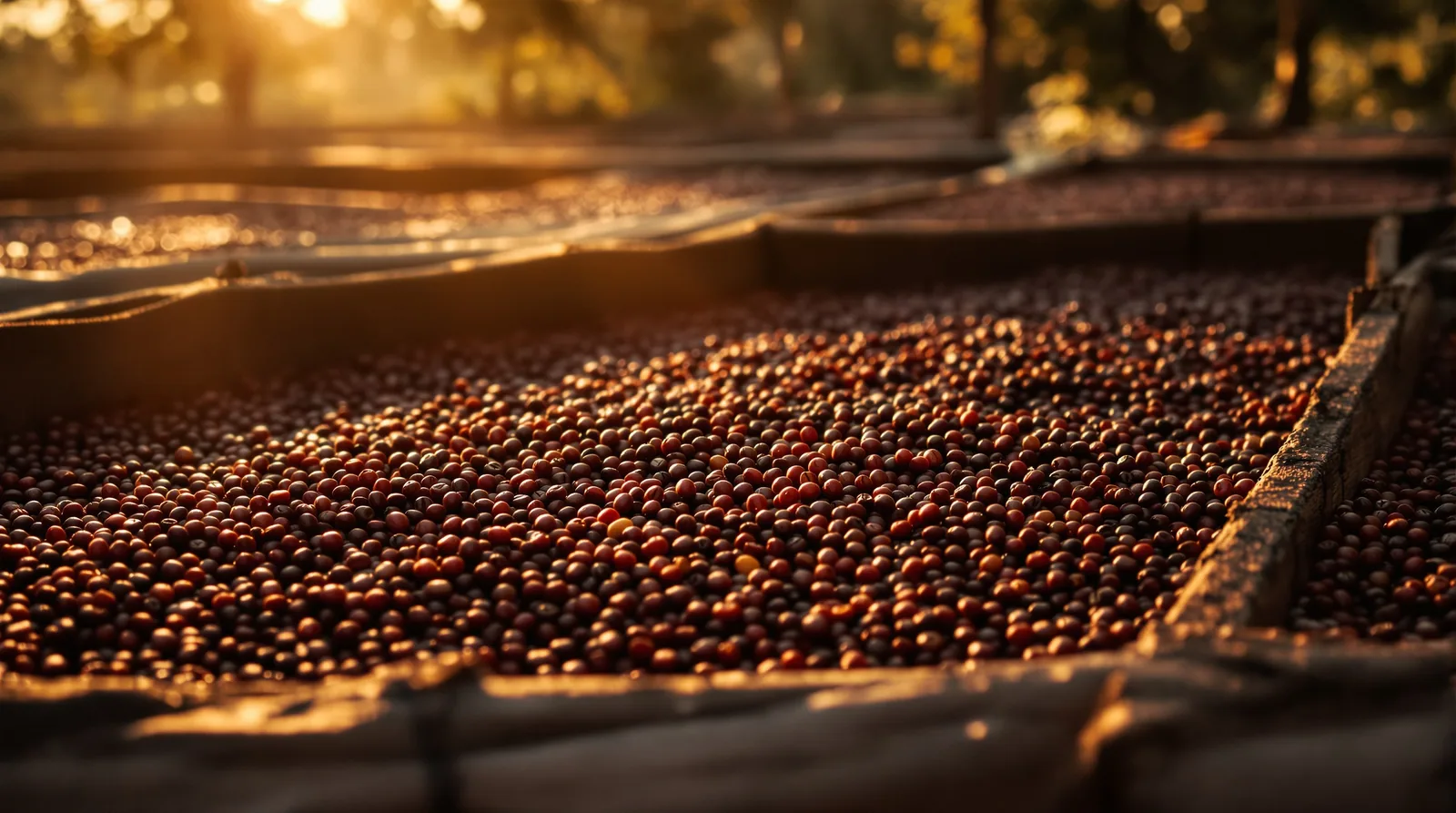
the air is thick with the sweet, slightly fermented aroma of coffee cherries drying under the ethiopian sun. at the bale mountain farm, workers gently turn the cherries on raised beds, a practice as old as the hills themselves. natural processing, this sun-drenched method of drying coffee, is a tradition deeply rooted in ethiopian coffee culture. it's a method that requires patience, no water, and an attentive hand to ensure each bean develops its bold, complex flavors. this is true coffee alchemy, a process that has shaped how the world perceives ethiopian coffee.
the essence of natural processing
strip coffee back to its simplest possible form and you get this: a fruit, the sun, and time. that is natural processing. no depulping machines, no fermentation tanks, no rushing. the whole cherry, skin and pulp intact, is laid out to dry until the fruit shrinks, darkens, and the sugars migrate inward through the parchment and into the bean itself.
natural processing is considered the oldest method in coffee production. it grew not from tradition for tradition's sake but from practical necessity: in regions like ethiopia and yemen, clean water has always been scarce and unreliable. you work with what you have. what you have, it turns out, produces some of the most distinctive cups on the planet.
the reason the flavour is so pronounced is fermentation. as the cherry dries, yeast and bacteria interact with the fruit over days and weeks, producing esters, alcohols, and organic acids that penetrate the bean. the result is a coffee that carries the memory of its own fruit: heavy, layered, occasionally wine-like, and unmistakably forward. there is nothing subtle about a well-made natural. that is the point.
a step-by-step look at the process
the process sounds straightforward. in practice, it demands constant attention and good weather. one stretch of unexpected rain, one batch turned too infrequently, and you risk mould that ruins an entire lot.
here is how a natural processed coffee moves from tree to dry mill:
- selective picking. cherries are hand-picked at peak ripeness, ideally a fully red state. consistency here matters more than in the washed process because the fruit stays on the bean throughout drying. an unripe cherry in the mix will drag the whole lot toward harsh, astringent notes.
- floating and sorting. freshly picked cherries go into water tanks not for washing but for sorting. underripe and overripe fruit floats; the rest sinks and moves forward.
- spreading on raised beds. the sorted cherries are laid out in thin, even layers on raised mesh drying beds. raised beds matter because they allow air to circulate underneath, which speeds even drying and reduces the risk of rot from contact with the ground.
- turning, constantly. workers move through the beds multiple times a day, raking and turning the cherries by hand. skip a session and you get uneven drying; skip two and you risk mould forming in damp pockets beneath the fruit.
- weeks of drying. depending on altitude, temperature, and humidity, drying takes anywhere from three to six weeks. national geographic notes that many ethiopian farmers traditionally spread cherries on mats for around four weeks, turning by hand throughout.
- dry milling in addis ababa. once the moisture content drops to the right level (around 11-12%), the dried cherries travel to a dry mill. in ethiopia, this final step for export-grade coffee happens in addis ababa, where the dried husk, parchment, and silverskin are removed to reveal the green bean inside.
that is six stages before the coffee reaches a roaster. and most of the flavour has already been decided by stage four.
ethiopia's role in global coffee culture
ethiopia is where arabica coffee originates. that is not a marketing claim; it is the prevailing scientific and historical understanding. wild coffee trees still grow in the forests of kaffa, illubabor, and bale. ethiopia's farming tradition leans heavily on smallholder farmers working with heirloom varieties so genetically diverse that they resist easy classification. the genetic breadth alone gives ethiopian coffee a flavour range that few origins can match.
natural processing is how ethiopia shared that genetic wealth with the world's palate. long before specialty coffee buyers started paying premiums for process-driven lots, ethiopian naturals were already doing what naturals do: delivering flavour in a way that made people stop mid-sip. yirgacheffe naturals in particular, with their blueberry and jasmine character, became a reference point that reshaped what buyers and drinkers thought coffee could be.
the sprudge writeup on natural process coffee points to the yirgacheffe idido misty valley as one of those formative cups for a generation of specialty buyers. one coffee, one farm, one method, and an entire market started paying closer attention to processing decisions. that is the weight ethiopia carries in this conversation.
regions like sidamo, harrar, and bale each bring different altitude profiles, soil types, and microclimate conditions. harrar in the east is particularly associated with the natural process and produces beans with a distinctly wild, mocha-tinged quality. bale's higher elevations push the fruit notes toward stone fruit and red berry. same country, same method, very different results.
comparing natural and washed processes
the washed process (sometimes called the wet process) removes all fruit before drying. cherries are depulped, fermented in tanks to loosen remaining mucilage, then thoroughly washed and dried as bare parchment. the bean is clean, the process is controlled, and the flavour reflects the origin's terroir more directly because there is no fruit interference.
natural processing does the opposite: the fruit is the process.
| | natural process | washed process |
|---|---|---|
| fruit removed before drying | no | yes |
| water usage | very low | high |
| drying time | 3-6 weeks | 1-3 weeks |
| fermentation type | extended, uncontrolled | short, controlled |
| typical body | full, heavy | light to medium |
| typical acidity | lower, rounder | bright, structured |
| flavour character | fruity, wine-like, sweet | clean, floral, complex |
| risk of defects | higher | lower |
the environmental difference is real and worth naming. natural processing uses dramatically less water and produces no wastewater runoff, which is a genuine concern with wet processing: hermanos coffee roasters note that the cost to the environment is substantially lower when the natural method is used, precisely because it sidesteps the water and energy demands of machine-driven depulping.
honestly though, neither process is inherently superior. a well-executed washed ethiopian from yirgacheffe can be extraordinary. a poorly managed natural from anywhere produces something that tastes like overripe fruit left in a hot car. execution is everything.
a day at bale mountain farm
picture this: early morning at altitude, the air cool enough to see your breath, and the drying beds already smelling faintly sweet and fermented from yesterday's cherries. a worker moves down the first row with a wooden rake, working methodically, pausing to lift a cherry and press it gently between two fingers to check the resistance. it should give slightly. too soft and it is overripe; too firm and it needs more time. this is knowledge passed through seasons, not manuals.
by mid-morning the sun is strong enough to feel on your face and the beds are radiating a warm, almost jammy smell. the cherries have darkened overnight from their bright red to a deeper burgundy. workers move in small groups, talking, raking in overlapping passes to avoid leaving untouched pockets. one of the senior processors once described the job to a visiting roaster this way: "you are not drying coffee. you are watching it." that patience is the entire skill.
bale mountain's elevation, which sits at roughly 1,900 to 2,200 metres, slows the drying process relative to lower-altitude farms. slower drying, as counterintuitive as it sounds, is generally considered better for flavour development. the sugars have more time to migrate into the bean, the fermentation progresses more gradually, and the resulting cup tends to be cleaner and more complex than naturals dried fast at lower elevations. the steampunk coffee roasters comparison of both methods at this farm is worth reading if you want to see side-by-side tasting notes from the same base coffee processed two different ways.
by late afternoon, sections of the beds are covered with shade cloth to prevent the cherries drying too aggressively in the final hours of direct sun. the process is not set-and-forget. every decision, every hour, affects what ends up in your cup six months later.
taste profiles: what to expect
natural ethiopian coffees do not taste like much else in the coffee world. if you have only ever drunk washed coffees, your first well-made ethiopian natural might seem almost like a different drink.
here is what to look for, broadly:
- fruit forward. blueberry, strawberry, and dried fig are common descriptors, particularly in yirgacheffe naturals. harrar coffees lean more toward dark fruit: raisin, grape, even a hint of port.
- body. expect something heavier and more viscous than a typical washed coffee. natural processing amplifies body substantially.
- sweetness. the prolonged contact with fruit sugars pushes natural coffees toward an almost candy-like sweetness, which is why they work beautifully as filter coffees at medium roast. the sweetness is not added; it develops through the process.
- fermented complexity. a good natural has a background note that some describe as wine-like or funky. this is desirable in moderation. when it tips too far, it becomes what cuppers call "over-fermented" and it tastes sour, musty, or medicinal.
- floral. jasmine and rose are not uncommon in yirgacheffe naturals, a character that fades noticeably if the coffee is roasted dark.
roast level matters enormously here. a natural ethiopian taken to a dark roast loses most of what makes it worth paying for. the fruit, the florals, the nuanced sweetness: all of it compresses into something much more generic. if you are buying an ethiopian natural from a specialty roaster, you want a light to medium roast, and you want to brew it with enough precision to let those flavours actually come through. a v60 or a chemex is a better choice than a moka pot for this particular coffee.
sidamo naturals, to pick another regional example, tend toward a slightly more balanced profile: berries and spice, good body, vibrant acidity, a smooth finish. yirgacheffe is the showboat; sidamo is the one you might reach for every morning. different ambitions, equally worthwhile.
---
faq
what exactly makes natural processing different from other methods?
in natural processing, the whole coffee cherry is dried with its skin and fruit intact before any of the outer layers are removed. no water, no machines, no depulping stage before drying. the bean absorbs sugars and fermentation byproducts from the surrounding fruit over several weeks, which is what creates the bold, fruity character natural coffees are known for. washed and honey processes both involve removing some or all of the fruit before or during drying, which changes the flavour profile substantially.
is natural process coffee higher quality than washed?
not inherently. quality depends on how carefully the process is managed, the quality of the cherries going in, the altitude and climate conditions, and the skill of the people overseeing the drying. a meticulously managed washed coffee and a meticulously managed natural can both be exceptional. the difference is in the flavour character, not the quality ceiling. natural coffees are more prone to defects if conditions are not controlled carefully, but the risk is manageable with experience and attention.
why is natural processing so common in ethiopia specifically?
two reasons: history and water scarcity. ethiopia has been producing coffee for centuries and developed the natural process long before water-intensive washing stations were feasible. many growing regions still have inconsistent access to large volumes of clean water, making the natural process not just traditional but practical. it is also worth noting that natural processing generates no wastewater, which matters in regions where water sources are shared and vulnerable to contamination from coffee processing runoff.
how should i brew a natural ethiopian coffee at home?
go for a light to medium roast from a specialty roaster who has sourced it carefully. for brewing, a pour-over method, v60, chemex, or kalita wave gives you the clarity to appreciate what the processing has done to the flavour. use water around 92-93 degrees celsius, grind slightly coarser than you might for a washed coffee, and pay attention to the bloom: a fresh natural ethiopian will bloom dramatically and smell extraordinary at that stage. whole fruit, dried fruit, sometimes a faint jasmine note. if you are grinding pre-ground and smell nothing, you have already lost most of what you paid for.
can natural processing go wrong, and how do you know when it has?
yes, and it does more often than the industry likes to admit. the most common failure is over-fermentation, which happens when cherries dry unevenly, are not turned frequently enough, or get caught in humid conditions. the resulting coffee tastes sour, musty, or medicinal rather than fruity and sweet. mould is the other main risk: wet pockets in the drying beds can harbour mould that taints an entire lot. a good natural ethiopian should taste complex and fruit-driven without any of those off-notes. if a cup tastes like it went slightly wrong somewhere, it probably did. trust your palate.
natural processing is more than just a method; it's a narrative of ethiopian geography and culture distilled into a cup. this age-old tradition not only ties the coffee back to its roots but also showcases ethiopia's innovative spirit in sustaining coffee's unique flavors in a resourceful manner. as you sip, you're tasting a story told through the land, the sun, and the unwavering hands that craft every batch.