when your wholesale roaster can't keep up
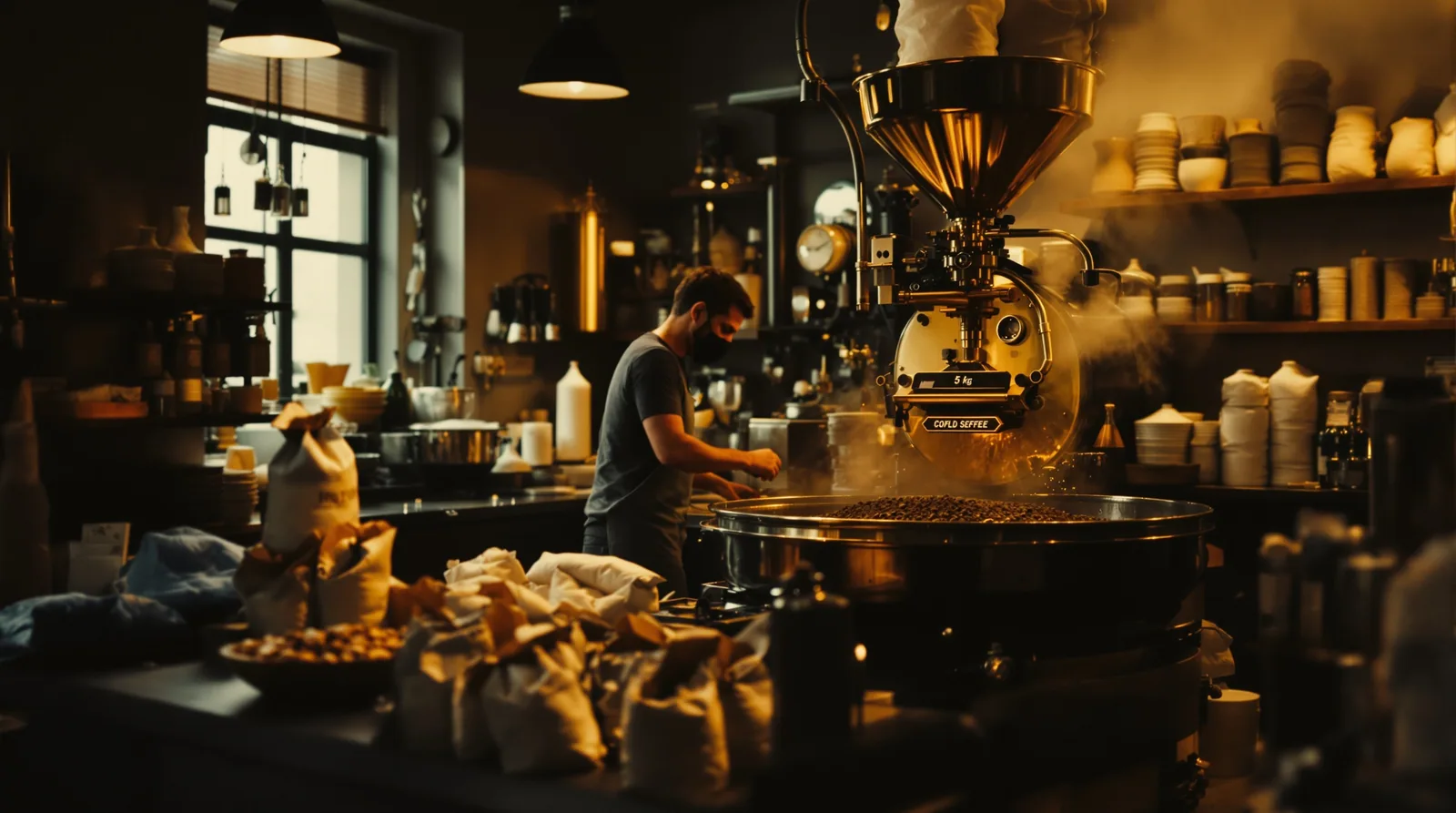
stuck on a hamster wheel with your 5 kg roaster, unable to meet demand while dreaming of growth? it's a common story. here's how to leap into the next phase.
in this guide
- understanding the growth bottleneck
- the initial struggle: hamsters on the wheel
- when to consider upgrading your roaster
- financing your next big move
- maintaining quality during transitions
- thinking beyond equipment: other growth strategies
- faq
- how do i know if my roaster is the actual bottleneck and not something else?
- can i grow my wholesale business without upgrading equipment?
- what's the real risk of undersizing a roaster when starting out?
- how do i protect my existing wholesale accounts during a roaster upgrade?
- should i adjust my wholesale pricing before or after upgrading?
ever seen a 5 kg roaster working overtime in a cramped room? that's urban house, where peter's journey into the world of coffee roasting began with a lot of sweat and little sleep. you can almost hear the steady purr of beans tumbling in the drum all night long. but there's a catch: when your wholesale business starts to outgrow that beloved machine, do you scale or stagnate? peter's story echoes the challenges faced by many roasters caught in the cycle of demand, decisions, and dreams.
understanding the growth bottleneck
there is a particular cruelty to the small roaster problem. the machine that earned you your first wholesale accounts, the one you babied through thousands of batches, becomes the thing that caps your ceiling. not because it roasts bad coffee. it probably roasts great coffee. but because it simply cannot keep up with what you have built.
covoya coffee puts it well: if your production roaster is small enough to roast samples, it probably isn't big enough to grow your wholesale operation in any meaningful way. and if it's big enough to handle volume, you've likely already outgrown sample roasting on it. you end up solving one problem while creating another.
the math is unforgiving. a 5 kg roaster running at full tilt, two or three roasts per hour, maybe six days a week, has a hard ceiling. when you start adding wholesale accounts, each one pulling 10 to 20 kg a week, you hit that ceiling faster than you expect. then comes the choice: roast longer hours, turn down new business, or find a way to scale. most roasters spend months stuck in option one before they're forced into option two or three.
space compounds the problem. as covoya notes, the tension between space and growth is "endlessly precarious." one week you have room to breathe, the next you're stacking green coffee on every flat surface and your post-roast flow has backed up into the hallway. growth doesn't arrive gradually. it arrives in lurches.
the initial struggle: hamsters on the wheel
ask any roaster who has been through a growth spurt and they'll describe the same feeling. you stop thinking about coffee. you start thinking about capacity. every cupping session becomes a logistics problem. every new inquiry from a cafe feels less like an opportunity and more like a threat to your sleep schedule.
peter's experience at urban house is almost textbook. according to the account on coffeeis.me, the turning point came at dobrý trh market in bratislava, one of those beloved independent market events where the right day can change the trajectory of a small brand entirely. demand spiked, the customer was real, and the ability to upgrade immediately (funded from personal savings, not a waiting loan application) is what kept the business alive. "if we couldn't have scaled when that opportunity hit, we would have stayed a tiny brand. or disappeared entirely." that's not hyperbole. that's just how wholesale works.
the hamster wheel is not about working hard. everyone in specialty coffee works hard. the wheel is specifically the condition where all your effort goes into maintaining your current position rather than improving it. you're roasting five days a week to hit baseline. there is no slack in the system. a new account would actually break you. and because you're exhausted, you stop pitching, stop attending events, stop doing the things that brought you here in the first place.
one roaster i spoke to described it as "the sound of the timer going off at 5am for the third week in a row and realising i hadn't cupped my own coffee in six days." not because she didn't care. because she was maxed out. the grinder runs, the drum turns, the batches go out, and somewhere in that cycle the actual craft disappears.
when to consider upgrading your roaster
honestly, the signs are usually obvious before you admit them to yourself. here's what actually indicates you need a bigger machine, not just better scheduling or earlier mornings.
- you are declining new wholesale inquiries because you cannot physically roast the volume
- your roast days have stretched to five or six per week with no buffer
- you cannot run sample roasts on your production roaster without losing production time
- lead times to your existing accounts have crept past four days consistently
- you've hired help primarily to handle the roasting workload, not the business development
that last one is telling. if your new hire is spending most of their time feeding the drum rather than helping you grow, you've staffed around a constraint instead of solving it.
the sample roasting issue deserves its own moment. covoya's breakdown of the wholesale path makes the point clearly: you have to be cupping, both to evaluate incoming green and to maintain quality control. if your production roaster is too big or too busy for sample roasts, you are either skipping cups or roasting samples in ways that don't translate to production. neither is good. a dedicated sample roaster (even a small ikawa or a 300g machine) often solves this before you need to upgrade the big drum, and it costs a fraction of the price.
but there is a point past which you simply need more kilos per hour. when you reach it, don't wait for a crisis to confirm it.
financing your next big move
this is where most roasters freeze. equipment costs are real. a step up from a 5 kg to a 15 kg roaster from a reputable manufacturer (probat, loring, has garanti, or a well-specced giesen) can run anywhere from £20,000 to £80,000 or more depending on spec and age. used machines bring that number down, but used machines also bring their own risks, especially if you don't have an engineer you trust to inspect them.
the options, in rough order of how most independent roasters actually do it:
- personal savings or retained profit. fastest, no interest, but obviously requires having the cash. peter's story at urban house is a reminder that having liquid capital ready is itself a growth strategy, not just good fortune.
- asset finance or equipment loans. many specialist lenders will finance commercial roasting equipment specifically. the roaster serves as collateral, which keeps rates more manageable than unsecured lending.
- revenue-based financing. a handful of lenders now offer repayments tied to monthly revenue rather than fixed instalments. useful if your income is seasonal or lumpy.
- grants and regional business development funds. more available than most people realise, particularly for food manufacturing in certain regions. takes time to apply, but worth investigating.
- roaster partnerships or co-roasting arrangements. not ownership, but renting time on a larger roaster while you save. buys you capacity without the capital outlay, though it comes with scheduling constraints and some loss of control over your process.
one practical note: perfect daily grind's advice on wholesale pricing applies directly here. never price your wholesale accounts below what's sustainable in the long run. if your pricing doesn't account for the cost of future equipment, you will never generate the margin to upgrade. build the machine into the price before you need it.
also, don't try to sell your current roaster before you have the new one. the coffeeis.me piece is blunt about this: your customers need coffee. your revenue stops if you stop roasting. the overlap period costs money, but it protects your accounts.
maintaining quality during transitions
scaling up a roaster is not plug-and-play. the profiles you've spent two years dialing in on a 5 kg drum will not transfer directly to a 15 kg machine. different thermal mass, different airflow, different drum speed, different charge temperature dynamics. you will need to re-profile. possibly every single coffee in your range.
this is the part nobody wants to talk about when they're excited about a new machine. but your wholesale accounts bought your coffee as it tastes now. consistency is the whole point of a roasting relationship.
a few things that actually help:
- run your new roaster in parallel with the old one for at least four to six weeks if you can physically manage it. use this time to build and validate new profiles before retiring the old machine.
- cup blind against your existing roasted stock throughout the transition. not just at the end.
- tell your key accounts what's happening. not the technical detail, but the fact that you're scaling up and that you're actively working to maintain the cup they know. most good wholesale partners will appreciate the transparency.
- document everything. the coffee roaster warm up sessions podcast makes a good point about systems: clarity and rigid guard rails are what let you scale without things quietly falling apart. what do you do when a batch doesn't cup to standard? what's the threshold? who decides? write it down before you need the answer in a hurry.
the goal through all of this is that your wholesale accounts notice nothing unusual in their cup. if they do notice, they should notice an improvement, not a question mark.
thinking beyond equipment: other growth strategies
here is the thing about equipment upgrades: they solve the production constraint. they don't automatically solve the business. you can have a beautiful new 20 kg probat sitting in a freshly rented unit and still lose accounts because your service has slipped, your pricing doesn't hold up, or your green coffee supply can't match your new capacity.
forward buying green coffee is one of the most underused tools at this stage. genuine origin outlines it clearly: buying forward not only locks in the specific coffees you want to offer consistently over coming months, it also frees up cash flow because you're not scrambling to source at spot when an account needs more than you expected. with some suppliers, you don't pay until the coffee actually ships. that's meaningful when you're also servicing equipment finance payments.
beyond supply security, think about what your wholesale program actually offers beyond the bag. genuine origin is direct about this: some restaurant and cafe clients will expect equipment on loan, or at minimum on-site dialling-in support. what do you offer? what won't you offer? knowing this before you pitch new accounts means you don't commit to things that quietly erode your margin.
a comparison of common wholesale support tiers:
| support level | what it includes | who it suits |
|---|---|---|
| coffee only | delivery, basic brew guide, email support | high-volume, self-sufficient accounts |
| coffee + training | delivery, staff brew training, occasional cupping | mid-tier cafes building their coffee identity |
| full partnership | equipment loan, on-site dialling, regular check-ins | anchor accounts, new openings, restaurants |
you do not have to offer every tier to every account. but knowing which tier each relationship is actually in stops you from subsidising big accounts with services they're not paying for.
pricing discipline matters enormously here. perfect daily grind flags this clearly: never agree a price you can't sustain long-term. raising a price after a relationship is established creates friction on both sides. and with green coffee costs staying elevated through 2025 and into 2026, roasters across the industry are already navigating the conversation with their wholesale accounts about cost increases. the roasters doing best are the ones who were already charging sustainably, so the conversation is about adjustments rather than corrections.
growth isn't just a bigger roaster. it's the pricing model that supports the roaster, the supply relationships that feed it, the service structure that justifies the rate, and the systems that keep quality consistent while you're managing all of it at once.
---
faq
how do i know if my roaster is the actual bottleneck and not something else?
if you have unfulfilled wholesale demand, and the reason you can't fulfill it is roast capacity rather than sales, sourcing, or staffing, then yes, the roaster is the bottleneck. a useful test: could you take on two new wholesale accounts right now if you had the volume? if the honest answer is no, and the reason is roast days rather than anything else, you have your answer.
can i grow my wholesale business without upgrading equipment?
up to a point. co-roasting arrangements (renting time on another roaster's machine) can bridge the gap temporarily. some roasters subcontract certain coffees to a contract roaster while they save for their own upgrade. but both options come with trade-offs around quality control and scheduling. they work as a bridge, not a long-term solution.
what's the real risk of undersizing a roaster when starting out?
the risk isn't just slow growth. as the urban house story shows, it can mean losing a significant account at the exact moment you're ready to scale, simply because you can't fulfill the volume in time. coffeeis.me frames it starkly: undersizing doesn't just limit growth, it threatens the business itself. you can't suddenly roast more when opportunity arrives.
how do i protect my existing wholesale accounts during a roaster upgrade?
overlap periods are your best protection. run both machines simultaneously where possible. build stock ahead of the transition. and communicate with your accounts. you don't need to give them a technical briefing, but letting key clients know you're investing in capacity (and therefore in the relationship) builds goodwill. most will appreciate it more than silence followed by an unexplained change in their coffee.
should i adjust my wholesale pricing before or after upgrading?
before. if your current pricing doesn't generate the margin to eventually cover new equipment, you're undercutting yourself out of the ability to grow. model your target machine into your pricing now, even if the upgrade is 18 months away. price increases after the fact, especially when tied to external costs like rising green coffee prices, are much harder conversations than pricing that was right from the start.
so, what happens when the heart of your business, the roaster, becomes the bottleneck? for many, it's the defining moment that requires a leap of faith, investment, or ingenuity. maybe peter's story inspires you to take that leap, or perhaps it reminds you to plan ahead. either way, recognising this turning point is crucial. it's about embracing the possibility of growth rather than being trapped by your current limits.