independent cafes brew more than just coffee
independent cafes tune in to their communities and adapt faster than chains, boosting local economies and customer satisfaction. let's dig into the data.
in this guide
- how independents listen and adapt
- data: innovation by numbers
- comparing chains and independents
- a personal story from behind the counter
- independent cafes in the age of data
- faq
- do independent cafes actually make better coffee than chains?
- why don't independents grow into chains if they're so good at what they do?
- how do independents compete on price when chains can buy at scale?
- what's the biggest challenge independent cafes face right now?
- is the local economic benefit of independent cafes actually measurable?
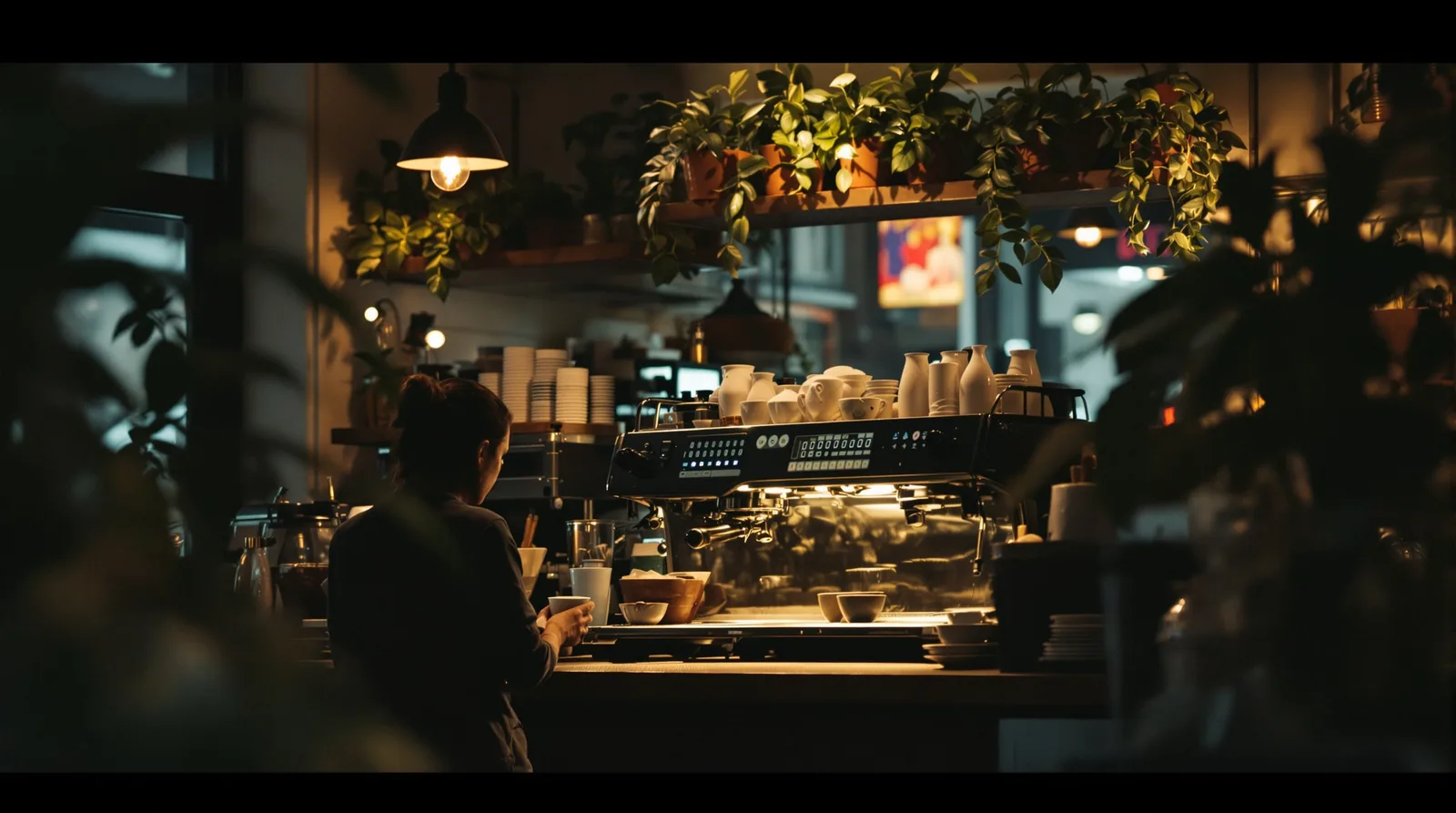
the hiss of steam and the earthy aroma of freshly ground beans envelop you as you step into brewed awakenings in brooklyn's park slope. a handwritten chalkboard lists today's roasts, each sourced from a different corner of the globe. it's not just the coffee that's different here. it's the energy. the owner, maggie, knows her regulars by name, and their orders before they even ask. while corporate chains move with the sluggishness of ocean liners, places like brewed awakenings turn on a dime, adjusting to the beats of their neighbourhoods. data backs it up: independents innovate because they're deeply woven into the fabric of their communities.
how independents listen and adapt
walk into almost any independent café on a tuesday morning and you'll notice something a franchise location rarely has: a conversation happening between the person pulling the shot and the person drinking it. not a scripted upsell. an actual exchange. "you liked that kenyan last week? we just got a guji natural in, very similar fruit notes." that's real-time market research, and it costs nothing.
the reason independents adapt faster is structural. there's no regional manager to call. no planogram to submit a deviation request for. the owner is often the buyer, the trainer, the floor staff, and the person reading the feedback form at 10pm. when a neighbourhood shifts, a new block of flats goes up, a tech office moves in, a vegan market takes over the car park on saturdays, the independent café on the corner notices within days and responds within weeks. a chain notices in the next quarterly review.
this isn't romanticising small business. it's just physics. fewer layers between observation and action means faster change. research into independent grocery retailers found that independent stores consistently show greater attunement to community needs than chain counterparts, often stocking different products at different price points within the same postcode. coffee is no different. the independents are the ones trialling oat milk before the chains add it to the national menu. they're the ones running a natural wine pairing evening on a thursday because three regulars asked about it. they fail fast and quietly, then try something else.
and when they get it right, they get it right for that place, not for 400 locations simultaneously.
---
data: innovation by numbers
here is the thing about the economic argument for independents: the numbers are not close. they're not a rounding error apart from chains. they tell a different story entirely.
according to research compiled by civic economics and cited by statista, local retailers return 52% of their revenue into the local economy. national chain retailers? 14%. for restaurants and cafes specifically, the gap widens further: local operations circulate roughly 79% of revenue within the community, versus about 30% for chain restaurants.
the independent retailer data fills in more of the picture:
- for every $100 spent at a local business, at least $68 stays in the local economy
- local businesses generate 70% more local economic activity per square foot than big-box or chain retail
- for every $10 million spent at independents, 57 jobs are created, compared to 14 jobs when that same money goes to amazon
- local retailers reinvest 130% more of their revenues than chain retailers
so when someone says "i'm just grabbing a coffee" at a chain, they're making a small economic choice that, at scale, has a large community cost. that's not a guilt trip. it's just maths.
what's less talked about is innovation roi. the 2025 state of independent retail report from mr. checkout noted that independents execute format changes, menu additions, and local sourcing partnerships significantly faster than national banners. they don't make headlines when they do it. but they do it, constantly, without fanfare and without a committee.
---
comparing chains and independents
the gap between how a chain café and an independent café actually operate day-to-day is wider than most people sitting on either side of the counter realise. some of it is obvious. a lot of it isn't.
| factor | independent café | chain café |
|---|---|---|
| menu change timeline | days to weeks | months, sometimes quarters |
| local sourcing flexibility | high, owner decides | low, controlled by hq |
| customer feedback loop | direct and immediate | filtered through surveys and brand teams |
| staff training focus | craft and relationship | consistency and speed |
| revenue recirculated locally | ~52-79% | ~14-30% |
| response to neighbourhood trends | rapid | slow or nonexistent |
| new product trial risk | low (one location) | high (brand consistency at stake) |
the training column is worth stopping on. chain baristas are often trained to be fast and consistent. independent baristas, at their best, are trained to be curious. there's a difference between someone who can dial in a recipe and someone who can explain why they've dialled it that way and adjust mid-service because the humidity changed. it's the difference between executing a system and understanding coffee.
none of this makes every independent café good. some are badly run, badly sourced, badly staffed. but the ceiling is higher, and the connection to place is structural rather than cosmetic.
---
a personal story from behind the counter
a roaster friend of mine, she runs a small operation out of a railway arch in bermondsey, doing maybe 200kg a week, told me about the time she nearly binned her entire filter menu. it was early 2023. she'd built the programme around single origins, rotating every six weeks, because that's what she believed in. the regulars weren't buying it. they wanted something familiar to come back to, an anchor.
so she tried something no chain could do cleanly: she kept one rotating single origin but added a permanent house filter blend she called "the regular." same name every week. different beans underneath, depending on what she had from her two main importers, but always approachable, always nutty and slightly sweet, always £3.50. within a month it was outselling everything else. she knew because she counted cups herself, on a tally sheet kept under the till.
the blend is still on. she's adjusted the profile four times since. nobody noticed the adjustments, which was the point.
that's independent innovation. not a product launch. not a marketing campaign. a small, close-reading of what people actually want, and a willingness to act on it without asking permission.
---
independent cafes in the age of data
there's a version of "data-driven café" that sounds like a nightmare: every cup tracked, every dwell time logged, loyalty apps pinging people to come back, conversion funnels for the pastry cabinet. some chains are already there. it's not pretty.
but independents are finding a middle path, using data without being consumed by it. a good pos system tells you which drinks sell on which days, which beans move and which sit. a mailing list tells you who's paying attention. a quick note in a customer's profile, "oat, no sugar, ethiopian if available", is data too. informal, human-scale data.
the local sourcing research from the rural grocery initiative found that independent operators are notably more willing to trial new local products than chains, precisely because they can absorb small-batch volumes and respond to what sells without needing to roll it across a national estate. some are now using basic ai-assisted ordering tools to reduce waste on perishables without losing the flexibility that makes them independent in the first place.
here is what matters: data should serve the relationship, not replace it. maggie knowing her regulars' orders isn't inefficiency. it's the product. the best independent cafes understand that the information gathered across a counter is more actionable than anything a head office dashboard can tell you, because it comes with context, tone, and a face.
what you should actually track if you're running an independent:
- your top five selling drinks by day of week, not just overall
- which single origins (or blends) generate the most repeat orders within a two-week window
- average spend at different times of day, not just peak hours
- which staff shifts correlate with the highest return customer rate
- what your cancellation or waste rate is on batch brew versus espresso-based drinks
none of that requires a subscription to an enterprise analytics platform. a spreadsheet and honesty will do it. the point is to look, and to act on what you see, faster than a chain ever could.
---
faq
do independent cafes actually make better coffee than chains?
not automatically. an independent can serve mediocre coffee as easily as a chain can. but the conditions for excellence are more present in an independent: the owner has a direct financial and reputational stake in the cup quality, the sourcing decisions are made by someone who often visits origin or works closely with a roaster who does, and there's no head office mandate to hit margin by swapping to a cheaper green. the ceiling is higher. whether a given café reaches it depends on the people running it.
why don't independents grow into chains if they're so good at what they do?
some do, and some of those are still excellent. but scaling changes the structure that makes independents fast. once you have five locations, you need systems that work without the owner present. once you have fifteen, you need a layer of management between the owner and the barista. by thirty, you're making the same compromises you criticised the chains for making. a few operators thread this needle, heart in portland comes to mind, but it's genuinely hard, and many founders deliberately choose not to scale because they understand what they'd lose.
how do independents compete on price when chains can buy at scale?
honestly, many don't try to. the price conversation at an independent is usually about value rather than cost: a £4.50 filter at a well-sourced café, where the farmer received a fair price and the roaster roasted to order, is not the same product as a £2.99 drip coffee at a chain, even if they're both "coffee." the customers who understand that seek it out. the ones who don't aren't really the target market. that said, some independents do compete on price effectively, particularly in neighbourhoods where affordability matters, by running tighter menus, reducing waste, and sourcing smartly through direct relationships.
what's the biggest challenge independent cafes face right now?
cost. not competition from chains, which is real but manageable, but the underlying cost structure: rent, energy, labour, and green coffee prices all moved significantly upward post-2020 and haven't fully settled. the 2025 state of independent retail report flagged cost pressure as the primary headwind for independent operators across retail categories, coffee included. the cafes weathering it best are the ones with strong community loyalty, diversified revenue (wholesale, retail bags, events), and low ego about what "counts" as part of their offer.
is the local economic benefit of independent cafes actually measurable?
yes, and the numbers have been consistent across multiple studies over more than a decade. civic economics research, summarised by statista, puts local restaurant revenue recirculated locally at around 79%, versus 30% for chains. the independent retailer statistics add that every $100 spent locally keeps at least $68 in the local economy. these figures vary by region and business model, but the direction of the gap doesn't. spending at an independent café is, in a measurable sense, a more efficient use of your coffee budget for the community around you.
independent cafes like brewed awakenings thrive by weaving themselves into the community fabric. they don't just survive alongside the big chains, they offer something personal and irreplaceable. in a world driven by data, it's the human touch and adaptability that make these spaces invaluable. next time you're weighing your coffee options, maybe skip the algorithm and try trusting the barista instead.