why kenya coffee costs a fortune: is it worth it?
delve into what makes kenyan coffee a luxury item in the coffee world, from its unique growing conditions and meticulous processing to its reputation among coffee enthusiasts. is it worth every penny?
in this guide
- why kenyan coffee is expensive
- the flavour profile: what makes it unique
- the origin story: kenya's unique growing conditions
- comparing value: kenyan coffee vs other origins
- personal tales from the cupping room
- faq
- is kenya aa the best grade of kenyan coffee?
- what brewing method suits kenyan coffee best?
- why does my kenyan coffee taste sour rather than bright?
- is kenyan coffee production declining?
- where can i buy genuinely good kenyan coffee?
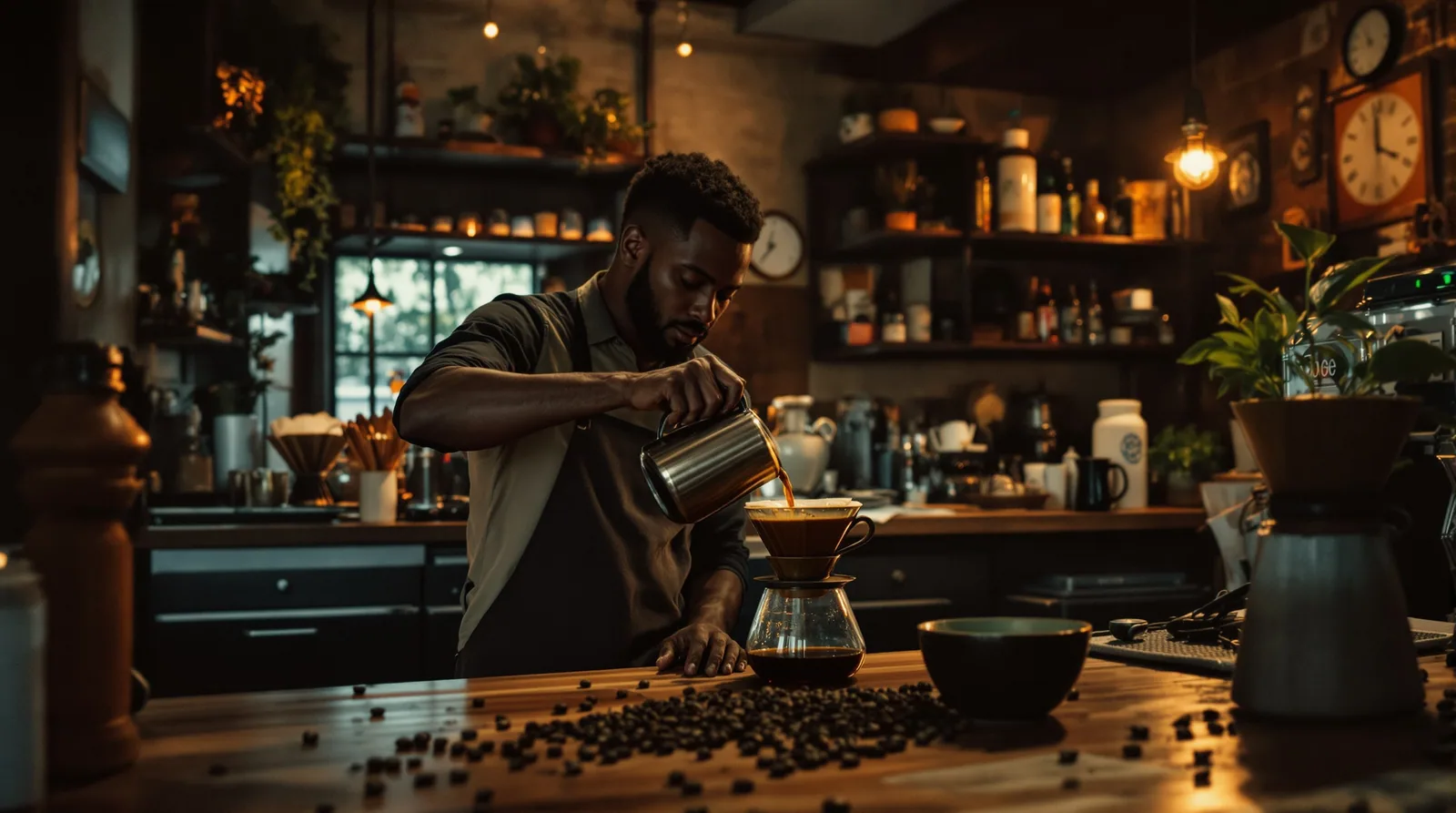
the first sip of a kenyan coffee can be unforgettable. a vibrant acidity awakens your senses, with notes of blackcurrant lingering on the palate. at nairobi's small but revered cafe, third draught, this experience is a daily affair. the barista expertly pours a v60, the aroma of freshly ground beans fills the air like a promise. but here’s the thing: a cup costs double what you’d pay in london or new york. why? it’s down to the unique, labor-intensive methods behind each cup, methods that make kenyan coffee both a luxury and an art.
why kenyan coffee is expensive
the short answer is: almost everything about producing it costs more than it does elsewhere. but that's not particularly satisfying, so let's be specific.
kenya runs a centralised coffee auction through the nairobi coffee exchange. farmers deliver cherry to cooperatives or washing stations, the coffee is processed and graded, then it moves through the auction before it ever reaches a roaster anywhere in the world. that system creates genuine price competition among buyers, which is great for quality signalling but pushes costs upward fast. a washed sl28 or sl34 lot at the top of the auction can fetch anywhere from $8.50 to $11 per kilo green, before freight, import duties, and the roaster's own margin.
then there's the processing itself. kenya's double-wash method, sometimes called a double fermentation, involves soaking the parchment in water after the first fermentation and mucilage removal, then soaking it again. it's time-consuming. it requires clean water in volume, and it demands skill at the washing station level. get it wrong and the cup turns sour or fermented in the bad way. get it right and you get that clean, almost electric brightness the origin is known for.
production volume matters too. kenya produces somewhere between 45,000 and 65,000 tons annually. compare that to brazil's multi-million-ton output and you understand why scarcity bends the price curve. over 700,000 smallholder farmers account for roughly 55% of total output, each working small parcels, each hand-picking ripe cherry. there is no industrial shortcut hiding in that supply chain.
the cultivars are a separate complication entirely. sl28 and sl34 were selected by scott laboratories in the 1930s specifically for kenyan conditions, and they simply do not perform the same way anywhere else. you can plant sl28 in other countries. roasters have tried. the cup is not the same. so if you want the real thing, you are paying for beans grown in one specific country, in specific highland regions, from specific trees, processed with extra steps. the economics follow.
the flavour profile: what makes it unique
kenyan coffee does something most origins do not. it gives you fruit that reads as savory and sweet at the same time, like biting into a ripe blackcurrant rather than drinking blackcurrant cordial. there is a wine-like quality that can genuinely catch you off guard if your palate is calibrated to the caramel register of a brazilian or the floral softness of a yirgacheffe.
coffee review's cupping notes on kenyan lots consistently land on black currant, pink grapefruit, red plum, and cocoa nib. not as individual notes you have to hunt for, but as a layered experience that moves through the cup as it cools. the acidity is high but not harsh. the body is usually light to medium, which means nothing is muffling those aromatics.
what makes this happen chemically comes down to a few things working together:
- high elevation slows cherry maturation, which concentrates sugars and organic acids
- the double-wash process strips out compounds that would dull or muddy the cup
- sl28 and sl34 carry a natural phosphoric acidity that most other cultivars simply do not have
- raised-bed drying, done well, preserves volatile aromatics that contact drying would cook off
darker roasts tend to flatten all of this. push a kenyan into second crack and you are mostly paying premium green prices for a cup that tastes like any other dark roast. most specialty roasters rightly keep kenyan lots at a light to medium-light profile, which keeps the acidity alive and the fruit forward.
the origin story: kenya's unique growing conditions
mount kenya sits almost exactly on the equator. that sounds like a recipe for scorching, uniform weather, but the altitude changes everything. coffee in kenya grows between 1,400 and 2,100 metres above sea level, where nights are cool enough to slow ripening and days are warm enough to keep the plant productive. the cherries hang on the tree longer. longer maturation means more complex flavour development. it is that simple, and that hard to replicate.
the soil around the central highlands is volcanic, with a ph that tilts slightly acidic. this suits the coffee plant and contributes to the distinctive acidity in the cup. whether the soil's minerality translates directly to flavour is a debate that gets heated in cupping rooms, but the combination of soil chemistry, elevation, and rainfall pattern in regions like nyeri, kirinyaga, and murang'a produces results that consistently score above other kenyan sub-regions.
nyeri, in particular, has developed a reputation bordering on myth. farms on the slopes around there, benefiting from two rainy seasons per year, can produce cherries with a density and sweetness that makes them immediately identifiable to experienced cuppers. it is not marketing. blind tastings at origin trips bear it out.
comparing value: kenyan coffee vs other origins
here is the thing: expensive does not automatically mean better for your palate. preference is real. but if we're comparing what you get per dollar spent on green coffee, kenya does hold up against other premium origins.
| origin | avg. specialty green price (per kg) | typical flavour register | processing |
|---|---|---|---|
| kenya (sl28/sl34) | $8.50 - $11.00 | black currant, citrus, wine | double washed |
| ethiopia (yirgacheffe) | $6.00 - $9.00 | jasmine, bergamot, peach | washed or natural |
| colombia (huila) | $5.50 - $8.00 | caramel, red apple, chocolate | washed |
| panama (gesha) | $20.00 - $80.00+ | jasmine, tropical fruit, tea | washed or natural |
| rwanda (bourbon) | $5.00 - $7.50 | floral, citrus, red fruit | washed |
kenya sits in a middle tier of price with an upper tier of distinctiveness. you are not paying panama gesha prices, but you are getting a cup profile that is genuinely hard to find anywhere else. rwanda comes closest in terms of the bright-fruity register, often at a lower price point, which is why some roasters rotate between the two depending on the season.
honestly, the comparison that matters most is this: if brightness and complexity are what you're after, kenya delivers it more reliably than almost any other origin at its price point. if you want sweetness and body with low acidity, spend your money on a brazilian natural and save the kenyan budget for when you want your coffee to actually surprise you.
personal tales from the cupping room
christopher feran, a coffee buyer whose writing on kenyan coffee is worth reading in full, has described the most memorable coffee he ever cupped as a kenyan, and one that got away. that framing says something about the origin. not "one of the best i've had," but the one. the benchmark everything else gets measured against.
that resonates with anyone who has spent time seriously tasting these coffees. a colleague who works for a nordic importer told me about a cupping session in nyeri several years ago, tasting through freshly milled lots at a cooperative washing station, the smell of fermenting cherry hanging in the air outside while the cups inside were almost unnervingly clean and bright. she said the lot they eventually bought scored higher than anything she'd tasted that year, from any origin. she also said the cooperative's manager was matter-of-fact about it. not proud in a performative way. just precise. he knew what he had produced and he knew why.
that precision matters. the declining quality debate in kenya, which feran and others have documented, centres partly on the spread of ruiru 11 and batian cultivars at the expense of sl28 and sl34. both newer varieties have disease resistance advantages, which is genuinely important for farmers managing crop risk. but many buyers argue the cup suffers. the jury is not fully in, and processing quality at the station level probably has as much influence as cultivar. what's not in dispute is that the best kenyan lots, from the best cooperatives, remain extraordinary.
if you can find a single-cooperative lot from nyeri or kirinyaga at a specialty roaster who buys through direct relationships rather than purely through the auction, buy it. taste it on a v60 at around 93 degrees. don't add milk. give it five minutes to cool. then decide what you think it's worth.
faq
is kenya aa the best grade of kenyan coffee?
not necessarily. "aa" refers to bean size, specifically beans that pass through a 7.20mm screen, not to cup quality. the grading system separates beans physically, but a poorly processed aa can cup far worse than a well-processed ab. the auction system does value cup quality separately from grade, so a high-scoring ab lot will often fetch more than a mediocre aa. when buying retail, the grade on the bag is a loose signal, not a guarantee.
what brewing method suits kenyan coffee best?
pour-over methods, particularly v60 or chemex, tend to let the acidity and aromatics express themselves most clearly. the relatively light body of a washed kenyan can get lost in a french press alongside all that sediment. espresso works, but you need to dial it carefully as the high acidity can read as sour if the extraction is off. for most people exploring the origin for the first time, a v60 at a medium-light grind, 93 degrees, is the most direct path to understanding what the fuss is about.
why does my kenyan coffee taste sour rather than bright?
sour and bright are not the same thing, even though they both register as acidity. sourness usually points to under-extraction: too coarse a grind, too low a water temperature, or too short a brew time. brightness is what you get when the extraction is balanced and the organic acids are fully developed. try grinding finer, or brewing slightly hotter, and see if the sourness resolves into something more complex. it usually does.
is kenyan coffee production declining?
production volumes have trended downward over recent decades, with economic pressures pushing some farmers toward more profitable crops. quality at the top end remains high, but some buyers have noted inconsistency creeping into mid-tier lots as higher-yielding, disease-resistant cultivars replace sl28 and sl34 on more farms. it is something worth watching. the best cooperative-processed lots from central highlands regions still rank among the finest coffees produced anywhere, but the margin for error in sourcing is narrower than it was twenty years ago.
where can i buy genuinely good kenyan coffee?
look for roasters who name the cooperative or washing station, not just the country or region. "kenya aa" on a supermarket shelf tells you almost nothing. "nyeri, gichatha-ini cooperative, washed sl28" tells you the roaster actually knows what they bought. specialty roasters who travel to origin or work with established importers are your best bet. many of them are listed on not another sunday, where you can filter by origin to find roasters stocking kenyan lots near you.
so, is a cup of kenyan coffee worth the premium? it depends. for some, the vibrant flavours and meticulous craftsmanship justify every penny. for others, it's an occasional luxury. but here's the secret: every sip tells a story, from the soil of mount kenya to your cup. a story that might just be worth the price of admission.