why ethiopian coffee never tastes the same twice
ethiopian coffee is known for its vibrant, distinct flavours that change annually. discover why each harvest offers something unique and how to savour its varied tastes.
in this guide
- the unique flavours of ethiopian coffee
- traditional processing methods
- how geography influences taste
- why each harvest is different
- embracing the unpredictability
- personal stories from ethiopian cafes
- faq
- why does my ethiopian coffee taste so different from bag to bag?
- what is the difference between washed and natural ethiopian coffee?
- does altitude really affect how ethiopian coffee tastes?
- is ethiopian coffee quality declining?
- how should i brew ethiopian coffee to get the most from it?
in the heart of addis ababa, beneath a tangle of electric lines and the chatter of street vendors, sits a tiny roadside stall. here, a woman pours freshly brewed coffee into small cups, the perfumed steam mingling with the city’s hustle. each sip tells a story, intricate and alive with the vibrant floral notes that ethiopian coffee is revered for. what you might not expect is how it will taste just a year from now. the magic of ethiopian coffee lies in its unpredictability, thanks to time-honored methods like drying cherries on raised beds under the ethiopian sun.
the unique flavours of ethiopian coffee
there is nothing neutral about a cup of ethiopian coffee. you pick up a bag from a good roaster, say, something washed from yirgacheffe, and the dry aroma alone can stop you mid-scoop. bergamot, maybe. a faint lemon zest. then you brew it and the floral notes open up like something you'd smell in a florist, not a cup.
that complexity is not accidental. ethiopian coffee is grown at elevations above 1,500 metres across a stretch of highland terrain that includes yirgacheffe, sidamo, guji, and harrar, each producing something dramatically different from the others. the slower a coffee cherry matures at altitude, the more sugars and organic compounds it builds up. you taste that directly. bright acidity, a clean sweetness underneath, and fruit notes that can range from blueberry and stone fruit in a natural-processed guji, to jasmine and lime in a washed gedeb.
what also sets ethiopia apart is genetic diversity that no other origin can match. over 6,000 unique coffee varieties are growing across the ethiopian highlands, most of them heirloom plants that have never been formally catalogued. farmers in the same village may be growing three or four distinct varietals side by side without knowing it. each one contributes something slightly different to the cup. so when you're tasting an ethiopian coffee, you're tasting an accumulation: the altitude, the soil, the specific plants on that specific farm, and what was done to the cherry after picking.
---
traditional processing methods
processing is where flavour gets made or unmade. in ethiopia, two methods dominate, and understanding both tells you a lot about why a bag labelled simply "ethiopia yirgacheffe" can taste completely different from one roaster to the next.
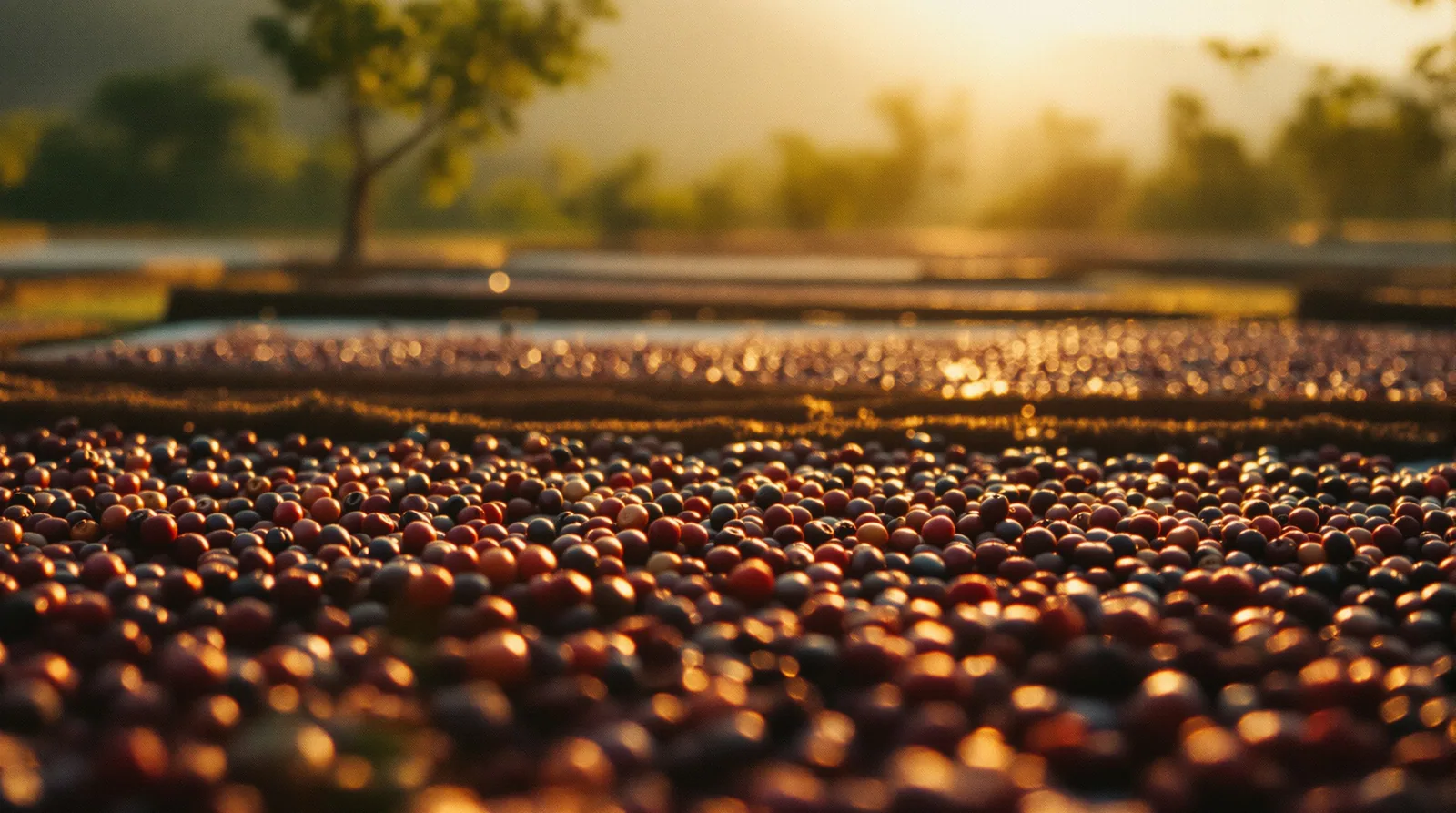
natural (dry) processing is the older method. whole cherries are picked and laid out on raised beds, wooden or mesh frames elevated off the ground to allow airflow underneath. they dry in the sun for several weeks while the fruit still clings to the bean inside. the sugars in the cherry skin ferment slowly into the bean. the result is dense, fruity, sometimes almost wine-like. blueberry, dark cherry, a faint boozy undertone. this sun-drying on raised beds is one of the defining characteristics of ethiopian processing, and the length of drying time, the turning schedule, the temperature, all of it shifts the final cup.
washed (wet) processing strips the cherry flesh off immediately. the beans ferment in water for up to 72 hours before being washed and dried. this produces a cleaner, brighter cup. more citrus, more florals, less of that deep jammy body. a washed yirgacheffe is a different animal from a natural guji, same country, same week on a calendar, but worlds apart in the cup.
there's also a honey process (a middle-ground where some mucilage is left on the bean during drying), though it's less common in ethiopia than in central america. when it does appear on an ethiopian lot, expect something in between: softer fruit, rounder body, a gentle sweetness that doesn't overwhelm.
the table below lays out how each method tends to affect your cup.
| processing method | body | acidity | common flavour notes |
|---|---|---|---|
| natural (dry) | full, syrupy | lower | blueberry, dark cherry, wine, chocolate |
| washed (wet) | light to medium | bright, clean | jasmine, bergamot, lemon, peach |
| honey | medium | moderate | stone fruit, caramel, gentle florals |
one thing worth saying: the same farm using the same method in two consecutive years can still produce a noticeably different result, because the cherries themselves changed. processing amplifies what's in the fruit. it doesn't manufacture flavour from nothing.
---
how geography influences taste
pull up a map of ethiopia's coffee regions and you're looking at an altitude chart as much as a geography lesson. yirgacheffe sits around 1,700 to 2,200 metres. guji goes higher. harrar, in the east, is drier and lower, which is why its coffees tend toward mocha and blueberry rather than clean florals.
the soil matters too. guji's deep red volcanic soil enhances mineral uptake in ways that translate directly to a richer body and bolder fruit character. gedeb, nearby, has a cooler and more stable microclimate, ideal for washed coffees where you want precision and clarity. two farms twenty kilometres apart can produce cups that taste like they come from different countries.
then there's the shade. most ethiopian coffee is grown under a canopy of native trees, which slows growth further and protects the cherries from harsh direct sun during the ripening period. you don't get this in monoculture plantations. the biodiversity of the growing environment is literally part of what you're tasting.
a few things that make ethiopian terroir unlike anywhere else:
- wild and semi-wild coffee plants growing alongside cultivated ones in forest gardens
- consistent two-season rainfall that prevents the extremes that stress plants in other origins
- small-scale, hand-harvested farming that selects for ripe cherries rather than stripping whole branches
- shade cultivation under indigenous trees that moderates temperatures and preserves soil moisture
all of this compounds. altitude slows maturation. volcanic soil provides nutrients. shade moderates temperature. hand-harvesting selects ripeness. by the time that cherry is dried on a raised bed, it has had the best possible start. which is why, even when a harvest varies from year to year, the floor of quality tends to stay high.
---
why each harvest is different
here is the thing: even the most consistent ethiopian producer, working the same plot with the same processing setup, will hand you something noticeably different twelve months later. that's not a failure of quality control. it's just how coffee works when it's grown in a place with genuine terroir.
climate is the biggest variable. ethiopian growing regions depend on two rainy seasons, the "belg" (short rains, roughly february to april) and the "kiremt" (main rains, june to september). when those seasons shift, arrive late, or deliver more or less rainfall than usual, the cherries develop differently. more rain during flowering can affect cherry density. a dry spell during ripening concentrates sugars faster. an unusually warm season pushes cherries to maturity before they've fully developed.
climate change is already making this more unpredictable, and long-time buyers of ethiopian lots have noticed. what tasted like a reliable yirgacheffe profile five or six years ago is now a moving target. some harvests lean brighter than expected. others come in heavier, more fermented. a few have disappointed entirely.
farming practices also shift. a cooperative might change its drying protocols, or bring in new raised bed infrastructure, or switch from natural to washed on a particular lot in response to market demand. processing staff change. mills get upgraded. all of these decisions ripple into the cup.
here's a rough idea of what can change from one harvest to the next, and why:
- rainfall timing and volume, affects cherry density, sugar development, and overall ripeness at harvest
- temperature during maturation, cooler years tend to build more complexity; warmer years rush the process
- fermentation conditions at the mill, ambient temperature and humidity affect how fast and how deeply fermentation proceeds
- drying duration, a longer drying window in a cool, cloudy year produces a different profile than a fast dry in strong sun
- picking selection, in high-labour years, sorting quality may drop; in better years, only fully ripe cherries make the cut
none of these are flaws. they're the signature of a living agricultural product. the burgundy analogy gets used a lot in coffee circles, and honestly, it holds up. vintage matters.
---
embracing the unpredictability
most people who drink ethiopian coffee regularly already know this on some level. you buy a bag in october, love it, come back in march and the new harvest is in, same farm, same roaster, same price, and it's just... different. not worse. different.
the instinct is to be disappointed. try to resist that.
here is how to actually get more out of ethiopian coffee's year-to-year variation:
- read the roaster's tasting notes before you brew, not after. if they're saying "this year's harvest is leaning more toward stone fruit than the citrus we had last year," adjust your expectations and your brew recipe. a heavier natural may need slightly coarser grinding than the washed you ran before it.
- brew it two ways. ethiopian coffees tend to reveal themselves differently as filter versus espresso. a natural that feels jammy and dense through a v60 can turn bright and almost sharp on a la marzocco with the right extraction parameters. both are valid. both are different coffees.
- keep a simple tasting log. you don't need a cupping form or sca vocabulary. just write down the harvest year, the region, the process, and a few words of what you got. do it again next year with the new crop. you'll start to see patterns.
- ask your roaster what changed. good roasters travel to origin or work closely with importers who do. they'll often know, was it a short rainy season? a change at the mill? that context makes the variation feel less random and more interesting.
- brew it fresh, and then brew it a week later. ethiopian coffees in particular change a lot as they degas. what tastes sharp and angular two days off roast can open into something much rounder at ten days. give it time before you decide what you think.
the other thing worth saying is: buy from roasters who are transparent about harvest years and processing lots. a bag that just says "ethiopia" with no other information is asking you to accept something on faith. a bag that says "ethiopia yirgacheffe, kochere cooperative, washed, 2024/25 harvest" is giving you something to actually track. that specificity is what lets you follow a coffee across years.
---
personal stories from ethiopian cafes
a friend who works as a green buyer for a mid-sized london roaster told me about her first trip to yirgacheffe, maybe four years ago now. she'd been buying ethiopian lots for two years over email and zoom calls, trusting the cupping notes that came back from amsterdam. then she flew to addis, took the long road south to the highlands, and spent a week visiting washing stations.
on the second day, a station manager handed her a cup of coffee that had been brewed in a simple metal jebena over a small burner in the corner of the office. no filter, no precision kettle, no brew ratio. just coffee, hot water, and time. she said it tasted like nothing she'd had from any of the samples she'd approved back in london. deeper. more fermented. a fig note she'd never written on a cupping sheet before.
the manager told her the beans were from an older wild-grown plot up the hillside, processed separately from the main co-op lots. it never made it into the export containers. it was just for them.
she came back to london and started asking different questions about what she was buying, not just the sca scores, but the provenance of specific plots, the age of the trees, what was being held back. it changed how she read every ethiopian lot that came across her desk after that. the usda's own reporting on ethiopian coffee notes that the country's small roadside coffee stalls, where coffee is brewed and served in a traditional manner, have expanded enormously over the last fifteen years, in part because ethiopians themselves feel the quality coming out of commercial cafes has slipped. there's something in that. the best ethiopian coffee experience she ever had wasn't in a cup she approved for sale. it was in a corner office at a washing station, from a jebena she couldn't take home.
that's the thing about ethiopian coffee. the further you follow it back toward its source, the stranger and more alive it gets.
---
faq
why does my ethiopian coffee taste so different from bag to bag?
because almost everything about it changes between harvests. the climate during growing season, the rainfall patterns, fermentation conditions at the mill, how long the cherries dried, all of it shapes the final cup. add to that the sheer genetic diversity of ethiopian heirloom varieties, and you have a coffee that is essentially impossible to standardise. that's a feature, not a problem. if you want the same thing every time, a commercial blend is built for that. ethiopian single-origin is not.
what is the difference between washed and natural ethiopian coffee?
washed coffees have the cherry flesh removed before drying, producing a cleaner, brighter cup with more distinct floral and citrus notes. natural (dry-processed) coffees are dried with the whole cherry intact, which lets the fruit sugars ferment into the bean over several weeks. this natural fermentation produces the dense, fruity, wine-like character that makes natural ethiopians so distinctive. same country, same altitude sometimes, completely different sensory experience.
does altitude really affect how ethiopian coffee tastes?
yes, and significantly. cooler temperatures at high altitude slow the maturation of the coffee cherry, which allows sugars and aromatic compounds to develop over a longer period. beans grown above 1,500 metres tend to have more complex acidity and deeper layering of flavour than lower-grown coffee from the same region. the difference between a guji lot grown at 2,100 metres and one from 1,600 metres can be striking even if the processing is identical.
is ethiopian coffee quality declining?
there's genuine debate on this. some experienced buyers feel that certain cooperatives have loosened quality controls as export volumes have increased, and climate pressures are making growing conditions less predictable year on year. others point to the rising number of outstanding micro-lots from regions like guji and bench maji as evidence that the ceiling is actually going up. the honest answer is: it depends entirely on who grew it, how it was processed, and who roasted it. provenance and transparency matter more than ever.
how should i brew ethiopian coffee to get the most from it?
filter brewing tends to show ethiopian coffees at their most expressive, a v60 or chemex with a medium-fine grind and water around 93 to 94 degrees celsius will usually let the florals and acidity come through clearly. natural-processed lots can handle a slightly coarser grind and benefit from a longer bloom on the pour-over. as espresso, washed ethiopians in particular can be surprisingly good at slightly longer ratios (1:2.5 to 1:3) where the brightness doesn't read as sharpness. experiment with the same bag across methods before you decide what you think of a harvest.
so, next time you sip on ethiopian coffee, embrace the unexpected. whether a burst of blueberry or a hint of jasmine graces your cup, remember that it's the land and its ancient practices at work. revel in the journey each harvest offers, knowing that no two years will ever bring the same notes to your palate.