coffee roast levels: what changes as beans get darker
coffee roast levels range from light to dark and greatly affect flavor and aroma. discover how each roast level changes your coffee's character and taste.
in this guide
- understanding roast levels
- the science behind roasting
- how roast levels affect flavor
- choosing the right roast for you
- roast level and caffeine content
- conclusion: a personal roast journey
- faq
- does roast level actually affect caffeine content?
- how should i store coffee once i've opened the bag?
- why do dark roast beans look oily?
- is there a "right" roast for espresso?
- what does "first crack" and "second crack" mean, and why do roasters talk about them?
the hiss of the roaster at workshop coffee in clerkenwell on a tuesday morning is not romantic. it's loud. it smells like popcorn and burnt toast and something almost floral underneath, and if you've stood next to a loring mid-batch you know exactly what i mean. green beans go in smelling like grass and hay and come out as something else entirely. light roasts pulled early, still bright, almost citrusy off the drum. medium roasts settling into that caramel-and-nut territory. dark roasts pushed further, oily, bittersweet, the origin character mostly gone. same bean. completely different cup. and honestly that's the whole thing right there.
understanding roast levels
roast level is, at its core, a measure of how long and at what temperature a green coffee bean gets exposed to heat. that sounds simple. it isn't. the difference between a bean pulled at 385°f and one taken to 435°f is the difference between a cup that tastes like lemon curd and one that tastes like bittersweet chocolate. same origin. completely different drink.
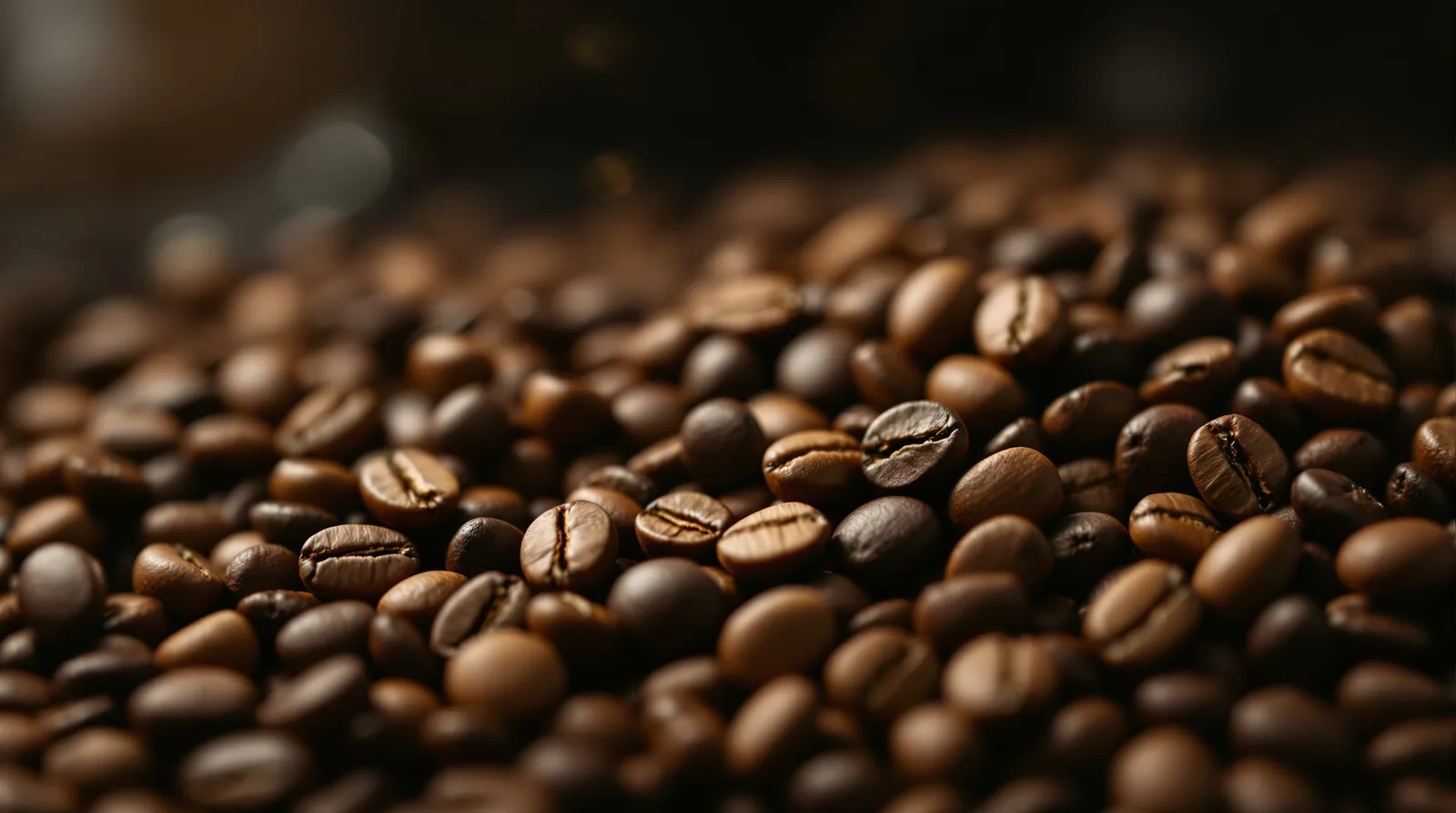
there are three primary categories: light, medium, and dark. some roasters carve out sub-levels (light-medium, specialty dark, and so on), and the agtron scale gives a more precise numerical read on bean colour, but for most drinkers the big three is where you start. colour is the most visible indicator. light roasts are a matte, pale brown. medium roasts are a warmer, more even brown, still dry on the surface. dark roasts are oily, smooth, shifting from deep brown into near-black territory at the extreme end.
one thing worth saying upfront: the names are not standardised across the industry. one roaster's "medium" is another's "medium-dark." if you buy a bag and the roast date, origin, and processing method are printed on it but the roast level feels off from what you expected, that's why. (i've had bags labelled "medium" that i'd pull out of a sample roaster and call dark without hesitating.)
---
the science behind roasting
this is where it gets genuinely interesting, especially if you've ever stood near a roaster mid-batch and caught that shift in smell from grassy and raw to something almost buttery, then nutty, then sweet. four main chemical processes are doing the work.
- moisture loss. green beans are roughly 10-12% water. as roasting begins, steam drives off that moisture. the bean lightens in weight and starts to expand.
- the maillard reaction. amino acids and reducing sugars combine under heat, producing hundreds of new flavour and aroma compounds. this is the same reaction that browns bread or sears a steak. it starts early and drives most of the complexity in a light or medium roast.
- sugar caramelization. as temperatures climb, sugars break down further, producing the richer, rounder sweetness associated with medium roasts and the slightly bitter edge that comes in darker ones.
- oil migration. at higher temperatures, internal pressure forces lipids to the surface. that sheen you see on a dark roast bean? that's oil. it also means the bean has become more porous and less dense.
two audible markers punctuate all this. first crack (roughly 385-405°f) sounds like popcorn popping, a rapid series of small snaps as the bean's structure fractures from built-up steam and co2. light roasts are pulled around here or just after. second crack (around 435-450°f) is quieter, more of a crackle, and marks the point where the roast character really starts to dominate. most dark roasts are pulled during or after second crack. push much further and you're making charcoal, not coffee.
bean density also drops as roasting progresses, which matters for grinding. a light roast is denser and harder. it'll behave differently on a burr grinder than a dark roast, which is more brittle and fractures more easily. i spent three days dialling in a natural ethiopian on an ek43 at our old site in peckham and the grind setting kept drifting because the beans were so dense the burrs were running hot. not fun.
---
how roast levels affect flavor
so here's a question worth sitting with: have you ever had two shots of the same ethiopian yirgacheffe pulled side by side, one light, one dark? they taste nothing alike. the bean is identical. the roast has essentially rewritten the flavour profile from scratch.
as big island coffee roasters put it, a light roast lets the coffee "sing its own song." you're tasting the terroir, the soil, the altitude, the fermentation notes from how the bean was processed. medium roast balances those origin flavours against the caramelization developing in the roast itself. dark roast hands the flavour over almost entirely to the roasting process. the origin is largely gone.
| attribute | light roast | medium roast | dark roast |
|---|---|---|---|
| acidity | high, bright | moderate | low |
| body | light, tea-like | medium, rounded | heavy, coating |
| sweetness | delicate, fruity | caramelized | reduced, bittering |
| origin clarity | high | medium | low |
| surface oil | none | none or trace | visible, glossy |
| typical flavors | citrus, florals, berries | chocolate, nuts, mild caramel | smoke, dark chocolate, char |
a light roast from a washed kenyan coffee might land somewhere between blackcurrant and grapefruit, with a clean, almost tea-like finish. the same bean taken to a medium roast softens that acidity, rounds out the body, and starts to bring forward hazelnut and brown sugar. at dark, you've largely lost the kenya entirely. what you taste is the roast. (i had a customer at a pop-up we ran in bermondsey last spring who ordered the same single origin three times before realising she'd been drinking the light one all along and actually hated the dark.)
that isn't a value judgment. some people want that bold, smoke-edged cup. but it's worth knowing what's actually happening.
---
choosing the right roast for you
brewing method matters here more than most guides admit. not just taste preference. right, this is the bit people skip.
a v60 or chemex pours clean, transparent, and unforgiving. every compound in that cup is on display. light and medium roasts are made for this, because the filter and the water bypass technique amplify clarity. if you pull a very dark roast through a v60, you often get a flat, ashy bitterness with nowhere to hide. the bloom barely holds together.
espresso is more forgiving of dark roasts because the pressure extraction and concentrated format can balance intensity, but lighter roasts brewed as espresso need careful dialling in. when it works (and it does work), a light roast espresso can taste like fruit juice in the best possible way. fruity, sharp, alive. and here is the thing, i'd actually argue that most home espresso setups are better served by medium roast than anything else, because the margin for error is so much smaller at the extremes. contrarian take, maybe, but i've watched too many people spend £900 on a machine and then blame the coffee when actually they just need a more forgiving roast to learn on.
some rough guidance:
- pour-over, chemex, aeropress: light to medium. you want the clarity.
- espresso: medium to medium-dark works reliably. light roast espresso rewards the effort but demands precision.
- french press, stovetop moka pot: medium to dark. the heavier body and lower acidity suit the immersion style and the metal filter.
- cold brew: dark or medium-dark. long steep times flatten acidity anyway, and the roast character comes through well chilled.
beyond method, go with your gut on what you actually like. clive coffee make the point that a light roast can taste sour to someone who drinks dark, and a dark roast can taste harsh and one-dimensional to someone who prefers bright, nuanced cups. neither person is wrong. start from what you enjoy, then work outward.
---
roast level and caffeine content
this is the one that trips people up constantly, and honestly, it's understandable. dark roast tastes stronger. it smells stronger. it feels like it should have more caffeine. it doesn't.
the difference between a light and dark roast in terms of caffeine is genuinely marginal. an 8-ounce cup of drip coffee typically contains 80-120mg of caffeine regardless of roast level. if anything, light roasts retain very slightly more caffeine, because caffeine is relatively stable under heat but some is lost at extreme temperatures. the gap is small enough that your brewing ratio matters far more than your roast level. (this comes up at least twice a week behind the bar, usually from someone ordering a double dark roast espresso at 7am thinking they're getting twice the hit.)
what actually changes with dark roast is the flavour intensity, not the stimulant content. bold and bitter isn't the same as strong in the caffeine sense. a single-origin light roast brewed at a high ratio could wire you just as effectively as a double espresso of dark roast. the "stronger coffee" association with dark roast is mostly a flavour perception. a persistent one.
if you want more caffeine, use more coffee. simple.
---
conclusion: a personal roast journey
a good friend who works as a head roaster, currently at a small producer-focused operation in east london, spent years dismissing light roasts entirely. too fussy. too acidic. "i'd rather drink something that tastes like coffee," she used to say.
then she got sent a natural-processed ethiopian guji from a farm she'd been corresponding with for a year. the roaster suggested pulling it very light, around first crack, just to see. she brewed it on a simple ceramic v60, nothing special, over a tiny camp stove in her kitchen. she called me an hour later and said it tasted like strawberry jam and jasmine. "i didn't expect to be emotional about coffee," she said, "but here we are." (she now runs a monthly light-roast-only filter menu at their hackney café. same person.)
that's what roast level can do. it doesn't just change a flavour note or two. it changes what the coffee is. finding the roast that makes you stop and actually pay attention, even if you've been drinking coffee for years, is worth the experimenting.
---
faq
does roast level actually affect caffeine content?
not in any meaningful way for the average drinker. caffeine is relatively heat-stable, and while very dark roasts lose a tiny amount through prolonged heat exposure, the difference between a light and dark roast cup is negligible, probably a few milligrams. your dose (how much ground coffee you use), your brew ratio, and your extraction time have a far greater impact on caffeine in the final cup.
how should i store coffee once i've opened the bag?
keep it in an airtight container, away from light and heat. a ceramic canister with a rubber seal works well. don't refrigerate whole beans, the moisture cycling as you open and close the container causes condensation and stales the coffee faster than room temperature storage would. most roasted coffee is at its peak between 5 and 21 days post-roast. after about 4 weeks, even well-stored coffee starts to taste flat. grind only what you're brewing, as ground coffee goes stale within hours once exposed to air.
why do dark roast beans look oily?
the oil you see on dark roast beans is actual coffee lipid, forced to the surface by internal pressure during roasting. the bean's cell structure becomes more porous and less dense at high temperatures, and the volatile oils migrate outward. this is also why dark roast beans go stale a bit faster once ground, those surface oils oxidise quickly. if you're buying pre-ground dark roast, try to use it within a week or two of opening.
is there a "right" roast for espresso?
no single answer, but medium to medium-dark is the most forgiving starting point. the concentrated pressure extraction of espresso needs some soluble sweetness and body to balance intensity, and lighter roasts can produce sour, underdeveloped shots if your grinder and technique aren't dialled in precisely. that said, light roast espresso has a devoted following, and many specialty cafes run it beautifully. (monmouth in borough does a rotationally light filter menu that's worth going out of your way for.) if you're pulling shots at home, start medium and adjust from there once you understand how your machine behaves.
what does "first crack" and "second crack" mean, and why do roasters talk about them?
both are physical events during roasting. first crack happens as steam and co2 build up inside the expanding bean and fracture its structure, it sounds like popcorn. most specialty roasts finish somewhere around or after first crack. second crack is quieter, a finer crackling sound, and marks where cell walls begin to break down more aggressively and surface oils appear. roasters use these as auditory cues alongside temperature and colour readings to decide when to end the roast. pulling just after first crack gives you a light roast. pushing into or past second crack gives you dark. what happens in between is where the craft lives.